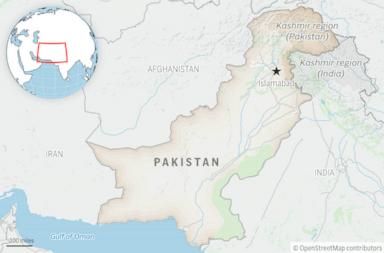
An old man sits in a small, concrete house on the outskirts of Rawalpindi, holding a fraying piece of paper. The paper is an electoral roll, but to him, it is a map of a home he has not seen in decades. He is a refugee from Indian-administered Kashmir. His status is supposed to be temporary, a brief pause in history until a geopolitical knot is untied. Decades have passed. The temporary has become permanent, and the only tangible thread connecting him to the governance of his homeland is a vote cast for a specific legislative seat hundreds of miles away.
For weeks, that thread was on the verge of snapping.
In Muzaffarabad, the capital of Pakistan-administered Azad Jammu and Kashmir, a high-stakes standoff reached the highest court in the territory. At issue were 12 legislative seats. These are not ordinary seats. They are reserved exclusively for Kashmiri refugees living across Pakistan—migrants who crossed the border during the upheavals of the mid-20th century, carrying little more than their memories and a fierce desire to retain their political voice in the lands they left behind.
To the bureaucrats and legal scholars, the battle was over constitutional text and executive boundaries. But on the streets, it was about identity.
The Weight of the Reserved Ballot
The regional government found itself locked in a bitter dispute with a powerful protest movement known as the Joint Awami Action Committee (JAAC). For months, tensions simmered, eventually boiling over into violent street demonstrations, road blockades, and a sweeping government ban on the protest group. The JAAC demanded radical changes, and near the top of the list was a direct challenge to the necessity of these 12 refugee seats.
The argument from critics sounds logical on the surface. Why should people living permanently in cities like Lahore, Rawalpindi, or Karachi hold a direct stake in the local assembly of Muzaffarabad? To opponents, these seats represent an outdated anomaly, an administrative relic that skews local representation and complicates regional governance.
But look closer at the emotional architecture of Kashmir, and the logic shifts.
For the refugee community, those 12 seats in the 45-member Legislative Assembly are the ultimate symbol of a promise. To dismantle them is to admit that the dream of return is dead. It is an erasure. If you remove their political representation, you turn a displaced population into a forgotten one. You cut the final umbilical cord tying them to the soil of their ancestors.
The regional Prime Minister, Faisal Mumtaz Rathore, found himself caught between a rock and a hard place. On one hand, a furious protest movement was bringing the region to a standstill, demanding systemic overhauls. On the other hand, a sudden administrative deletion of these seats would trigger a profound identity crisis for hundreds of thousands of refugees.
The government insisted its hands were tied. Rathore claimed that out of 38 demands presented by the protesters, 36 had been resolved through intense negotiations involving regional and federal officials. The remaining sticking points were deeply constitutional. They could not be fixed with the stroke of a governor's pen.
The protesters refused to back down. Police clashed with demonstrators. Dozens of activists were arrested. Reports of casualties emerged, met by fierce denials from law enforcement. The upcoming assembly elections, scheduled for next month, were suddenly blanketed in dense legal and political fog.
A Verdict from the High Bench
The Supreme Court of Azad Jammu and Kashmir stepped into the chaos. The judges were asked a fundamental question: Can a government change the foundational rules of representation just to restore order on the streets?
The answer was a resounding, unyielding no.
The top court ruled that the 12 legislative seats reserved for Kashmiri refugees enjoy absolute constitutional protection. They cannot be abolished, reduced, or modified by executive orders or administrative decrees. The judicial opinion made the legal reality perfectly clear: if anyone wants to alter the structure of these seats, they must do so through a formal constitutional amendment passed by the Legislative Assembly. No shortcuts. No concessions under duress.
Consider the alternative. If the court had allowed the executive branch to dissolve the seats to appease a protest movement, it would have set a perilous precedent. It would mean that representation is a currency to be traded away whenever the political temperature rises.
The judges went further, drawing a sharp line between legitimate grievance and public disruption. While affirming that peaceful protest is an unalienable constitutional right, the court declared that actions blocking roads, halting public life, or intimidating citizens cross a legal boundary. Public order cannot be held hostage in the name of political disagreement.
Most crucially, the court cleared the path for the upcoming vote. The elections must proceed within the constitutionally prescribed period. Political disputes cannot be used as an excuse to freeze the democratic process.
The True Cost of Representation
This legal victory provides a massive sigh of relief for the regional administration, validating its stance that constitutional matters belong in parliament, not on the barricades. Yet, the underlying friction remains. Law can draw boundaries and courts can issue decrees, but they cannot instantly heal the deep economic and political frustrations that brought thousands of people into the streets in the first place.
For now, the machinery of the upcoming election is back in motion. The ballots will be printed. The polling stations will be set up.
And in that small house on the edge of Rawalpindi, an old man will keep his name on the roll. He will walk to a local voting booth next month, thousands of yards away from the snow-capped peaks of his childhood, and he will drop a piece of paper into a box. It is a small, quiet act. But as the supreme court just reminded the world, it is an act backed by the full, unbreakable weight of the law.