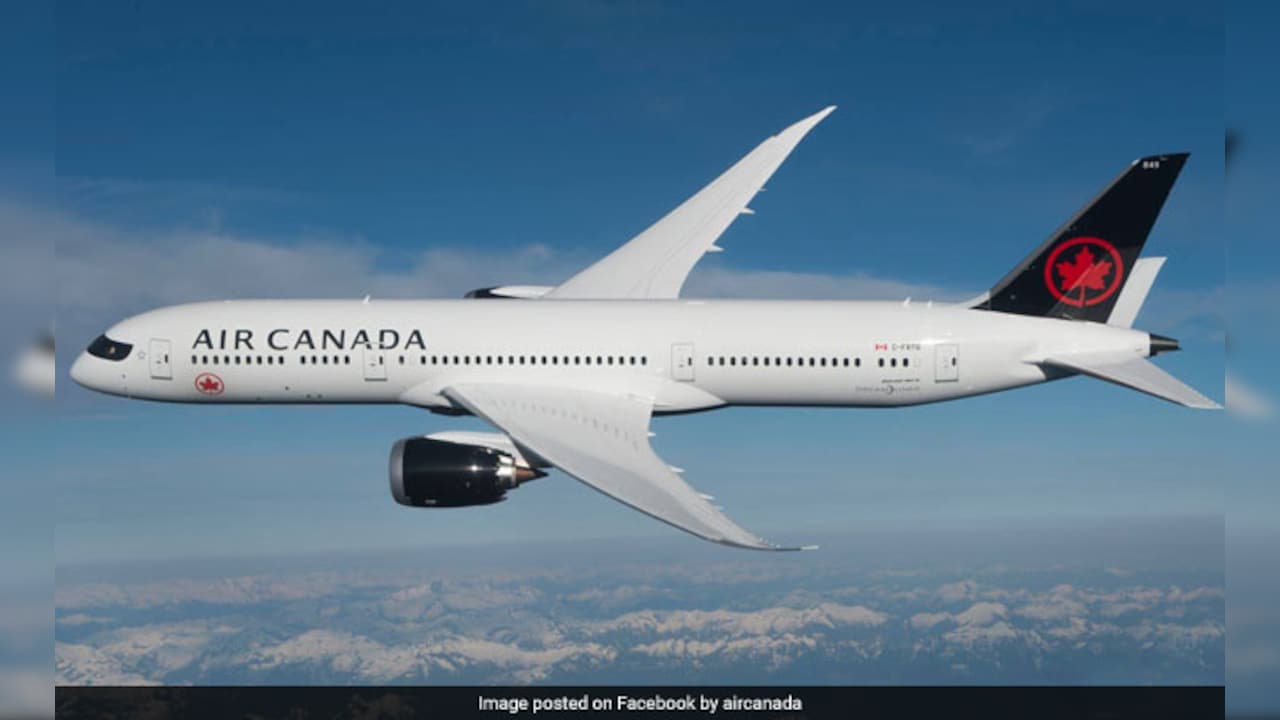
The media is currently hyperventilating over reports that a man allegedly flew commercial airliners for Air Canada for nearly two decades using falsified credentials. The collective freak-out follows a predictable script: shock, horror, demands for bureaucratic overhauls, and terrified speculation about how close thousands of passengers came to disaster.
They are asking the wrong questions, and they are learning the wrong lessons. In related updates, we also covered: The Terrifying Illusion of Aviation Safety Credentials.
The lazy consensus screams that this is a catastrophic failure of aviation security. The reality is far more jarring, uncomfortable, and counter-intuitive. If an individual can fly complex, heavy transport category aircraft for 17 years without a single safety incident, it does not prove that our skies are inherently dangerous. It proves that modern aviation infrastructure, training redundancy, and automation are so brilliantly engineered that they successfully mitigated the risk of a bureaucratic anomaly for nearly two decades.
We do not have a piloting crisis. We have a systemic inability to distinguish between paperwork compliance and operational competence. Lonely Planet has provided coverage on this critical subject in extensive detail.
The Illusion of the Maverick Imposter
The public hears "fake credentials" and immediately pictures a Leonardo DiCaprio character from Catch Me If You Can—a smooth-talking charlatan winging it in the cockpit, sweating through turbulence, blindly guessing which button to press.
This image is pure fiction.
Let us dismantle the mechanics of modern commercial aviation. You do not just walk into the cockpit of a Boeing 777 or an Airbus A330 because you forged a piece of paper. To operate these aircraft within a major carrier’s network, every single pilot undergoes rigorous, recurring evaluations.
- Type Ratings: A pilot must pass a specific, highly regulated training course for the exact model of aircraft they fly.
- Simulator Checkrides: Every six to twelve months, pilots are thrown into Level D flight simulators—which perfectly replicate aircraft physics—to face catastrophic engine failures, hydraulic dropouts, and severe weather.
- Line Checks: Annual real-world evaluations conducted by check airmen during actual commercial flights.
If this individual flew for 17 years, he passed these checks. Dozens of them. He satisfied the brutal, uncompromising standards of the simulator instructors and check airmen. He performed the maneuvers, handled the emergencies, and demonstrated the split-second decision-making required by the airline's standard operating procedures (SOPs).
The aviation industry did not fail to verify his ability to fly. It failed to verify his database entries. There is a massive, distinct difference between a man who cannot fly a plane and a man whose paperwork is illegitimate. The former kills people on day one. The latter flies safely for 1,000 weeks until an auditor looks at a background file.
Why the System Actually Worked
I have spent years analyzing operational risk in high-consequence industries. When a major anomaly occurs, the instinct of the amateur observer is to burn down the house to catch the mouse. The professional looks at why the house did not burn down in the first place.
Consider the sheer volume of variables over a 17-year aviation career. We are talking about thousands of flight hours, hundreds of thousands of passengers, unpredictable North Atlantic winter weather, mechanical malfunctions, and chaotic air traffic control environments.
The imposter did not survive this environment on luck. Luck runs out during your first crosswind landing in a blizzard at midnight. He survived because commercial aviation has successfully removed the "lone wolf" variable from the cockpit.
Modern multi-crew coordination (MCC) and Crew Resource Management (CRM)—frameworks pioneered by bodies like the National Transportation Safety Board (NTSB) and Eurocontrol after the systemic failures of the 1970s—ensure that no single pilot operates in a vacuum. A commercial flight is a highly choreographed, dual-custody operation.
Every checklist must be challenged and responded to. Every altitude change must be verified by both individuals. The automation handles the monotonous tracking, while the human pilots manage the energy state and systems of the aircraft.
Imagine a scenario where a brilliantly engineered factory produces flawless microchips for 17 years, only for management to realize the head technician lied about where he got his engineering degree. Do you recall the microchips? Do you claim the factory is unsafe? No. You acknowledge that the factory's quality control protocols were so rigid that even an uncertified operator could not compromise the output.
The Air Canada narrative should not be a story of terror. It should be studied as the ultimate, albeit accidental, stress test of modern aviation’s redundant safety architecture. The system neutralized the human variable so effectively that bureaucratic status became secondary to operational output.
The High Cost of the Compliance Fetish
The inevitable fallout from this event will be a tightening of the bureaucratic vise. Regulators will introduce new layers of digital verification, multi-factor authentication for licenses, and tedious background checks.
This is security theater, and it comes with a steep cost.
By hyper-focusing on administrative compliance, the aviation industry routinely ignores the actual, looming threats to flight safety. We are currently facing a global pilot shortage, escalating rates of pilot burnout, and severe mental health stigmatization that forces flight crews to hide treatable medical conditions out of fear of losing their livelihoods.
When we treat a paperwork error or a forged certificate as the ultimate sin while ignoring the crushing fatigue of a legally compliant, fully certified crew flying their fourth leg of the day through a storm, we display a fatal misunderstanding of risk.
A tired, distracted, fully licensed captain is infinitely more dangerous to a planeload of passengers than an attentive, highly experienced individual who aced his simulator checks but fudged his historical paperwork. Yet, the industry's regulatory framework is obsessed with the latter because numbers on a spreadsheet are easy to police. Actual human cognitive fatigue is hard.
Facing the Uncomfortable Truth
To be absolutely clear: nobody is arguing that airlines should allow unverified pilots into the cockpit. Aviation authorities must maintain a secure, verifiable database of licenses. Fraud should be prosecuted.
But we must stop misdiagnosing the problem.
The competitor articles covering this event want you to feel vulnerable every time you step onto a plane. They want you to believe that the pilot upfront might be an incompetent fraud who could drop the plane out of the sky at any moment.
They are wrong. They do not understand how planes fly, how crews are trained, or how risk is managed.
The terrifying truth for regulators—and the comforting truth for passengers—is that the modern aviation ecosystem is so spectacularly resilient that it can absorb a 17-year administrative anomaly without dropping a single knot of airspeed.
Stop looking at the forged license. Look at the 17 years of safe landings. The machinery of aviation safety worked exactly as designed; it made the pedigree of the individual irrelevant compared to the discipline of the system.
Fix the database. Leave the panic behind.