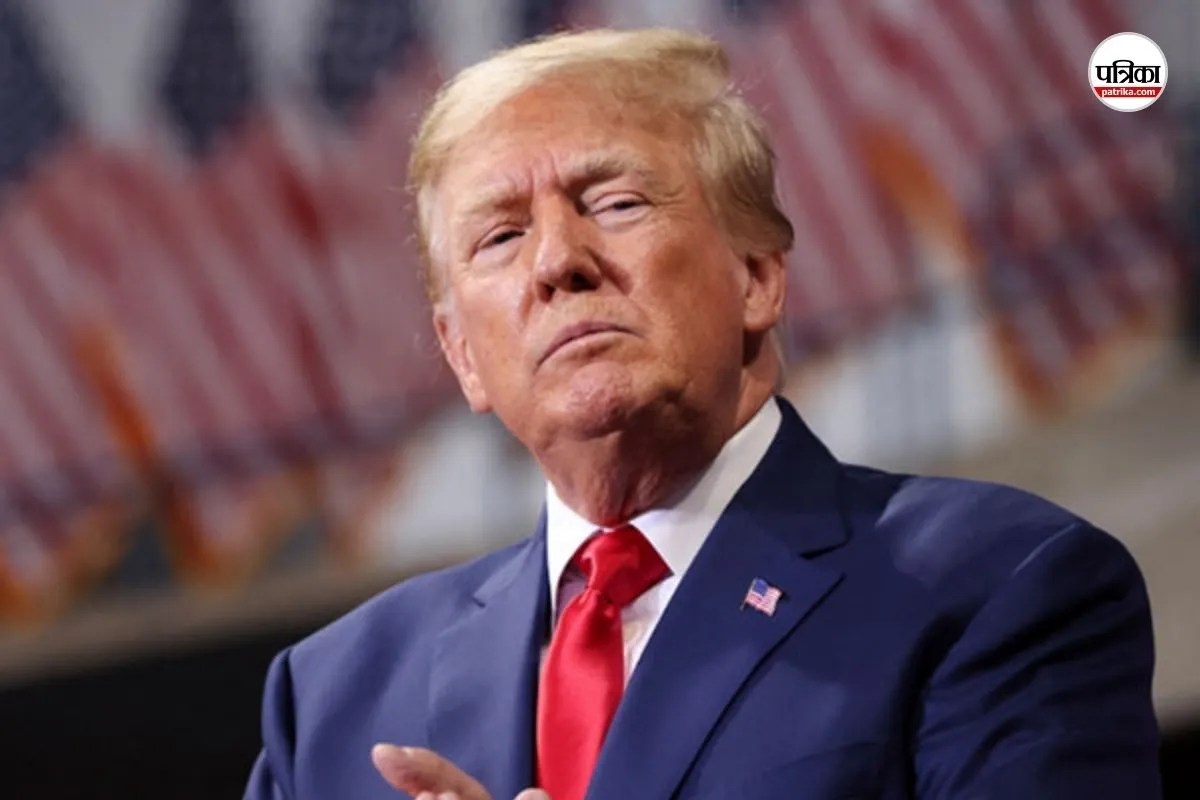
The media is having a collective meltdown over a $200 fine leveled against Donald Trump for a delayed financial disclosure regarding a stock sale. Outlets are splashing headlines everywhere, framing this as a massive breach of ethics, a hidden trading scandal, or proof of systemic corruption.
They are missing the entire point.
Chasing a $200 fine against a billionaire is not hard-hitting journalism. It is administrative theater. The mainstream narrative treats this penalty like a smoking gun, but anyone who understands the mechanical reality of compliance knows it is a rounding error on a rounding error. It is the financial equivalent of a jaywalking ticket, magnified into a national crisis to generate clicks.
We need to stop treating routine paperwork delays like Watergate.
The Myth of the Stock Trading Cover Up
The core argument circulating right now is that this fine exposes a deliberate attempt to hide asset movements. Let us dismantle that premise immediately.
Under the Stop Trading on Congressional Knowledge (STOCK) Act, public officials and certain candidates must report financial transactions over $1,000 within a specific window, usually 30 to 45 days. If they miss the deadline, the standard, mandatory initial penalty is a flat $200.
A $200 fine is not a deterrent. It is a late fee.
Imagine a scenario where a retail investor forgets to file a specific tax form on time and gets hit with a automated penalty by the system. Nobody accuses them of running an illicit offshore trading ring; they just filled out the paperwork late. Yet, when the name on the file is Trump, a late fee is magically transformed into an "allegation of hiding stock trading information."
If an individual truly wanted to conceal market-moving trades or hide illicit financial gain, they would not do it via a trackable asset that triggers an automatic, public disclosure slip late fee. They would use complex derivative structures, private equity vehicles, or blind trusts. Failing to file a standard disclosure on time is almost always the result of bureaucratic friction, not a criminal conspiracy.
The Reality of Ultra High Net Worth Compliance
I have spent years analyzing corporate governance and watching high-net-worth individuals navigate compliance frameworks. Here is the reality the public never sees: billionaires do not manage their own stock disclosures.
They hire armies of accountants, compliance officers, and attorneys whose entire job is to track these deadlines. When a filing is late, it means a mid-level compliance analyst missed a calendar notification, or an internal clearing house delayed sending a transaction confirmation slip.
- The asset size in question is often negligible compared to the total portfolio.
- The administrative cost to track the asset sometimes exceeds the fine itself.
- The penalty is paid automatically via a corporate account without the principal ever knowing it happened.
To believe that a literal billionaire personally orchestrated a late filing to save face or hide a trade is to completely misunderstand how the ultra-wealthy interact with money. They operate at a macro level. The micro details—like a $200 filing fee—are background noise.
The media focuses on the $200 figure because it is a tangible number that everyday readers can comprehend. Explaining the actual mechanics of compliance auditing is boring. It does not drive traffic. A headline screaming about Trump being fined for "hiding stock info" does.
The Structural Flaw of the STOCK Act
If we want to have an honest conversation about ethics in trading, we need to look at the actual rules, not the political actors. The STOCK Act is fundamentally toothless, and this situation proves it.
The law was designed to prevent insider trading and create transparency. Instead, it created a system where politicians can routinely violate disclosure deadlines, pay a tiny fee, and move on. Dozens of lawmakers from both sides of the aisle violate this act every single year. They pay their $200 fines quietly, and nobody writes an article about it.
The flaw in the system is not that Donald Trump got fined $200. The flaw is that the system treats a $200 fine as a sufficient penalty for a disclosure failure.
If the goal were true transparency, the penalty would be scaled to the value of the trade or the individual's net worth. A static $200 fine is a regressive penalty that penalizes a low-level staffer but means absolutely nothing to a wealthy politician or executive. By focusing on the individual rather than the structural irrelevance of the law, the current commentary completely misdiagnoses the problem.
Stop Asking the Wrong Questions
People are constantly looking at these headlines and asking, "What was he trying to hide?" or "Is this the start of a bigger investigation?"
Those are the wrong questions. You are playing into a pre-packaged narrative designed to spark outrage.
The real question you should be asking is: Why is the public archive flooded with stories about a pocket-change fine while major structural policy decisions, macroeconomic shifts, and actual regulatory rollbacks go completely unnoticed?
It is easy to get outraged over a name. It takes effort to understand a system.
The downside of taking this contrarian view is obvious: it lacks the emotional satisfaction of taking a side. It is far more entertaining to view this as either a massive corrupt conspiracy or a targeted political witch hunt. But the truth is far colder and more boring. It is just bureaucracy functioning exactly as it was designed to—slowly, inefficiently, and with zero actual impact on the status quo.
Stop falling for the administrative theater. The $200 fine is not a scandal. The real scandal is that you were convinced it mattered.