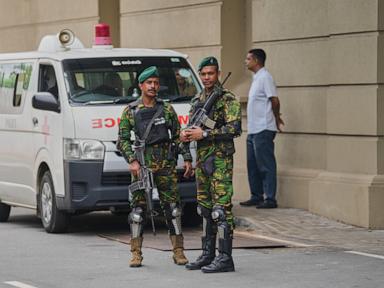
Justice moves slowly when entire nations break. More than seven years after coordinated suicide bombers tore through churches and luxury hotels across Sri Lanka, a Colombo court delivered a verdict that sent shockwaves through the judicial system. Out of 24 defendants standing trial, the Colombo High Court Trial-at-Bar found 15 men guilty of orchestration, conspiracy, and support roles tied to the 2019 Easter Sunday attacks, sentencing each to over 200 years in prison.
If you've followed this tragic chapter of modern South Asian history, you know the numbers. Over 260 people died that morning, including dozens of foreign nationals, while more than 500 others suffered horrific injuries. Yet, while these sentences ensure the convicted will spend the rest of their lives behind bars, the ruling itself has done little to quiet a deeply skeptical public.
The Anatomy of a Delayed Verdict
The trial spanned nearly five years of tangled legal arguments, evidentiary hearings, and sharp political scrutiny. Among those convicted was Naufar Moulavi, identified by prosecutors as a central ideological figure behind the local extremist factions linked to the Islamic State. The court combed through thousands of pages of evidence, examining how local radicalized cells managed to bypass intelligence frameworks to execute simultaneous blasts at St. Anthony’s Shrine in Colombo, St. Sebastian’s in Negombo, the Zion Church in Batticaloa, and three prominent tourist hotels.
While prosecutors praised the verdict as a monumental step for accountability, victims' advocates point out a glaring reality. None of the actual suicide bombers survived the explosions. The men sitting in the dock were second-tier planners, recruiters, and logistical facilitators. For families who lost children, parents, and entire generations on April 21, 2019, a prison term for logistical handlers feels incomplete when questions about systemic institutional failure remain wide open.
Accountability Beyond the Courtroom
You can't talk about this tragedy without looking at the staggering intelligence failures that preceded it. Weeks before the attacks, foreign intelligence agencies—specifically from India—provided concrete warnings about an impending strike. Those warnings sat on desks. They bounced through bureaucratic channels. Nobody acted.
Sri Lanka's legal system has slowly tried to address this dereliction of duty from another angle. Earlier, courts handed down death sentences to a former top police official and a senior defense ministry bureaucrat for criminal negligence, marking a rare instance of high-ranking state officials facing severe legal consequences for administrative inaction. Civil suits have also targeted former political leaders, with courts ordering heavy financial compensation payouts to victims from former officials who failed to secure the nation.
Even so, the Catholic Church in Sri Lanka has consistently pushed back against narrative closure. Church leaders argue that the network of complicity runs far deeper than what has been exposed in courtrooms. They continue to demand independent international inquiries to uncover whether hidden political masterminds manipulated or ignored the threat for political leverage.
What This Means for Sri Lanka's Future
The sentencing of these 15 men closes a major judicial chapter, but it doesn't heal the underlying fractures. Tourism took years to recover from the immediate aftermath of the blasts, and the country subsequently plunged into historic economic and political turmoil. Every time courts issue landmark rulings on the Easter bombings, the nation is forced to relive the trauma of a security apparatus that fell asleep at the wheel.
True recovery requires more than prison sentences handed down years after the fact. It demands absolute transparency from intelligence agencies, structural police reform, and a willingness to prosecute negligence at every level of government. Until those systemic changes become permanent, verdicts like this will feel less like final justice and more like a necessary, albeit delayed, down payment.
15 convicts sentenced to 200 years in jail over 2019 suicide bombings
This video provides direct coverage and visual context of the Colombo High Court sentencing the fifteen individuals involved in the 2019 Easter Sunday terror attacks.