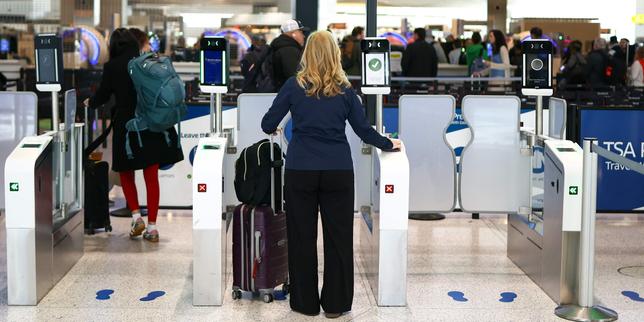
Mainstream news outlets treat flight delays like sudden acts of God. The standard headlines hit on cue: 240 flights cancelled, 530 delayed, thousands stranded, terminal chaos unfolding on a Monday morning. The narrative is predictable. It points fingers at sudden weather spikes, vague technical glitches, or air traffic control bottlenecks, framing every delay as an unprecedented structural failure.
That narrative is completely wrong. Read more on a connected issue: this related article.
When an airline grounds 240 flights across the United States, it isn't evidence of a system breaking down under stress. It is the system operating exactly as it was designed to function. What the public misconstrues as emergency chaos is actually a calculated financial trade-off—one where carrier balance sheets take priority over your schedule.
The Operational Illusion of "Unforeseen Delays"
Airlines operate on hyper-thin margins and hyper-optimized assets. A single commercial aircraft stays in the air up to 14 hours a day to generate maximum yield. When media reports hyperventilate over a batch of Monday morning cancellations, they treat each delayed jet as an isolated tragedy. Further analysis by The Guardian explores related perspectives on the subject.
They ignore the cascade mechanics.
Airline scheduling relies on tightly bound hub-and-spoke networks. If ground equipment at a single major hub—say, O’Hare or Hartsfield-Jackson—glitches for forty-five minutes, the downstream impact doesn't hit linearly; it multiplies exponentially. Grounding 200-plus flights is not a panicked reaction. It is a controlled burn.
I've worked alongside network operations managers during mass disruption events. The moment a critical hub slips past a specific threshold, carriers execute targeted cancellations to save the rest of the operational grid. They cut smaller regional routes, sacrifice low-yield point-to-point connections, and leave hundreds stranded in regional outposts to ensure the high-revenue international and transcontinental routes stay green.
The media calls it a crisis. Wall Street calls it network preservation.
The Real Reason Cancellations Cluster on Mondays
Notice how these headlines routinely surface on Monday mornings? That is no accident.
Monday is the highest-yield window for business travel. It is the day when corporate accounts—the passengers flying on last-minute, non-refundable, premium-tier fares—hit the security lines. When a carrier faces early-week delays, they face a severe operational fork:
- Option A: Push every delayed flight through, absorbing compounding penalties, crew timeout mandates, and massive overtime payouts across ground crews.
- Option B: Purge the schedule aggressively, rebook passengers onto later flights, consolidate half-empty regional jets into single mainline aircraft, and reset the clock before the evening bank of long-haul departures.
Carriers pick Option B every single time.
The financial penalty for delaying business travel legacy accounts is lower than the operational cost of letting crew duty clocks expire mid-rotation. Under Federal Aviation Administration (FAA) rules, pilot and flight attendant duty limits are strict. If a crew hits their duty limit while sitting on a taxiway waiting for clearance, that aircraft is effectively dead for the rest of the calendar day. Cancelling the flight preemptively at 6:00 AM frees up the crew to staff a higher-margin route later that afternoon.
Your cancelled flight was sacrificed so a premium long-haul route could leave on schedule.
Why Fixating on "Flight Safety" Misses the Economic Reality
The industry loves to hide behind the umbrella of safety. Every press statement released during a operational shutdown mentions an "abundance of caution."
Safety is non-negotiable in commercial aviation. But using safety as a universal PR defense masks systemic underinvestment in legacy infrastructure.
The Notice to Air Missions (NOTAM) system failure in early 2023 exposed how fragile the FAA's core technological backbones remain. Ground stops and mass cancellations frequently trace back to aging software, outdated scheduling algorithms, and air traffic control staffing shortages that have built up over decades.
When airlines run lean, they build zero slack into their human supply chains. When an ATC facility in Florida goes staffing-critical, or when a localized storm rolls through the Northeast, airlines don't have reserve crews sitting on standby at every outstation. They have optimized reserves out of existence to satisfy quarterly earnings targets.
When a disruption strikes, the infrastructure doesn't bend; it breaks. The 240 cancellations reported on a Monday are simply the debt on lean operations coming due all at once.
Dismantling the Passenger Compensation Myth
Consumers routinely ask the wrong question when faced with cancellations: "How do I get the airline to pay for my hotel and ticket refund?"
The brutal reality is that the regulatory system in the United States is structured to protect carrier liquidity, not passenger schedules. Unlike European regulations under EU261—which mandate flat-rate cash compensation for delays over three hours unless extraordinary circumstances apply—U.S. Department of Transportation guidelines historically grant airlines massive latitude.
If a carrier attributes a delay to weather (even if that weather occurred 1,000 miles away and only affected crew repositioning), they are generally relieved of paying statutory compensation beyond issuing a ticket refund or rebooking.
Here is the truth about fighting for compensation after a disruption:
- Demanding a cash refund directly on the day of the flight is often a tactical error. If you accept a full refund, the airline's legal obligation to transport you to your destination terminates immediately. You are left buying a last-minute ticket on a rival carrier at peak spot-market rates.
- The "Customer Service Commitment" is a marketing document, not a legal shield. Promises of meal vouchers and hotel accommodations during delays are subject to local airport availability and operational discretion.
- Interline agreements are rarely volunteered. Most legacy carriers maintain interline ticketing agreements with rivals. They can transfer your ticket to a competitor's seat at no cost to you. Front-line gate agents rarely offer this option because it costs the airline real money out-of-pocket. You have to ask for it by name.
The Downside of the Contrarian Reality
Acknowledging that delays are a calculated operational feature doesn't solve the immediate problem of sitting on a terminal floor.
The uncomfortable truth is that passengers have very little leverage once a mass cancellation event begins. Taking a contrarian view means accepting that individual convenience ranks low on an airline’s list of operational priorities during a network reset.
Attempting to outsmart the system by booking tight layovers, relying on single-carrier dominance in secondary markets, or assuming third-party travel insurance will instantly reimburse thousands in disrupted plans often leads to frustration. The industry runs on mathematical optimization; navigating it requires cold, unemotional tactics.
How to Play a System Designed to Sacrifice Your Schedule
If you want to survive the operational realities of modern air travel, stop booking flights like an amateur.
- Book the first flight of the day. Period. The 5:30 AM departure has two decisive advantages: the aircraft is already on the ground from the night before, and the crew hasn't accumulated delay hours from earlier legs.
- Fly non-stop, even if it costs 30% more. Layover points double your surface area for operational exposure. A single hiccup at a mid-continent hub destroys your entire itinerary.
- Never check a bag when operational disruption is forecast. If your flight is cancelled and your luggage is locked in the belly of an aircraft or stacked in a secure baggage facility, your mobility drops to zero. A carry-on allows you to walk straight out of the airport, rent a car, or switch airports without waiting three hours at a luggage resolution counter.
- Bypass the terminal customer service line entirely. When 200 people rush the gate desk, do not join the queue. Use the airline's mobile app to rebook immediately, or call the carrier’s international customer service numbers (e.g., the UK or Australian support lines for a domestic U.S. carrier), where call volumes are significantly lower.
- Track incoming aircraft tail numbers, not flight status updates. Airline apps often delay status changes to prevent terminal panics. Use public tracking tools to see where the physical plane assigned to your flight actually is. If your plane is still sitting three states away two hours before your scheduled departure, start executing your backup plan immediately.
Stop treating flight cancellations as sudden, unpredictable tragedies. They are logical outcome of an aviation system pushed to maximum capacity, running on legacy infrastructure, and prioritizing high-margin network preservation over your schedule. Adapt your strategy to the math, or keep getting left behind at the gate.