Pixels lie. They always have.
We stare at glowing rectangles, convinced that our eyes possess some divine X-ray vision capable of stripping away fabric, lighting tricks, and camera angles to reveal an absolute, unvarnished truth. A celebrity walks down a red carpet. Cameras flash. Thousands of frames capture a single second in time. And almost instantly, a collective madness begins.
Rumors spark. Theories spread.
She is wearing a prosthetic. It sounds completely ridiculous. Yet, entire digital communities spend hours dissecting the exact protrusion of a stomach, comparing shadows, measuring millimeters of fabric, and treating a human body like a low-budget special effect.
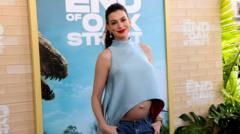
Consider what happened when Anne Hathaway faced the bizarre machinery of internet speculation. Instead of issuing a stiff, carefully worded statement through a publicist—the usual sterile armor of modern fame—she chose a different path. She poked fun at it. She leaned into the absurdity. By acknowledging the wild "fake baby bump" theories with humor, she exposed the fundamental ridiculousness of an internet culture that believes it is entitled to police, verify, and cross-examine the physical reality of a pregnant woman.
Public pregnancy has always been treated as a spectator sport.
Long before social media turned every smartphone owner into an armchair detective, the tabloid press operated as a ruthless surveillance state. Magazines with glossy covers splashed blurry paparazzi shots across grocery store checkouts, circling midsections in red ink with breathless arrows. Is she or isn't she? The question itself was treated as a game for public consumption. The woman carrying the child was merely the canvas upon which the public projected its collective obsession, judgment, and skepticism.
When a celebrity steps into the public eye, a strange psychological contract is quietly enforced. We buy the ticket, so we assume we own the ride. We believe that fame strips away the right to privacy, medical autonomy, and basic human dignity. If a star gains weight, the internet screams pregnancy. If a star stays remarkably fit, the internet screams conspiracy.
You cannot win.
Think about the sheer audacity required to look at a photograph of another human being and declare, with absolute certainty, that their body is a lie. This is not healthy curiosity. This is a profound detachment from reality. It stems from an era where cynicism is our default setting. We trust nothing, so we scrutinize everything.
When those strange rumors surrounded Anne Hathaway, the narrative followed a predictable, exhausting script. A bump looks slightly different in one dress compared to another. Different tailors, different corsetry, different lighting. To anyone who has ever worn clothes, this is common sense. But to the internet conspiracy theorist, it is a smoking gun.
Instead of getting defensive, Hathaway handled the chatter with a brilliant, disarming lightness. Humor is often the only weapon that works against total nonsense. You cannot argue logically with someone who believes in an elaborate Hollywood silicone-stomach conspiracy. You can only shine a light on how utterly silly they look.
Why do we do this?
The answer lies in our desperate need for control and certainty in a chaotic world. Celebrities represent the pinnacle of unattainable glamour. By reducing them to characters in a soap opera—or worse, fraudsters trying to pull off a bizarre hoax—we bring them down a peg. It is a leveling mechanism. If we can prove, even in our own minds, that their lives are fake, manufactured, or deceptive, we feel a little better about our own quiet, unglamorous Tuesdays.
We want the drama. We want the reveal.
Yet, beneath the gossip lies a darker undercurrent. Pregnancy is a deeply vulnerable, physically transformative experience. For everyday women, the pressure to conform to an ideal standard of "looking pregnant the right way" is suffocating. When public figures are subjected to microscopic examinations of their changing bodies—with people openly debating whether their flesh is real or synthetic—it sends a toxic message to everyone watching.
It teaches us that a woman's body is never her own. It belongs to the audience. It belongs to the comment section. It belongs to the algorithm.
When Hathaway laughed off the noise, she did something quietly revolutionary. She refused to validate the premise of the interrogation. She didn't offer medical records. She didn't look exhausted and hurt. She simply shrugged off the absurdity, reminding everyone that some things are just too ridiculous to take seriously.
We live in a culture that feeds on outrage and suspicion. We are constantly searching for the hidden angle, the fake setup, the corporate lie. But sometimes, a bump is just a bump. And a human being is just a human being, trying to navigate a bizarre existence where millions of strangers feel entirely comfortable commenting on the shape of her anatomy.
The flashbulbs fade. The magazines are recycled. The internet moves on to its next unfounded fixation.
But the echoes of this digital theater remain. They remind us of a simple, uncomfortable truth about our modern obsession with the lives of others: we are often so busy looking for the illusion that we completely lose sight of the actual human standing right in front of us.