The "absurdity" isn't the leak. The absurdity is the shock.
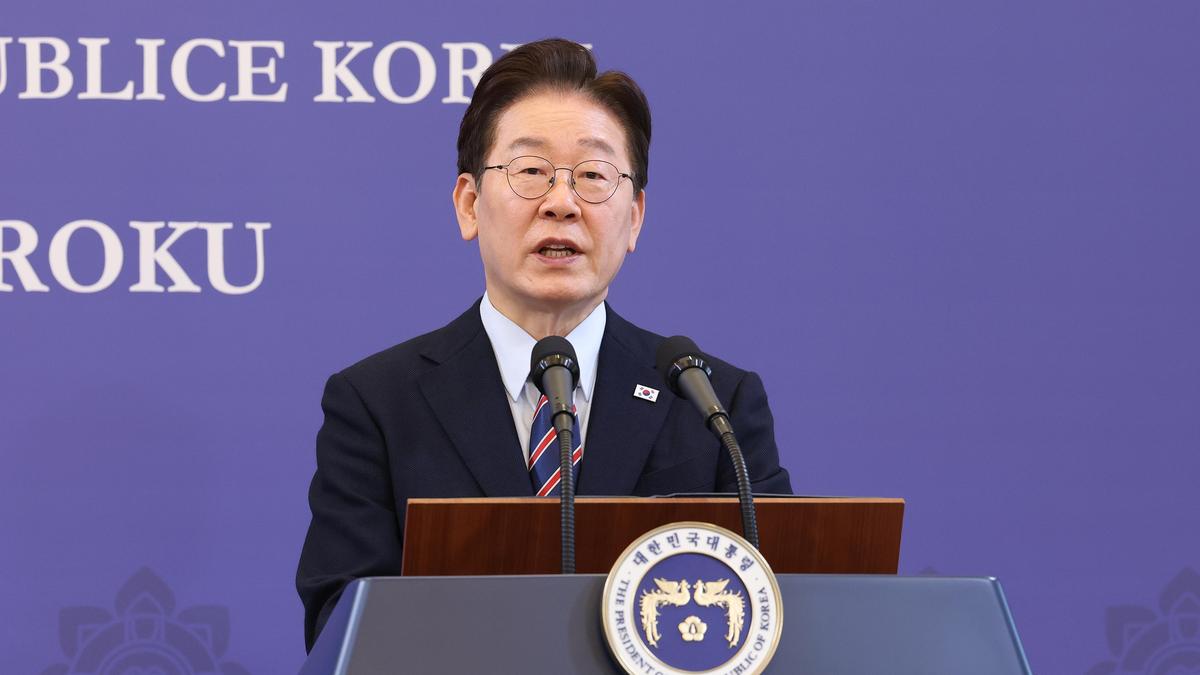
When Lee Jae-myung, leader of the Democratic Party of Korea, dismisses allegations that the Defense Minister leaked classified intelligence as "absurd," he isn't defending the truth. He is defending a carcass. He is clinging to an 18th-century concept of "state secrets" in an era where data is fluid, political loyalty is the new currency, and the South Korean defense apparatus is essentially a sieve.
The media coverage surrounding this scandal follows a predictable, lazy script: An official is accused of mishandling data, the opposition screams treason, the incumbent screams "fake news," and the public waits for a "thorough investigation" that will never arrive.
They are all asking the wrong questions. They are asking if it happened. They should be asking why we still pretend it can't happen.
In the high-stakes theater of Seoul’s defense politics, "classified" is a moving target. If you think the walls of the Ministry of National Defense are built of granite, you haven’t been paying attention to the digital and human rot that has defined the last decade of Korean procurement and intelligence.
The Myth of the Secure Vault
We love the idea of the "Deep State"—a locked room where silent professionals guard the blueprints of the nation. It’s a comforting lie.
In reality, intelligence in South Korea is a political football. The "leak" isn't an anomaly; it is the primary method of communication between rival factions. I have watched defense contractors and mid-level bureaucrats trade "sensitive" specifications for lunch money and career insurance. When a high-ranking official is accused of leaking, they aren't usually acting as a foreign spy. They are acting as a political operative.
The "absurdity" Lee refers to is actually a calculated defense of the status quo. By labeling the claim preposterous, he reinforces the delusion that the system is currently functional. It isn't.
Consider the mechanics. We aren't talking about a guy with a briefcase in a dark alley. We are talking about signals intelligence (SIGINT) and human intelligence (HUMINT) that exists on networks plagued by legacy vulnerabilities. South Korea's rush to digitize its military command and control has outpaced its ability to secure it. If the Minister "leaked" something, he likely didn't even have to try. The data is often one "Reply All" or one unsecured thumb drive away from the public domain.
Why "Absurd" is the Most Dangerous Word in Seoul
When an insider uses the word "absurd," they are signaling to the base. It’s a linguistic shield.
The logic goes like this: "The Minister is a patriot; a patriot would never leak; therefore, the accusation is absurd."
This is circular reasoning that ignores the history of the Republic of Korea’s security services. From the days of the KCIA to the modern NIS, the line between "national interest" and "party interest" has been blurred to the point of non-existence. To suggest that a Minister—a political appointee—is somehow immune to the pressures of political warfare is the real absurdity.
Let’s look at the "People Also Ask" garbage that litters the search results:
- Was classified info really leaked? Wrong question. The question is: What constitutes "classified" when every major player in the Blue House has a different agenda?
- Is the Defense Minister going to resign? Irrelevant. The seat will be filled by another appointee who inherits the same leaky infrastructure.
- How does this affect North Korean relations? It doesn't. Pyongyang already knows our secrets because our internal security is a joke.
The Professionalism Trap
The competitor's article focuses on the "professionalism" of the denial. It treats Lee’s statement as a factual rebuttal.
It isn't. It’s a PR pivot.
In the world of intelligence, professionalism is a mask. I’ve sat in rooms where "unshakeable" data was compromised because a senior officer wanted to look important at a dinner party. The "professionalism" of the South Korean military hierarchy is built on a rigid, Confucian structure that forbids juniors from questioning seniors.
This creates a vacuum of accountability. If a Minister leaks, who stops him? A colonel whose career depends on that Minister’s favor? Not a chance.
The counter-intuitive truth: The more "secure" a hierarchy claims to be, the more vulnerable it is to a single point of failure at the top.
Stop Protecting the Secret and Start Protecting the System
If you want to actually fix this, you don't do it with "denials" or "absurdity" labels. You do it by assuming the leak has already happened.
Modern cybersecurity—and by extension, modern statecraft—should operate on a "Zero Trust" model. We shouldn't care if the Minister is a saint or a sieve. The system should be designed so that no single individual can compromise the collective.
- Decentralize Intelligence: Stop keeping the "crown jewels" in a single digital or physical location.
- Audit Everything: Not just the files, but the metadata of every interaction an official has with sensitive material.
- End Political Appointments for Defense: As long as the Defense Minister is a political reward, the data they handle will be a political tool.
But the establishment won't do this. Why? Because a secure system is a system they can't control. They need the "leak" as a threat, a weapon, and a distraction.
The Cost of the Denial
By calling these claims "absurd," Lee Jae-myung is participating in a race to the bottom. He is prioritizing the optics of the Democratic Party over the systemic overhaul the MND actually needs.
Every time a major leak is dismissed as a political hit job, the actual security flaw remains unpatched. We are burning the house down to prove the smoke isn't there.
I’ve seen this play out in the private sector a thousand times. A CEO denies a data breach until the customers' credit cards are for sale on the dark web. Then, and only then, do they admit the "absurd" was actually "inevitable."
South Korea is currently in the "denial" phase. The dark web phase is already happening in the background, likely in the servers of the Reconnaissance General Bureau in North Korea or the MSS in China. They aren't laughing at the leaks; they're laughing at our shock when we find out about them.
The Inevitability of Compromise
Imagine a scenario where the "leak" wasn't a mistake or a crime, but a necessity of survival. In the factionalized world of Korean politics, information is the only thing that keeps you from being the next person in an interrogation room. If you aren't leaking, you aren't playing.
This isn't cynicism; it's a structural analysis of a broken incentive system. We reward the "loyal" with access, and then we are stunned when that access is used to maintain power.
The Minister might be innocent of this specific charge. It doesn't matter. The fact that the charge is even plausible enough to be called "absurd" proves the system is dead.
Stop looking for a hero or a villain in this story. The villain is the architecture of the secrecy itself. It’s a 20th-century bunker trying to survive in a 21st-century cloud.
Lee says the claim is "absurd." I say the claim is the most honest thing to come out of the Ministry in years. If you're still surprised by leaks in Seoul, you're the one being absurd.
The "absurdity" is believing that a political appointee in a factionalized government is a reliable guardian of anything other than their own career.
Burn the scripts. Stop believing the denials. The leak is the only thing that's real.