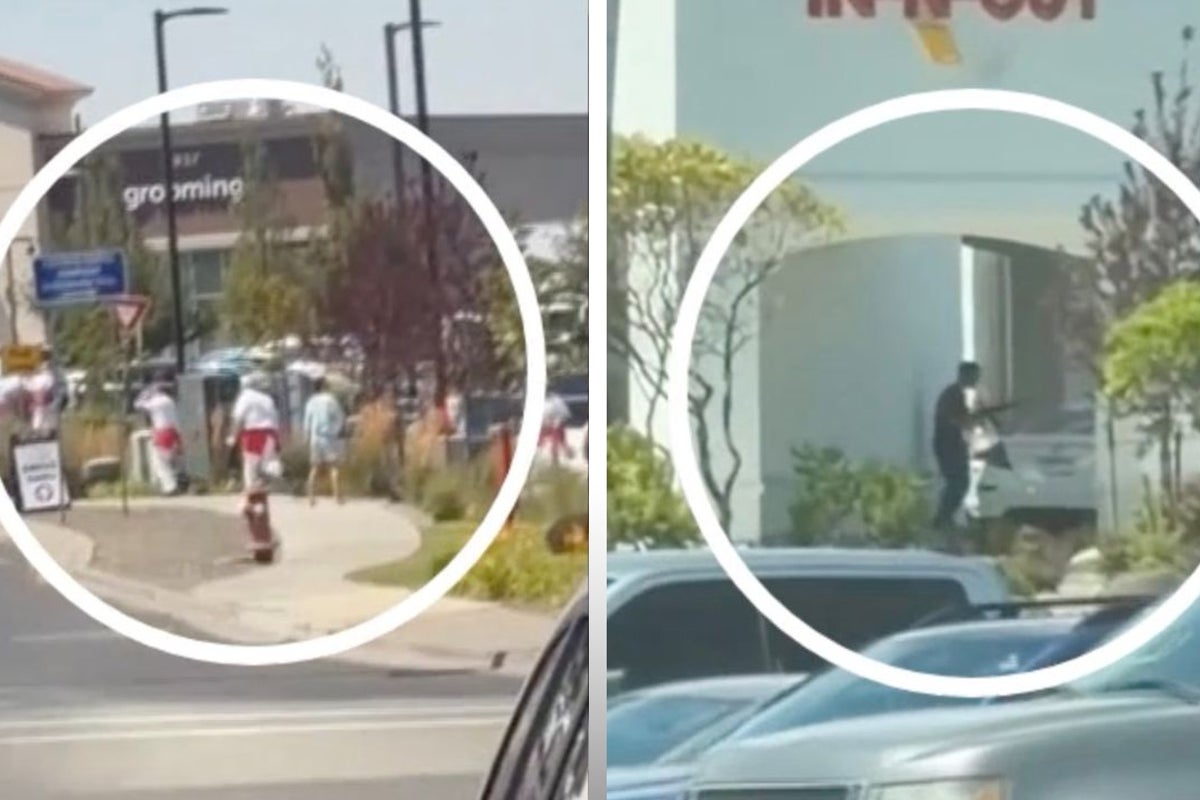
The tactical engagement at the Twin Falls In-N-Out location on August 1, 2026, serves as a high-fidelity case study in the efficacy of armed civilian intervention during an active shooter event. By analyzing the interaction between the assailant, Chad Williams, and responding parties—specifically an off-duty state trooper and an armed civilian—we can isolate the mechanical variables that curtailed the kinetic duration of this attack. This breakdown replaces narrative speculation with an operational assessment of incident mitigation.
The Mechanics of Incident Curtailment
Active shooter events follow a predictable temporal curve: the initiation of violence, the response delay, and the neutralisation or termination of the threat. In Twin Falls, the temporal gap between the onset of fire and the effective response was closed by immediate, localized intervention rather than external tactical deployment.
The incident was characterized by three primary tactical phases:
- Initial Contact: Williams initiated fire at approximately 2:30 p.m. using an AR-style rifle. At this stage, the assailant held the initiative, utilizing the element of surprise in a high-density commercial environment.
- Resource Escalation: Observed footage shows the assailant accessing his vehicle, a critical behavior associated with the transition to secondary weapon systems or increased ammunition load. The disruption of this specific phase is vital to incident suppression.
- Active Counter-Engagement: The presence of an off-duty law enforcement officer and a civilian, both armed, forced a change in the assailant’s tactical posture. By returning fire, these individuals transitioned the environment from a one-sided slaughter to a contested space.
The Cost of Intervention
Public discourse often ignores the asymmetric risk profile of civilian intervention. In Twin Falls, the civilian who confronted the assailant sustained critical injuries. This underscores a hard reality: the "good Samaritan" model of defense is not a risk-neutral endeavor. It is a high-stakes calculation where the responder accepts a non-zero probability of incapacitation to minimize the aggregate loss of life.
The efficacy of this intervention is measured by the diversion of the assailant’s focus. Evidence suggests that the incoming fire forced Williams to abandon his position near the restaurant. This forced migration of the threat vector shifted the operational burden away from the high-density interior of the restaurant, likely preventing higher casualty counts among patrons and staff.
Analyzing the Attacker Lifecycle
The assailant’s actions align with documented patterns of lone-actor violence. The use of an AR-style rifle in a high-traffic area represents a maximization of lethality potential. However, the subsequent self-inflicted gunshot wound—the final phase of this specific lifecycle—confirms that the objective was not long-term operational survival, but rather a final, singular act of destruction.
The "chaos" cited by responding officers is a byproduct of high-velocity, low-predictability events. In such environments, the decision-making loop is compressed. The responders acted during the "OODA loop" (Observe, Orient, Decide, Act) transition phase of the assailant. By disrupting the assailant’s ability to "Orient" and "Act" effectively, the responders introduced external pressure that overwhelmed the assailant’s internal control.
Strategic Implications for Security Protocols
The Twin Falls incident provides a clear data point regarding the necessity of immediate, local force application.
- Proximity is the primary variable. Response times of professional law enforcement, while standard, were secondary to the proximity of individuals already on-site.
- The pivot point of the car. The assailant’s retreat to his vehicle is a critical window. If a responder can engage during the retrieval of secondary equipment, they effectively strip the assailant of their logistical advantage.
- Contested space reduces lethality. In every instance where an active shooter is met with armed resistance, their focus shifts from target acquisition to self-preservation or exit.
The strategic takeaway for commercial property management and public safety is the limitation of passive defenses. When hard infrastructure is bypassed by an active shooter, the only remaining barrier is the presence of an immediate, capable counter-force. Future security architectural planning should prioritize the integration of these realities, focusing on clear evacuation routes and the training of on-site personnel in initial containment, rather than solely relying on police arrival windows.
Immediate focus must remain on the tactical support of those critically injured during the intervention, as the success of the defense is inextricably linked to the survival of the defenders. The primary strategic play is to institutionalize the training of personnel in active-shooter response drills that emphasize early identification and safe evacuation, while recognizing that the final line of defense remains the rapid, decisive application of force in the immediate vicinity of the threat.

.png?itok=1mb05mKJ)

