Drop a 500-won coin into those heavy, cold-metal viewing scopes bolted to the concrete deck at Dora Observatory, and the timer starts ticking. You have roughly two minutes. Most travelers press their eyes straight to the rubber eyepieces expecting dramatic military standoffs, rows of marching soldiers, or tanks lined up along the hills.
You won't see any of that.
Instead, through binoculars at the border with North Korea, you get a surreal, quiet glimpse into a carefully curated stage set. Across the 4-kilometer-wide Demilitarized Zone (DMZ) sits Kijong-dong, known outside the North as Propaganda Village, along with the massive 160-meter flagpole flying the North Korean flag and the distant industrial skyline of Kaesong. It's eerie, fascinating, and honestly a little disorienting once you realize half of what you're looking at was built specifically for your benefit.
If you're planning a trip to the Korean Peninsula's 38th parallel, knowing what you're actually looking at—and what's hidden behind the optics—changes the entire experience from a passive tourist stop into a sharp lesson in Cold War psychology.
The Reality Behind the Telescopes at the DMZ
The Korean Demilitarized Zone isn't a single fence line. It's a 250-kilometer-long buffer strip stretching across the peninsula, roughly 4 kilometers wide, established by the Korean Armistice Agreement in July 1953. Because civilians can't just wander across the Military Demarcation Line, South Korea built a series of elevated observation decks along the southern boundary.
Dora Observatory in Paju is the most famous because it sits less than an hour north of Seoul and looks directly into Kaesong. Other vantage points, like the Odusan Unification Tower where the Han and Imjin rivers meet, or the Goseong Unification Observatory on the far east coast, offer completely different angles.
Regardless of which deck you stand on, the setup is similar. High-powered coin-operated binoculars line the terraces, calibrated to zoom in on specific landmarks across the river or valley.
When I first looked through the lenses at Dora, the crispness of the optics caught me off guard. You can clearly make out individual window frames on buildings several kilometers away. Yet the longer you stare, the stranger the picture becomes. There's no traffic. Nobody is walking down the paved streets. Smoke doesn't rise from the chimneys.
Kijong-dong and the Illusion of Prosperity
The centerpiece of almost every binocular view from Paju is Kijong-dong. Built in the 1950s shortly after the armistice, Pyongyang claimed the settlement was a thriving collective farm housing 200 families, complete with a school, hospital, and childcare facilities. The goal was obvious: convince South Korean soldiers and citizens watching from the south that life under Northern rule was prosperous and modern.
Look closely through the high-magnification lenses, though, and the facade falls apart.
Those bright blue roofs and neat concrete apartment blocks are largely empty shells. Western observers and South Korean military intelligence noted decades ago that the buildings lack interior rooms and glass windowpanes. Lights inside the structures flick on and off at the exact same scheduled times every evening, controlled by central timers rather than families going to bed. The only people regularly spotted on the streets are maintenance crews sweeping the empty sidewalks to keep the illusion tidy.
For decades, Kijong-dong also housed massive banks of loudspeakers that blasted ideological broadcasts, opera music, and anti-Western speeches south across the border for up to 20 hours a day. South Korea eventually answered with its own wall of speakers blasting K-pop, weather forecasts, and world news, kicking off an acoustic arms race that has been turned on and off repeatedly depending on how tense relations get between Seoul and Pyongyang.
The Flagpole War of the 1980s
Right next to Kijong-dong stands one of the most ridiculous monuments of Cold War pettiness you'll ever see through a pair of binoculars.
In the 1980s, the South Korean government erected a 98.4-meter flagpole in Daeseong-dong—the only civilian village inside the southern half of the DMZ—flying a massive South Korean Taegeukgi flag. North Korea responded almost immediately by building a 160-meter steel tower in Kijong-dong, hoisting a North Korean flag weighing roughly 270 kilograms when dry.
At the time, it was the tallest flagpole in the world. Watching that gigantic banner ripple slowly in the wind through a 20x lens gives you an immediate sense of scale. The flag itself is nearly 30 meters long, so heavy that in heavy rain it reportedly has to be lowered so it doesn't tear the rigging apart. It serves zero tactical military purpose. Yet it dominates the horizon, a silent reminder that psychological signaling matters just as much as artillery along this border.
Where You Can Actually Use Binoculars Along the Border
Not every border tour takes you to the same viewpoint, and the rules around optics vary drastically depending on where you stand. Many first-time visitors book a generic DMZ bus tour without checking which observatory is on the itinerary, only to end up staring at river mudflats instead of Kaesong.
Dora Observatory in Paju
Located inside the Civilian Control Zone near Dorasan Station, Dora Observatory is the gold standard for border viewing. A newer observatory building opened a few hundred meters behind the original deck in 2018, featuring floor-to-ceiling glass walls, an auditorium, and an outdoor terrace lined with powerful mounted binoculars.
From this deck, your field of view covers three major zones:
- Kijong-dong (Propaganda Village) sits front and center in the middle distance.
- Daeseong-dong (Freedom Village) lies closer on the South Korean side, identifiable by its slightly smaller flagpole and actual working farms tended by residents who pay no taxes and are exempt from South Korean military service.
- The Kaesong Industrial Complex and Kaesong City stretch out further to the northwest. On clear autumn days, you can see the boxy white factories of the shuttered joint-Korean industrial park, the towering bronze statue of Kim Il Sung on Janamsan Hill in central Kaesong, and the jagged peaks of Mount Songak behind the city.
Odusan Unification Tower
If Dora feels too industrial, Odusan sits at the confluence of the Han and Imjin rivers in Paju, just two kilometers across the water from North Korea's Hwanghae Province. Because the rivers form a natural water barrier here, there are no minefields or layers of razor wire blocking the foreground.
Through the binoculars at Odusan, you aren't looking at staged propaganda towns. You're looking at real rural North Korean villages, terraced agricultural fields, and dirt roads. Visitors frequently spot farmers working with oxen, cyclists riding along the riverbanks, and military guard posts tucked into the tree line. It feels much quieter and far more human than the theatrical setup at Dora.
Goseong Unification Observatory
Way over on the eastern coast in Gangwon Province, the Goseong Unification Observatory offers dramatic mountain-and-sea scenery that most Seoul-based tourists completely miss. Looking north through the viewing scopes here, you see the rugged granite peaks of Mount Kumgang (Diamond Mountain) and the coastline stretching toward Wonsan.
Because the eastern end of the DMZ cuts through steep mountain terrain, the binoculars here highlight just how isolated the border communities are. You can trace the coastal railway tracks that abruptly dead-end at the border fence and spot North Korean patrol boats cruising offshore.
Can You Bring Your Own Binoculars or Zoom Lenses?
Yes, you can—and honestly, you should, provided you follow the strict photography rules enforced by the South Korean military and the United Nations Command (UNC).
Relying purely on the coin-operated deck binoculars has two major flaws. First, tour buses unload 40 people at a time onto the terrace, creating lines behind every scope. Second, those two-minute timers cut off right when you finally locate a landmark and get the focus dialed in.
Bringing a compact pair of personal binoculars (8x42 or 10x42 magnification works best) lets you scan the horizon at your own pace without fighting crowds or fumbling for 500-won coins. Keep your expectations realistic regarding magnification, though. Anything above 10x or 12x becomes almost impossible to hold steady without a tripod, and tripods are often restricted or impractical on crowded decks.
Rules That Will Get Your Camera Confiscated
Before you pull out a pair of binoculars or a massive DSLR telephoto lens, pay close attention to the painted yellow or red lines on the floor of the observatory deck.
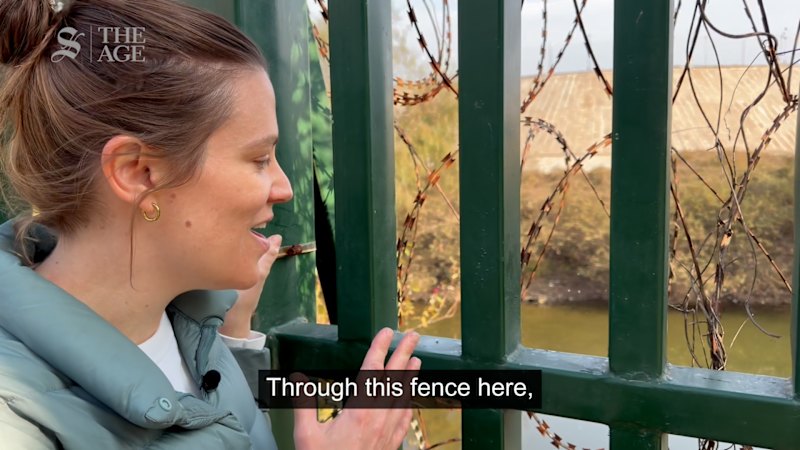
South Korean military police strictly regulate where you can take photos. At Dora Observatory, photography is generally forbidden inside the main briefing room and behind a marked line on the outdoor terrace. You have to step forward past the boundary line to shoot across the border, and even then, guards constantly patrol the deck watching what you point your lens at.
Never photograph South Korean soldiers, military vehicles, checkpoints, radar installations, or the immediate southern fence line. If a guard sees you aiming a telephoto lens at a South Korean guard post instead of North Korea, they won't just ask you to delete the file—they'll physically inspect your camera roll and delete the shots themselves. Keep your optics aimed strictly northward across the river or valley, and follow every instruction from your tour guide without arguing.
Why Weather and Timing Make or Break the View
You can have the best optics on the planet, and it won't matter at all if you visit during Seoul's spring dust season or summer monsoon fog.
Atmospheric haze is the number one reason travelers leave the DMZ disappointed. Between March and May, yellow dust blowing in from the Gobi Desert combined with regional air pollution frequently turns the valley beyond the Imjin River into a thick gray wall. Through binoculars on a hazy spring morning, Kijong-dong disappears completely, leaving you staring at blurry silhouettes of nearby barbed wire.
Summer brings lush green hills, which look great in photos, except high humidity creates heat shimmer and morning river fog that ruins high-magnification viewing.
October and November are hands-down the best months to visit. Crisp Siberian air clears out the humidity and particulate matter, giving you razor-sharp visibility stretching 15 to 20 kilometers into North Korea. Early morning tours—ideally arriving at the observatory between 9:30 AM and 11:00 AM—also beat the afternoon glare when the sun drops toward the west and shines directly into the lenses.
What No One Tells You About Watching the Border
Standing on a concrete balcony peering through binoculars at another country feels strangely voyeuristic at first. You're standing in one of the wealthiest, most hyper-connected democracies on Earth, holding a smartphone with blazing-fast 5G service in one hand while squinting through glass at a nation frozen in the mid-twentieth century.
What surprises most people isn't the tension. It's the silence and the wildlife.
Because human beings haven't stepped foot inside the 4-kilometer buffer zone since 1953, the DMZ has accidentally become one of the richest accidental wildlife sanctuaries in Asia. While scanning the fields below Kijong-dong through binoculars, you're far more likely to spot endangered red-crowned cranes, white-naped cranes, water deer, or wild boars wandering peacefully between landmine warning signs than you are to see a soldier holding a rifle. Nature completely ignored the armistice lines drawn by generals seventy years ago.
How to Prepare Before You Go
If you want to actually see something worthwhile through the binoculars rather than staring at fog and metal fences, handle these details before booking your trip:
- Check the air quality and visibility forecast the night before. Use apps like AirVisual or Korea's AirKorea service. If fine dust (PM2.5) levels are high or visibility drops below 8 kilometers, reschedule your tour if your itinerary allows it.
- Pack your own 8x42 or 10x42 binoculars and carry cash. Even if you bring personal optics, keep a few 500-won coins in your pocket so you can test the heavy-duty mounted telescopes on the deck, which pack much stronger magnification than handheld glasses.
- Choose your observatory based on what you want to see. Book a Paju DMZ tour that explicitly includes Dora Observatory if you want to see Propaganda Village, the giant flagpole, and Kaesong. Head to Odusan Unification Tower (which you can reach independently via public transit and taxi without a guided tour) if you want an unhurried look at everyday rural life across the river.
- Bring your physical passport. You won't even make it past the military checkpoint onto the bridge crossing the Imjin River without an original passport—photocopies and phone photos get you turned around on the spot.