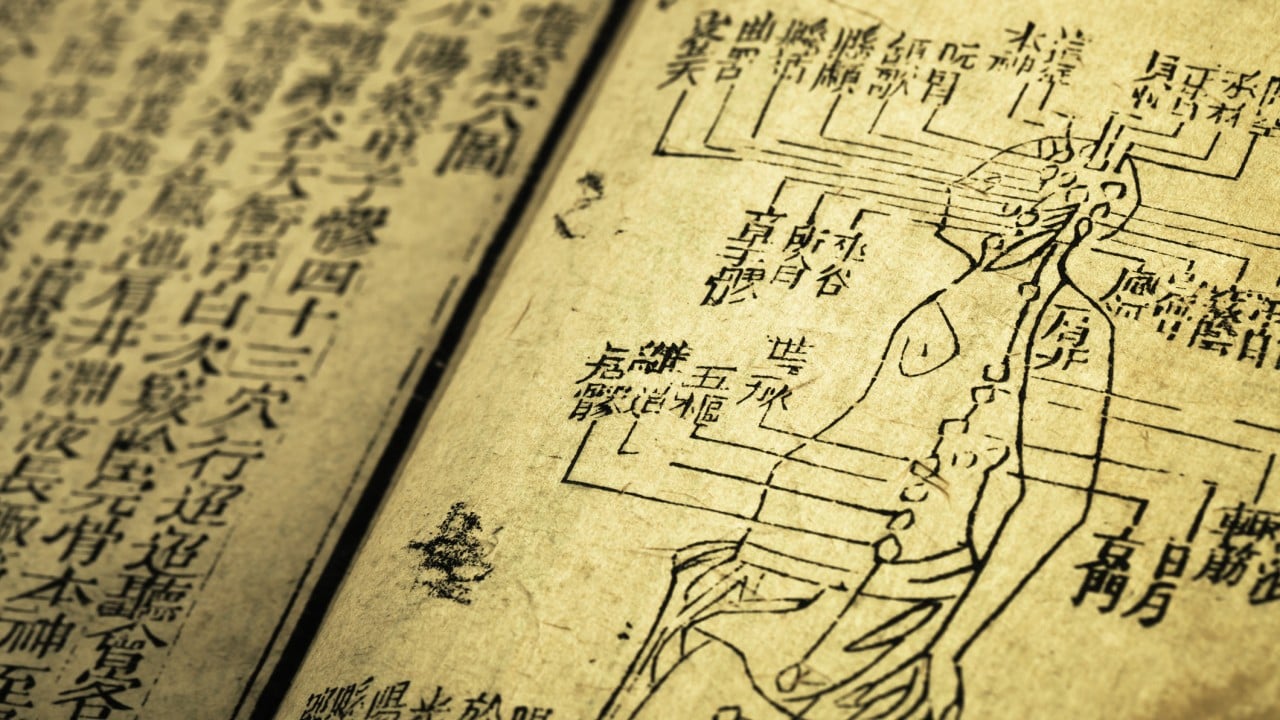
Everyone is celebrating the digital rescue of dusty scrolls. The mainstream narrative treats algorithms as digital saviors dusting off centuries-old Tang poetry and giving Ming dynasty fiction a second life. Tech evangelists cheer as machine learning models parse obscure characters, fill in missing manuscript fragments, and generate synthetic stylistic clones of Li Bai or Cao Xueqin.
It sounds noble. It makes for great press releases. And it completely misses the point of why these texts survived in the first place.
I have spent years watching cultural preservation budgets get funneled into automated processing pipelines, treating literature like a data cleanup project. Companies blow millions training language models on historical corpora, assuming that high throughput equals high culture. They treat ancient Chinese texts as static datasets waiting for optimization, stripping away the very grit, ambiguity, and human error that made them endure.
Stop treating centuries of philosophy, grief, and political dissent like a lost Excel spreadsheet.
The Fallacy of the Complete Text
The primary engine driving this tech gold rush is the obsession with completeness. If a manuscript is torn, worm-eaten, or weathered by time, the knee-jerk instinct of modern engineering is to patch the hole.
Neural networks are now deployed to predict missing characters based on probabilistic distribution. If a line in a Dunhuang manuscript is illegible, the algorithm guesses the most statistically likely verb based on surrounding context.
This is not preservation. It is vandalism wrapped in math.
Ancient Chinese literature is defined precisely by its gaps. The aesthetic of liubai, or leaving blank space, is central to classical poetry and painting. Furthermore, historical fragmentation—the missing pages, the censored paragraphs, the accidental smears left by a Song dynasty scholar—is historical evidence. When you feed a degraded text into a generative model and demand a clean, readable output, you erase the struggle of transmission. You replace historical reality with a machine-generated hallucination that mimics historical style.
I spoke with paleographers who quietly admit that automated reconstruction creates a dangerous feedback loop. Once an algorithm fills a blank, subsequent researchers cite the reconstructed text as authoritative. We are actively polluting the historical record with high-confidence guesses generated by graphics cards that have never felt the weight of a brush or the terror of dynastic collapse.
The Algorithm Cannot Taste the Wine
Another favorite talking point of the techno-optimists is stylistic replication. We are told that neural networks can now write poetry in the strict tonal patterns of regulated verse, matching the meter of Du Fu with terrifying speed.
Let us be brutally honest about what is happening here.
Regulated verse requires strict adherence to tonal parallelisms and rhyme schemes. It is a technical constraint. But treating classical Chinese poetry as a math puzzle with rules is like reducing a gourmet meal to its caloric breakdown. The rules of regulated verse were never the point; they were the friction against which human emotion pushed.
When Du Fu wrote about watching his capital burn during the An Lushan Rebellion, his word choices were heavy with physical displacement, hunger, and survivor guilt. A language model trained on millions of classical lines does not know what hunger feels like. It does not understand the existential dread of imperial exile. It recognizes transition probabilities between tokens.
When you read a machine-generated poem in the classical style, you are looking at a taxidermied animal. It has the right shape, the right fur, and the right number of legs. But there is no pulse. By flooding the public sphere with synthetic classical verse, we cheapen the real artifacts. We train audiences to value formal compliance over genuine human resonance.
The Bureaucratization of Heritage
The commercial push behind digitizing ancient texts relies on corporate narratives about accessibility. The claim is that putting these texts into vector databases democratizes access, allowing anyone to query the philosophy of Zhuangzi or the military strategy of Sun Tzu instantly.
Access is good. Speed is convenient. But friction matters.
Classical Chinese is not designed for fast consumption. It is dense, elliptical, and intentionally ambiguous. A single character can carry twenty distinct meanings depending on the dynasty, the regional dialect, and the philosophical school of the commentator. When you wire an AI assistant to translate and summarize these texts into smooth, modern vernacular in two seconds, you strip away the interpretive labor that forces a reader to think.
True engagement with ancient literature requires cognitive friction. It demands that you sit with a dictionary, trace the radical of a character, and realize that a sentence written a thousand years ago has no clean English equivalent. When technology flattens that difficulty into a neat bulleted summary, it trains a generation of lazy thinkers who mistake information retrieval for understanding.
Companies building these tools are not serving literature. They are building content pipelines. They need a steady stream of cultural prestige to justify massive investments in infrastructure, and ancient Chinese texts are convenient, copyright-free fodder to train the next generation of models.
How to Actually Engage with the Past
If you want to respect ancient Chinese literature, stop looking for ways to automate it. Do the opposite.
Slow down. Embrace the unreadable fragments. Accept that some questions about ancient texts do not have a probabilistic answer.
If you are building tools for cultural heritage, abandon the urge to complete, smooth out, and scale. Build systems that highlight ambiguity rather than erasing it. Create interfaces that show readers where manuscripts are damaged, where scholars disagree, and where the text resists interpretation.
Literature is not data. It is a dialogue across the abyss of time. If you let a machine do the talking, you are just talking to yourself.