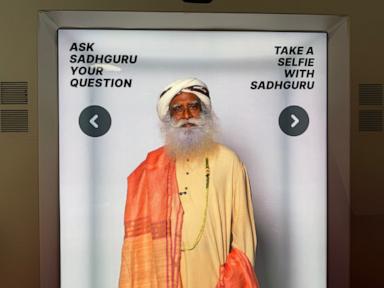
You are sitting in your kitchen at 3 AM. Your mind won't stop racing. You need advice, a perspective shift, or just someone to tell you things are going to be fine. You don't want to text a friend at this hour. You definitely don't want to wait three weeks for an appointment with a local counselor or spiritual director. So, you open a browser window and start typing your existential dread into a text box.
Welcome to the era of the algorithmic guru.
Across the internet, spiritual seekers are bypassing traditional priests, yogis, and meditation masters to chat with artificial intelligence. Software developers are training models on ancient texts, esoteric philosophies, and endless hours of transcribed self-help lectures. The result is a growing crop of digital entities ready to offer personalized astrology readings, instant tarot card interpretations, and tailored mindfulness exercises on demand.
It is easy to mock this. Skeptics point out that a server farm running Python scripts doesn't possess a soul, let alone enlightenment. Yet, dismissing this trend misses the entire point of why it is exploding right now. People aren't turning to machines because they think silicon chips possess divine wisdom. They are turning to chat applications because human institutions often fail to provide accessible, non-judgmental spaces for processing modern anxiety.
The Rise of the Algorithmic Confessional
Traditional spiritual guidance is expensive, geographically inconvenient, and socially intimidating. Booking a private session with an experienced mindfulness coach or a reputable intuitive reader can easily cost a hundred dollars or more per hour. Churches and temples often carry dogmatic baggage or scheduling constraints that alienate younger, independent seekers who prefer to curate their own belief systems.
AI fills this friction gap completely. It costs next to nothing. It operates twenty-four hours a day. Most importantly, it possesses zero human judgment.
When you type a vulnerable confession into a wellness bot, you don't have to worry about looking foolish, breaking social norms, or exhausting the emotional bandwidth of the listener. The code responds instantly, maintaining an unwavering, supportive tone regardless of how bizarre or repetitive your questions get. That infinite patience acts as a powerful hook.
What the Silicon Ascetics Get Right
Let's be clear about what these systems actually do. They are sophisticated pattern-matching engines. They analyze the cadence of your prompt, cross-reference it with massive training datasets containing everything from the Tao Te Ching to modern cognitive behavioral therapy frameworks, and synthesize a coherent, comforting reply.
They excel at reframing. If you tell an app that you feel stuck in your career and trapped by obligations, it won't just tell you to breathe. It might synthesize a response combining Stoic philosophy with basic career mapping steps, structured neatly into bullet points.
- Instant accessibility during acute moments of distress.
- Complete anonymity without social repercussions.
- Infinite customization for niche philosophical frameworks.
Human mentors get tired, busy, and annoyed. Software does not. For someone navigating a midnight panic spiral, that steady, unyielding availability feels remarkably like care, even if it is just math.
The Dangerous Illusion of Omniscience
The problem begins when users forget what they are actually talking to. Language models are master impersonators. They write with supreme confidence, using warm, authoritative language that mimics an enlightened sage even when they are completely hallucinating facts.
If you ask an AI for a personalized astrological chart calculation or a deep historical interpretation of a sacred text, it will give you an answer that sounds completely convincing. It might also be entirely wrong. Because these tools optimize for smooth, pleasing syntax rather than absolute truth, they can easily feed users comforting nonsense wrapped in profound-sounding prose.
Worse still is the risk of emotional dependency. A machine cannot offer genuine relational reciprocity. It can reflect your thoughts back to you in a polished format, but it cannot challenge you with the friction of real human community. Real spiritual growth often happens precisely because we rub shoulders with difficult people who force us to compromise, forgive, and evolve. You cannot learn patience or grace by interacting with a server that agrees with every premise you type.
How to Use Tech Without Losing Your Humanity
You don't need to throw your phone in a river to stay grounded. Technology can be a useful tool for personal reflection if you keep your eyes open. Treat these applications like a digital journal that talks back. Use them to brainstorm coping mechanisms, organize your thoughts before a difficult conversation, or explore philosophical concepts you want to research further.
Never outsource your moral agency to a database. If an app gives you advice that feels off, trust your gut over the algorithm. Use code to spark your curiosity, but take those insights back into the physical world. Talk to real people. Join a local club, volunteer, sit in a room with other imperfect humans who can actually look you in the eye.
The future of spirituality isn't about letting machines replace our gurus. It is about figuring out how to stay human in a world where machines are getting dangerously good at pretending to be us.