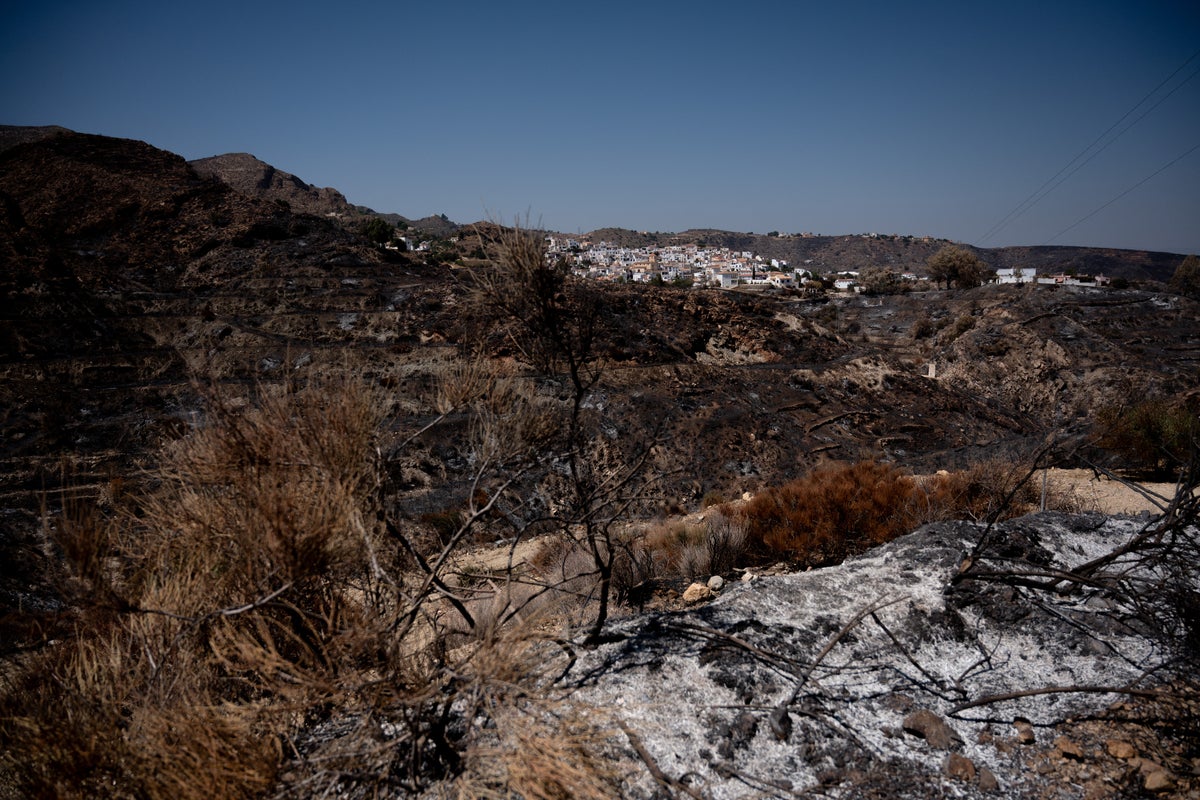
A fallen electrical cable on a parched roadside was all it took. Within hours, a monstrous wall of fire was roaring through the dry scrubland of Almeria, turning a picturesque expatriate haven into an absolute tinderbox.
When the smoke finally cleared over the southern Spanish province of Andalusia, a grim reality emerged. Thirteen people were dead. Twelve of them were foreign nationals who had moved to or were vacationing in the Mediterranean sun, including seven British citizens. For an alternative view, consider: this related article.
This is not just another tragic summer news cycle. It is a stark, terrifying wake-up call for anyone living in or traveling to Southern Europe. The traditional dream of a sun-drenched retirement or a carefree summer hike is colliding head-on with a climate that has turned increasingly hostile. If you travel to these regions, you need to understand exactly what went wrong in Almeria, why tourists and expats are uniquely vulnerable, and how to survive when the hills start to burn.
Anatomy of the Almeria Disaster
The fire broke out on a Thursday in the mountainous, rugged landscape of Almeria. This region of southeastern Spain is incredibly popular with northern European retirees and holidaymakers who flock to villages like Bedar and Los Gallardos. Further insight regarding this has been provided by National Geographic Travel.
Fueled by fierce winds and temperatures soaring past 40°C, the blaze consumed over 7,000 hectares (more than 17,000 acres) of land before firefighters could bring it under control.
The victims were caught in a brutal, fast-moving trap.
- Pete and Fran Gillam, a British couple who had made their home in the hard-hit village of Bedar, perished as the flames swept through. Their daughter, Danielle Gillam-Kirton, confirmed the devastating news to heartbroken friends online.
- A 93-year-old British woman suffered burns over 20% of her body and later died in the hospital.
- Another British man died in his vehicle in Los Gallardos. He was reportedly attempting to rescue his pets when the flames overwhelmed him.
The roads out of Bedar were quickly littered with charred, melted metal. Many of the victims died in their cars while trying to flee. Survivors like 70-year-old Malcolm Timbrell described a chaotic, apocalyptic scene. Timbrell watched four out of six cars in his immediate vicinity instantly combust. He survived by taking refuge in one of the last remaining vehicles with a cat.
Amid the horror, there was a solitary miracle. A British couple hiking in the area was found alive but semi-conscious in a ravine. They had suffered severe burns to 40% of their bodies. They only survived because a civil guard sergeant, Pedro Barre, followed a gut feeling to double-check an area his team had already searched, hearing their faint cries just as night fell.
Why Expats and Tourists are Targets for Wildfires
It is easy to look at these tragedies and assume they are just bad luck. But there is a pattern here. Tourists and expats are statistically much more likely to end up trapped in Mediterranean wildfires than locals.
It is not because they lack intelligence. It is because they lack context.
The Geography of Isolation
Expats love the rustic charm of rural Spanish villages. They buy beautiful villas tucked away in the pine-scented hills, surrounded by flammable scrub. This is what fire fighters call the "wildland-urban interface." These properties often have only one narrow, winding access road. When a fire cuts off that road, there is no escape route.
The Language and Communication Barrier
When a fire breaks out, local authorities broadcast urgent warnings on regional radio, television, and local social media channels. If you do not speak Spanish, you will miss the early warnings. By the time you notice the smoke or smell the ash, the fire may already be at your doorstep.
Underestimating the Speed of Fire
If you grew up in a damp climate like the UK, you simply have no concept of how fast dry Mediterranean vegetation burns. Pine trees and eucalyptus are full of volatile oils. In a strong wind, a wildfire can easily outrun a car, let alone a human on foot.
Crucial Steps to Survive a Wildfire Abroad
If you are planning a trip to Spain, Greece, Italy, or Portugal this summer, you cannot rely on luck. You must take active control of your safety.
Before You Travel
- Download local emergency apps. In Spain, download the My112 app. It sends your exact GPS coordinates to emergency services when you call and can broadcast localized emergency alerts in multiple languages.
- Learn the terminology. Know what Incendio Forestal (wildfire) means and pay attention to daily fire risk ratings (Riesgo de Incendio), which are posted online by local meteorology agencies like AEMET in Spain.
- Check the exit routes. Look at your accommodation on a satellite map. If there is only one road in and out, have an immediate plan of what you will do if that road is blocked.
If a Fire Starts Near You
- Evacuate early. Do not wait for an official knock on the door. If you see thick smoke plume up in your direction, pack your passport, water, and immediate essentials, and leave.
- Never try to save property or pets at the expense of time. Minutes matter. The tragic loss of life in Almeria shows how quickly cars can be overtaken on the road.
- Avoid ravines and steep slopes. Fire travels uphill incredibly fast because the rising heat pre-heats the vegetation above it. If you are caught on foot, try to move downhill or toward cleared, barren areas like plowed fields or wide paved roads.
- Stay in your vehicle only as a last resort. If you are trapped on a road and cannot drive away, park your car away from dense vegetation, close all windows and vents, turn on the headlights, and lie on the floor covered in a woolen blanket or heavy clothing.
The tragic events in Almeria prove that Mediterranean summers are no longer just about relaxation. They require a baseline of survival awareness. Enjoy the Spanish sun, but respect the landscape, keep your wits about you, and always know your exit route.