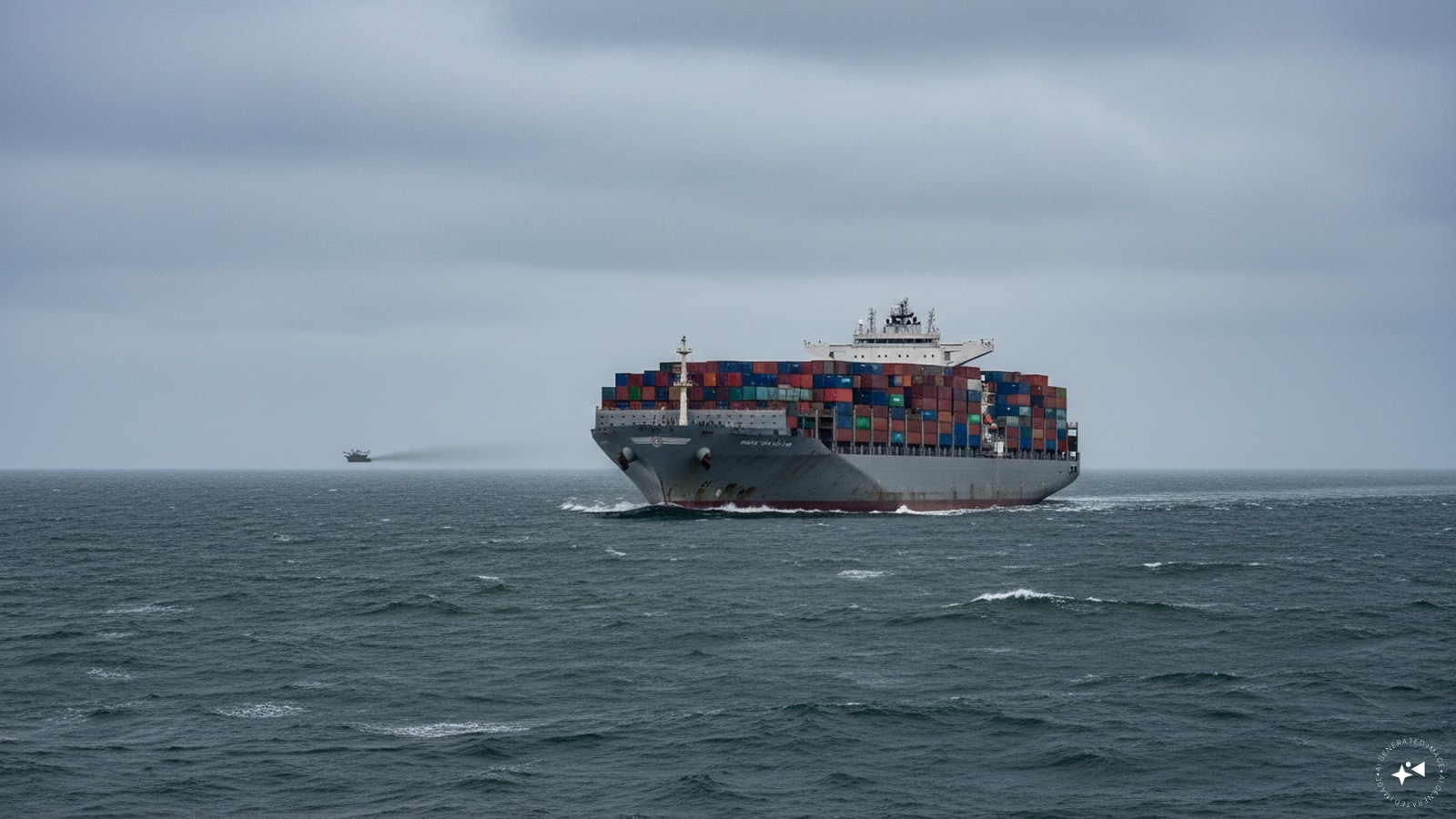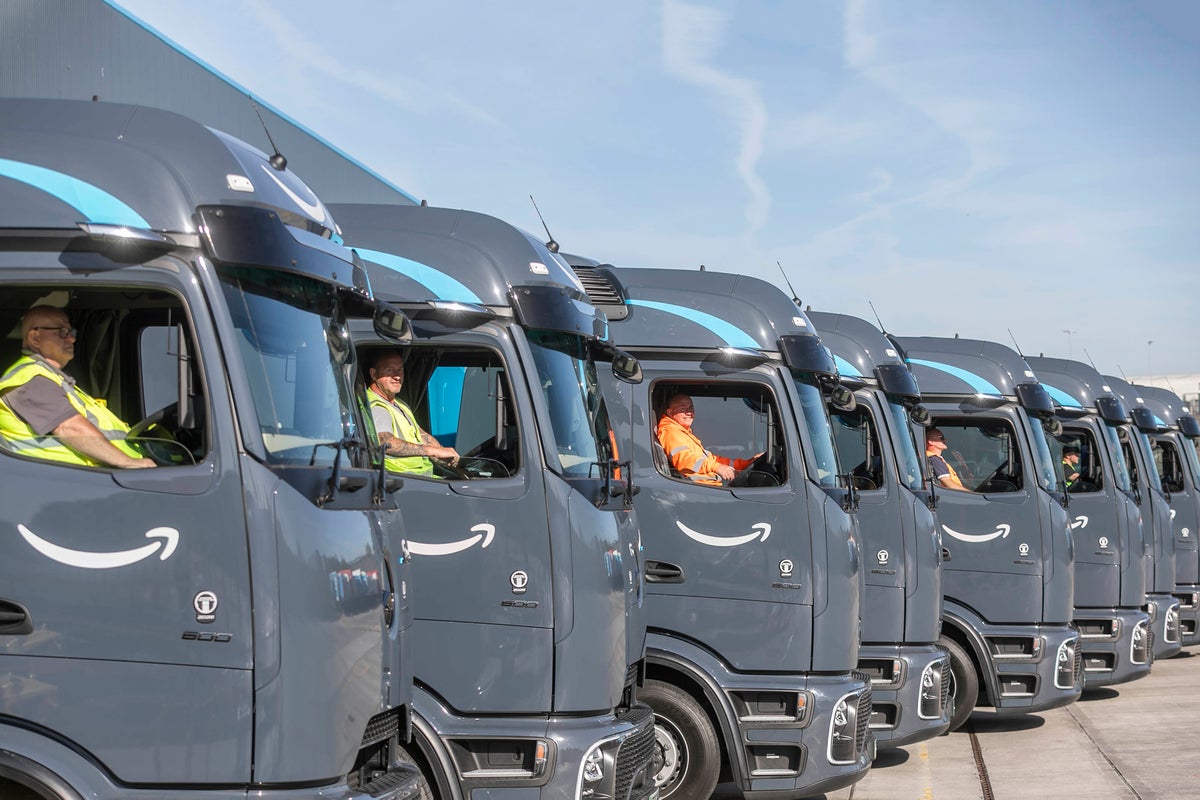
Amazon has ceased being merely the largest digital storefront on earth. The enterprise is now a weaponized commercial carrier, actively utilizing its network to strip away the core business of United Parcel Service and FedEx Corporation. Newly compiled industry data reveals that Amazon Logistics officially surpassed the United States Postal Service as the nation’s largest domestic parcel carrier by volume, delivering a staggering 6.7 billion packages in a single year. While corporate insiders at legacy shipping firms previously dismissed Amazon’s logistics arm as an internal utility built solely to move its own e-commerce orders, that comforting fiction has died. Amazon is explicitly bidding on contracts for businesses that do not even sell on its retail platform, offering rates up to 30% below traditional alternatives.
This represents a permanent dislocation of the American shipping industry. For decades, FedEx and UPS dictated terms to American retail through complex surcharge structures, annual general rate increases, and residential delivery penalties. Amazon is systematically dismantling that pricing power. By treating package delivery as a high-volume utility rather than a premium, margin-heavy service, the company is forcing its competitors into an uncomfortable strategic corner. The legacy carriers are responding by walking away from low-margin home deliveries to protect their margins, but this retreat may ultimately isolate them in a shrinking corner of the market. Read more on a related topic: this related article.
The Illusion of the High Value Pivot
When confronted with the reality of Amazon’s volume dominance, executives at Memphis and Atlanta point directly to their balance sheets. UPS still commands the highest revenue in the domestic parcel market, pulling in more than $58 billion annually, with FedEx closely following. Amazon Logistics, by contrast, sits at a lower revenue tier despite moving significantly more boxes. The official narrative from the incumbent carriers frames this as a deliberate choice. They claim they are intentionally letting go of cheap, residential e-commerce deliveries to focus on high-yield business-to-business shipping, healthcare logistics, and premium enterprise accounts.
This narrative is dangerously flawed. More analysis by MarketWatch highlights related views on the subject.
The strategy assumes that the market for business-to-business deliveries is large enough, and durable enough, to sustain two legacy corporate giants. Historical data suggests otherwise. Back in 1985, business-to-business shipments comprised roughly 90% of the entire domestic parcel market. Today, that dynamic has completely inverted. Business-to-consumer residential shipping now commands 75% of the total parcel delivery market, leaving corporate commercial shipping with a meager 25% slice. By surrendering residential deliveries to Amazon, the traditional carriers are fighting over an absolute minority of the total volume available.
FedEx has attempted to straddle the line by seeking residential parcels that weigh more than 50 pounds or travel long distances, hoping to find yield in specialized heavy shipping. The operational reality makes this a narrow niche. Thorough analysis of billions of domestic shipments indicates that less than 5% of all residential packages weigh over 50 pounds. Furthermore, fewer than half of those packages travel the long-distance routes where FedEx can command its highest profit margins. The pool of profitable, complex deliveries that Amazon cannot or will not touch is shrinking every quarter.
The Surcharge Weapon and Free Distribution
The core mechanism of Amazon's offensive is a program known simply as Amazon Shipping. Initially rolled out as a pilot for businesses utilizing Fulfillment by Amazon, the service has evolved into an unbundled, standalone option open to any corporate shipper. It is designed specifically to exploit the structural vulnerabilities of legacy courier networks.
Traditional carriers rely heavily on a dense thicket of add-on fees to make residential delivery profitable. They charge extra for deliveries to private homes. They apply fuel surcharges that fluctuate wildly month by month. They impose peak-season penalties that punish mid-sized retailers during the crucial holiday shopping windows.
Amazon has chosen to eliminate these fees entirely for eligible corporate clients.
For a typical mid-market e-commerce company, these fee waivers alter the entire cost calculation of fulfillment. Logistics platforms processing high-volume residential shipments report that corporate clients are saving up to $6 per package by routing their eligible volume away from FedEx and UPS to Amazon’s network. In one notable instance, a large national retail client using FedEx managed to slash its annual distribution expenditures by more than 33% simply by shifting 90% of its regional volume into Amazon's pipeline. When price discrepancies reach that scale, corporate loyalty evaporates.
Amazon can afford to run this playbook because its infrastructure was built on a different financial architecture. Traditional carriers must make a profit on the transport of every individual box to satisfy Wall Street. Amazon treats its logistics network as a infrastructure layer designed to support an entire ecosystem of services, including cloud computing, digital media, and advertising. The shipping network does not need to maximize its own immediate margin; it needs to maximize the velocity of capital through the wider enterprise.
The Coming Fiscal Collapse of the Postal Service Alliance
The collateral damage of Amazon’s expansion extends far beyond private-sector corporations. The United States Postal Service is currently facing an existential operational crisis driven almost entirely by Amazon's decision to internalize its regional operations.
For more than a decade, the relationship between Amazon and the Postal Service was mutually beneficial. Amazon handled the long-haul transportation of packages across the country, flying them into major hub cities and trucking them to local post offices. The Postal Service then performed the final leg of the journey, dropping the packages in residential mailboxes on their existing daily routes. This last-mile arrangement saved Amazon the immense capital expenditure required to build a hyper-local delivery fleet in suburban and rural areas.
That era has ended.
Amazon is currently executing a plan to reduce the total number of packages it funnels through the Postal Service by at least two-thirds. The company has poured more than $4 billion into an aggressive expansion of its proprietary rural delivery network, setting up operations across thousands of rural communities that were previously the exclusive domain of mail carriers. As these internal systems come fully online, the volume redirected away from the Postal Service will remove an estimated 1.7 billion packages from its annual operations.
The financial implications for the public mail system are severe. The Postal Service has already issued quiet warnings to congressional committees, indicating that the loss of this high-volume commercial revenue will trigger an immediate cash squeeze. Without the processing fees paid by Amazon, the overhead costs of maintaining six-day-a-week delivery to every household in America become mathematically unsustainable.
Structural Asymmetry in the Fleet
To understand why the legacy giants cannot simply match Amazon's prices, one must examine the fundamental divergence in how their workforces and fleets are structured.
UPS operates a highly structured, unionized workforce. Its drivers are full-time corporate employees who earn top-tier industry wages, comprehensive healthcare coverage, and traditional pensions. This creates an exceptionally stable, highly professional service model, but it also locks in a high, rigid cost structure that cannot be easily reduced during economic downturns. When UPS experienced an 8.3% drop in package volume, its rigid labor costs forced management to eliminate roughly 48,000 corporate and administrative positions and shutter nearly a hundred fulfillment facilities to protect its profit margins.
FedEx relies on a fragmented, two-tiered operational model. Its Express division employs corporate drivers, while its Ground division relies on a network of hundreds of independent, third-party contractors who own their own trucks and manage their own local routes. While this shifts operational risk away from the corporate parent, it has led to chronic friction with contractors who complain that rising fuel costs and demanding corporate service standards make their business models unprofitable.
Amazon bypassed both models entirely.
The company utilizes the Delivery Service Partner network, an entirely distinct corporate structure. Under this system, individual entrepreneurs are set up as independent logistics businesses, managing fleets of blue vans leased directly from Amazon. These small businesses hire the actual drivers, handle the local payrolls, and absorb the insurance liabilities. If a local delivery company fails under the financial strain, Amazon simply terminates the agreement and replaces them with another hopeful entrepreneur from its waiting list.
By shielding itself from direct employment liabilities and union negotiations, Amazon has constructed a variable-cost delivery apparatus that can flex, expand, and contract with brutal efficiency. It is an asymmetric labor advantage that traditional corporate models cannot replicate without triggering massive labor strikes or legal challenges.
The Overnight Moat
Despite its volume dominance and pricing advantages, Amazon’s logistics apparatus still possesses one distinct, vulnerable gap. It does not yet feature a comprehensive, national overnight air express network capable of matching the premium business-to-business services offered by FedEx Express or UPS Worldport.
FedEx and UPS spent five decades building massive, centralized air hubs supported by hundreds of specialized cargo aircraft. These systems are designed to pick up a high-value medical device or critical legal contract in San Francisco at 8:00 PM and guarantee its delivery to an office in Manhattan by 8:00 AM the following morning. This requires a level of precise coordination, capital investment, and global aviation infrastructure that cannot be easily cloned through software or independent van drivers.
This overnight capability remains the final defensive moat for the incumbent carriers. High-margin sectors like healthcare logistics, pharmaceutical distribution, and industrial manufacturing still rely heavily on these guaranteed time-sensitive networks. They are willing to pay premium prices because the cost of delivery failure in those industries can be measured in human lives or millions of dollars in lost factory productivity.
Amazon’s current network is built around a regionalized model. It uses predictive algorithms to position inventory in localized fulfillment centers before a customer even places an order, minimizing the need for expensive air transport. This works perfectly for consumer electronics, apparel, and household goods. It does not work for an unbundled, random business-to-business shipment that must cross the continent in less than twelve hours.
The strategic survival of the legacy carriers depends entirely on their ability to defend this specific operational territory. If Amazon continues its trajectory, the next logical step for its capital deployment will be the construction or acquisition of a dedicated, national time-definite air express network to compete directly for those lucrative healthcare and enterprise accounts. Should that air infrastructure close the capability gap, the incumbent shipping giants will find themselves completely disintermediated, left holding the keys to an incredibly expensive network of planes and hubs with no volume left to fill them. Corporate shippers currently relying on traditional carriers must aggressively diversify their fulfillment options now, or prepare to operate in a market where a single online retailer controls the physical infrastructure of American commerce.