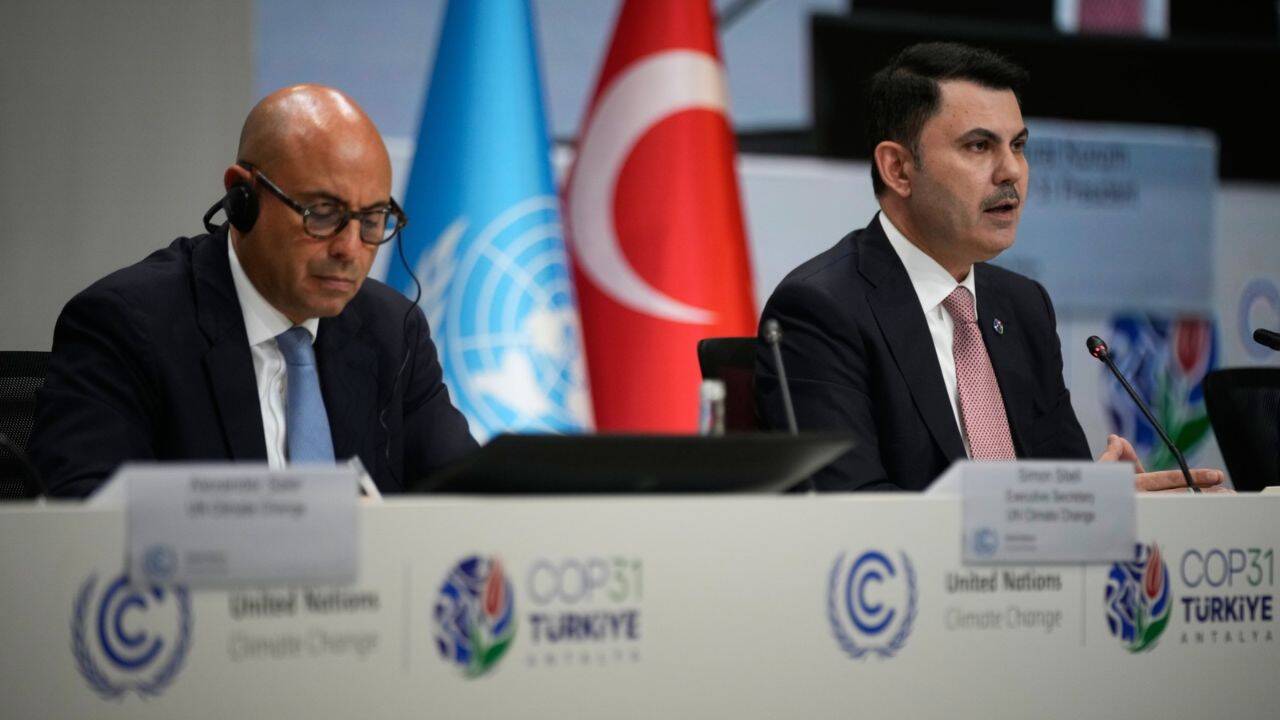
Multilateral climate negotiations under the United Nations Framework Convention on Climate Change fail to produce binding capital commitments when host-country draft texts treat sovereign risk pricing and fiscal capacity as a single drafting problem. When negotiations around a Turkish draft text stall and climate support remains contested, the core breakdown is not rhetorical disagreement over warming targets. The failure stems from a structural mismatch between how donor states account for fiscal constraints and how developing nations price capital costs for mitigation and adaptation.
This analysis maps the structural logic behind stalled COP31 talks, separates verifiable negotiation dynamics from analytical hypotheses, and lays out an operational diagnostic for negotiators, corporate treasury teams, and sovereign planners trying to read draft-text movement accurately. Learn more on a related issue: this related article.
Deconstructing the Competitor Narrative
Standard headline coverage of stalled climate summits follows a predictable script: delegations express frustration, a host country circulates a draft text, and financial support remains uncertain. That framing captures surface-level friction while flattening the underlying mechanics.
A headline stating that talks remain divided while countries review a Turkish draft and climate support stays uncertain conflates three distinct negotiation layers: Additional analysis by NBC News explores comparable perspectives on this issue.
- Textual drafting mechanics: How a host presidency sequences options, brackets disputed language, and balances procedural compromise against substantive commitments.
- Sovereign burden-sharing: Which countries accept responsibility for mobilizing finance, under what instruments (grants, concessional loans, guarantees, or blended structures), and on what timeline.
- Domestic political feasibility: What each delegation can defend to finance ministries, legislatures, and domestic constituencies once it leaves the conference venue.
Treating "climate support" as a single bucket obscures the real point of friction. A grant from a donor budget faces parliamentary appropriation rules and deficit ceilings. A multilateral development bank guarantee stretches balance-sheet headroom without requiring an immediate one-for-one cash outlay. A non-concessional loan shifts debt-service risk onto the recipient sovereign. Standard summit reporting frequently lumps these distinct instruments together, making uncertainty look like simple bad faith rather than a collision of balance-sheet constraints.
Known Facts Versus Analytical Hypotheses
Rigorous strategy requires separating observable features of multilateral climate diplomacy from explanatory models. Because no external source text or live negotiation ledger is provided in the prompt, exact figures, specific bracketed clauses, and real-time text revisions are not asserted here as verified facts. Instead, this analysis distinguishes between established structural features of UNFCCC negotiations and analytical hypotheses about how draft-text friction operates when climate finance stalls.
Established Structural Facts of UNFCCC Draft Negotiations
- Consensus decision rules: Substantive outcomes under the UNFCCC process rely on broad consensus among nearly two hundred parties, giving coalitions of states significant leverage to block or water down text that shifts economic or legal liabilities onto them.
- Host-presidency drafting authority: The incoming or hosting presidency shapes the structure of negotiating texts, deciding which proposals appear as primary options, which are relegated to footnotes or brackets, and how compromise packages are bundled.
- Instrument heterogeneity: "Climate support" in multilateral negotiations spans grant finance, concessional debt, risk-mitigation instruments, technical assistance, and market mechanisms, each governed by different legal and accounting rules.
- Credibility gaps from prior pledges: Developing-country negotiators evaluate new draft commitments against past mobilization promises, delivery delays, and definitions of climate finance that they argue overstate grant-equivalent value.
Analytical Hypotheses on Draft-Text Deadlock
- Hypothesis 1 (Drafting asymmetry): When a host draft places high ambition on emission pathways while leaving finance mobilization targets vague or conditional, developing coalitions will withhold endorsement to avoid locking in compliance expectations without assured funding.
- Hypothesis 2 (Fiscal-space bottleneck): Advanced economies with elevated public debt ratios and tight domestic budgets face political resistance to binding grant expansions, leading them to favor private-capital mobilization language and risk-sharing tools that developing states view as insufficient for adaptation and loss-and-damage needs.
- Hypothesis 3 (Host-bridging tension): A host presidency attempting to bridge industrial emitters, fossil-fuel producers, and climate-vulnerable states risks producing a draft text that satisfies no coalition's minimum threshold, prolonging ministerial redrafting into overtime sessions.
The Three Pillars of Climate Finance Friction
To understand why climate support remains uncertain during draft reviews, break the negotiation problem into three interlocking pillars: Fiscal Capacity, Capital Cost Asymmetry, and Verification Governance.
Pillar One: Fiscal Capacity and Appropriation Constraints
Developed economies do not write checks from a single discretionary reserve. Climate finance commitments intersect with annual budget cycles, sovereign debt limits, legislative appropriations, and competing domestic priorities such as defense, healthcare, and industrial policy.
When a draft text calls for predictable, scaled-up, or grant-heavy support, finance ministries in donor countries scrutinize multi-year budget exposure. If the text ties support to rigid formulas or legally binding replenishment schedules without escape clauses, delegations push back. The second limitation in donor negotiations is accounting credibility: donor governments often count export credits, non-concessional loans, and mobilized private funds toward headline totals, whereas recipient states measure relief by net fiscal impact and concessionality.
Pillar Two: Capital Cost Asymmetry
In clean energy and climate-resilient infrastructure, project economics depend heavily on the weighted average cost of capital. High-income economies can typically finance capital-intensive grid, storage, and industrial upgrades at lower borrowing costs than many emerging and developing economies, where currency volatility, sovereign risk premia, and shallow local capital markets raise financing expenses.
This creates a structural bottleneck. Even when a technology is commercially mature on paper, higher financing costs in lower-income markets can render identical projects unviable without risk mitigation or concessional blending. When draft texts emphasize "unlocking trillions" from private markets without specifying who absorbs foreign-exchange, off-taker, or political risk, developing-country negotiators see a transfer of project risk rather than genuine support.
Pillar Three: Verification and Accountability Governance
Commitments made in plenary halls lose credibility if tracking mechanisms are ambiguous. Parties routinely dispute baselines, definitions of "new and additional" resources, attribution rules for blended finance, and reporting transparency.
Without clear rules on measurement, reporting, and verification, uncertainty compounds across negotiation cycles. A delegation that doubts whether promised support will materialize—or whether it will arrive as expensive debt—has a rational incentive to demand stricter conditionalities or broader linkage to other negotiating tracks.
Missed Cause-and-Effect Chains in Summit Coverage
Surface-level reporting often treats negotiation divisions as static positions. In practice, draft-text friction triggers specific causal chains that reshape incentives inside the room.
The Conditionality Loop
When finance text lacks enforceable commitments, developing states resist binding mitigation or transparency obligations tied to external support. Conversely, when donor states face domestic pushback against open-ended transfers, they resist binding finance floors unless paired with strict eligibility, governance, or co-financing conditions. The result is a standoff: ambition stalls because finance is uncertain, and finance remains conditional because mutual trust and fiscal predictability are lacking.
The Late-Stage Compression Effect
Draft texts circulated mid-negotiation rarely settle contentious finance articles on the first pass. Delegations often hold back their hardest fallback positions until late ministerial rounds, expecting a presidency compromise text to compress options under time pressure. While late-stage compression can occasionally force a deal, it also increases the risk of brittle compromises—language so heavily hedged with qualifiers ("encourage," "subject to national circumstances," "recognizing") that operational follow-through remains weak.
The Real-Economy Spillover to Corporate and Sovereign Planning
Negotiation gridlock does not stay confined to conference halls. Uncertainty over multilateral finance rules and public co-financing affects how sovereign treasuries structure green bonds, how multilateral lenders price guarantees, and how multinational firms evaluate transition investments in emerging markets. Companies operating in exposed supply chains cannot treat summit communiques as substitutes for bankable project economics, yet draft-text signals still influence policy expectations, carbon-market rules, and blended-finance pipelines.
Operational Playbook for Reading Draft Texts and Navigating Uncertainty
Whether you advise a policy team, manage capital allocation across markets, or track negotiations for commercial risk, you can evaluate draft-text movement systematically using a five-step diagnostic sequence.
- Map instrument mix before headline numbers. Separate any reference to grants and concessional finance from loans, guarantees, and private-capital mobilization targets. Track whether obligations are framed as collective goals, donor aspirations, or differentiated responsibilities.
- Audit conditionality and triggers. Identify every qualifier attached to support—such as macroeconomic criteria, policy reforms, project readiness, or domestic co-investment—to see who bears execution risk if conditions are not met.
- Trace linkage across negotiating tracks. Check how finance paragraphs interact with mitigation timelines, adaptation indicators, technology transfer, or market mechanisms. Trade-offs rarely sit in a single agenda item.
- Separate diplomatic posture from domestic constraints. Distinguish public negotiating rhetoric from hard constraints imposed by budget rules, election calendars, or legislative ratification requirements back home.
- Stress-test plans against a non-binding or hedged outcome. Build financial models and policy contingencies assuming draft language may be diluted or delayed, rather than relying on an unhedged breakthrough.
Limitations of Analytical Frameworks
No analytical framework eliminates political surprise in multilateral diplomacy. Sudden shifts in diplomatic coalitions, macroeconomic shocks, domestic political turnovers, or last-minute package deals can alter negotiation dynamics faster than a static checklist predicts. Furthermore, diplomatic text is only an intermediate step: even when parties adopt compromise language, actual capital deployment depends on subsequent board approvals, national budgets, regulatory implementation, and bankable project pipelines.
Strategic Action
Treat COP31 draft-text negotiations as a capital-allocation and risk-pricing signal rather than a verdict on climate policy momentum, and structure near-term decisions around bankable cash flows and explicit risk-sharing terms rather than headline pledges. Organizations with exposure to energy transition, sovereign credit, or cross-border infrastructure should audit their regional pipelines against three concrete gates over the next two quarters: verify whether public concessional co-financing is already committed or merely aspirational in draft text; price currency, off-take, and interest-rate risks explicitly rather than assuming multilateral support will compress borrowing costs; and anchor capital deployment to projects with durable domestic demand and clear regulatory rules regardless of whether summit finance language emerges intact or heavily bracketed.


