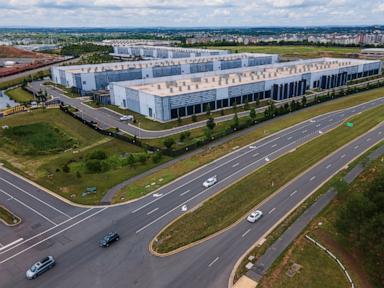
Executive offices nationwide face a sudden operational crisis as the physical footprint of artificial intelligence infrastructure collides with regional electrical grids and public opinion. What began half a decade ago as a bipartisan race to secure tax revenues and high-tech capital investment has mutated into a severe political liability. Hyperscale computing facilities, designed to operate continuously under massive electrical loads, now consume power and water resources at a scale that strains municipal utilities. Incumbents and challengers alike find their electoral margins dictated by how effectively they manage the localized fallout of this digital expansion.
The Three Structural Vectors of the Backlash
Political vulnerability surrounding digital infrastructure stems from three distinct friction points between state leadership and local constituents. Each vector operates independently, yet they converge to threaten incumbent political coalitions.
Resource Consumption and Grid Capacity
The primary stressor involves the absolute scale of energy demand. Modern artificial intelligence models require compute clusters that dwarf traditional commercial developments, often demanding hundreds of megawatts of continuous power.
- Regional transmission organizations face localized capacity shortfalls when hyperscalers connect to aging sub-transmission lines.
- Public utility commissions absorb pressure as retail electricity consumers realize that financing grid upgrades for tech firms risks inflating residential utility bills.
- Water extraction for evaporative cooling systems depletes municipal reserves, alarming agricultural and residential users alike.
Land Use and Spatial Friction
The physical footprint of server warehouses creates immediate friction in rural and suburban communities. Developers target expansive tracts of land for rapid construction due to proximity to fiber-optic backbones and transmission substations.
- Loss of prime agricultural acreage triggers fierce opposition from agrarian communities protective of rural zoning character.
- Noise pollution from banks of emergency diesel generators and high-capacity cooling fans degrades adjacent residential property values.
- Speculative land-banking locks up local parcels without guaranteeing proportional municipal tax yields or permanent employment generation.
The Fiscal Subsidy Paradox
State governments historically deployed aggressive incentive packages—such as multi-decade sales tax exemptions on server equipment—to win competitive location bids against rival jurisdictions. As fiscal costs mount, the structural return on investment breaks down.
- Capital-intensive facilities employ remarkably few permanent workers once construction concludes, invalidating early promises of sweeping job creation.
- Tax revenues foregone by the state shift the structural tax burden onto individual property owners and small businesses.
- Citizens perceive state-level tax abatements as unearned corporate handouts distributed to trillion-dollar enterprises at public expense.
The Cost Function of Gubernatorial Re-alignment
As voter sentiment shifts from celebration to skepticism, executive leadership models are undergoing rapid revisions. Governors across competitive electoral maps face an urgent need to re-price their political risk.
[Unchecked Tech Incentives]
       │
       ▼
[Local Resource Strain & Rate Hikes]
       │
       ▼
[Electoral Backlash & Bipartisan Friction]
       │
       ▼
[Executive Correction: Moratoriums & Mandates]
This structural shift manifests in varied policy interventions depending on state legislative dynamics. In key electoral battlegrounds, executives are halting automatic tax exemptions, imposing multi-year development moratoriums, and shifting the burden of energy procurement directly onto the developers.
The calculus for candidates requires balancing macroeconomic competitiveness against microeconomic local anger. When a state executive aggressively courts hyperscale infrastructure to capture the artificial intelligence hardware supply chain, they invite immediate retaliation from local zoning boards and grassroots coalitions. Conversely, enacting outright prohibitions risks ceding high-technology investments, regional supply chain dominance, and long-term computational capacity to neighboring jurisdictions.
The Operational Mechanics of Policy Reversal
Managing this friction requires moving away from blanket incentives or outright bans toward conditional operational mandates. State capitals are substituting arbitrary fast-track permitting with structured performance hurdles.
Developers must now internalize externalities that were previously offloaded onto the public grid. This includes mandatory direct investment in dedicated green energy generation, closed-loop water recycling infrastructure, and legally binding community benefit agreements.
Governors who successfully insulate their administrations from this backlash treat data centers not as passive economic development trophies, but as heavy industrial utilities requiring strict environmental and fiscal oversight. The political survival of executive leadership depends on enforcing these operational constraints before public utility rate shock destabilizes the broader electorate.
Pennsylvania Governor Josh Shapiro on data center permits and community standards
This video provides direct insight into how executive administrations are modifying infrastructure permitting standards to address community pushback.


