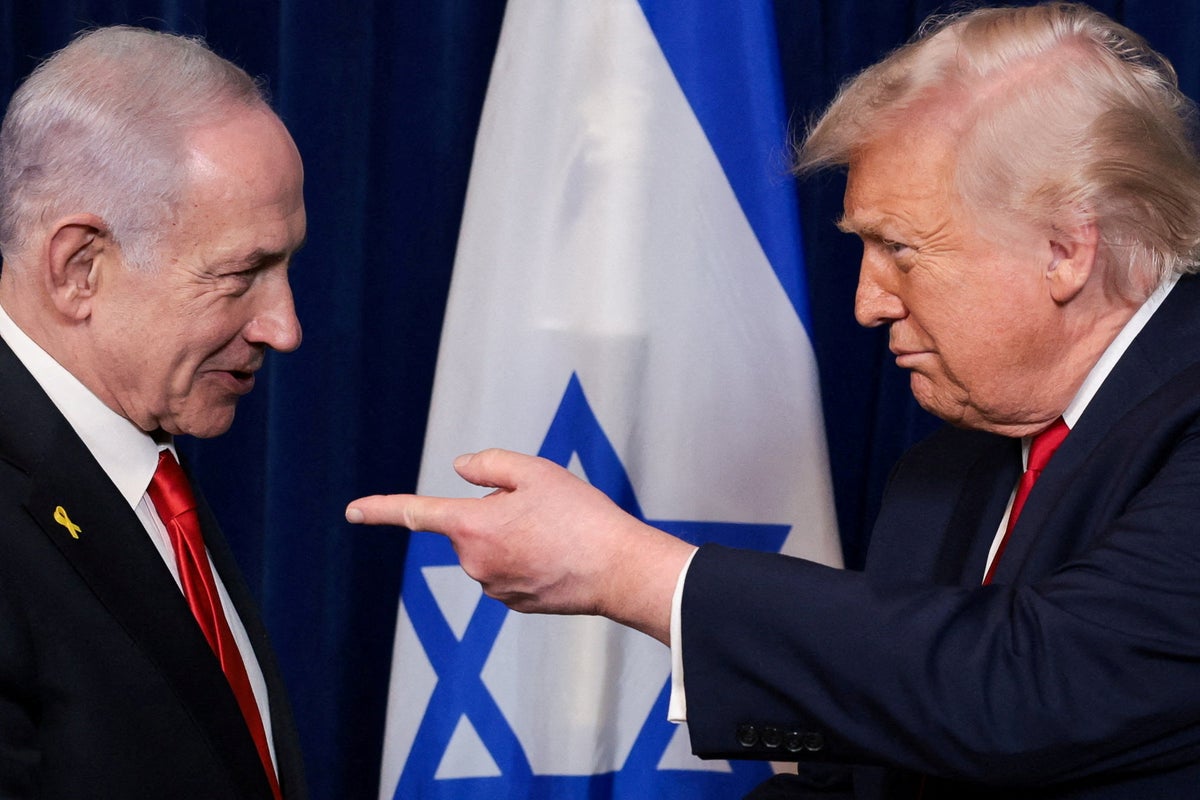
Diplomatic meetings between superpower executives and regional actors operating under acute existential strain follow a strict mechanical blueprint. When heads of state converge on the White House amid active multi-theater friction, observers frequently misinterpret these summits as either historic breakthroughs or empty theatrical gestures. Neither framework holds analytical weight. These engagements function as high-stakes calibration exercises designed to test friction coefficients, synchronize signaling loops, and establish hard operational boundaries under conditions of radical uncertainty.
To deconstruct the recent sequence involving executive leadership, Israeli statecraft, and Ukrainian defensive logistics, one must isolate the structural variables governing modern conflict management. The interaction is not defined by personality dynamics or symbolic handshakes, but by asymmetric resource dependencies, domestic political timelines, and the cost functions of protracted attrition.
The Triangulation Problem of Simultaneous Commitments
Managing two distinct, high-intensity geopolitical theaters simultaneously creates a zero-sum competition for finite administrative focus, legislative capital, and matériel reserves. The White House operates within a constrained resource envelope. When diplomatic bandwidth splits across the European security architecture and Middle Eastern escalation vectors, systemic inefficiencies multiply.
[White House Resource Pool]
       |---> [Ukraine Theater] (Attritional Defense & Industrial Replenishment)
       |---> [Iran/Middle East Theater] (Deterrence, Kinetic Interception, Regional Air Defense)
       |---> [Domestic Political Constraints] (Legislative Approval & Budgetary Cycles)
Ukraine requires deep-tier artillery, air defense interceptors, and predictable fiscal streams to sustain a defensive posture against massed industrial mobilization. Simultaneously, the Middle Eastern theater demands defensive positioning against ballistic missile vectors, drone networks, and proxy escalations emanating from Iranian command structures.
The primary structural limitation of this dual-front management is supply chain saturation. The defense industrial base of the Western alliance functions on long-lead procurement cycles. When inventory drawdowns accelerate to service two concurrent flashpoints, reserve thresholds approach critical depletion levels.
The Cost Function of Protracted Support
Public commentary routinely frames military and financial backing through absolute dollar values. This metric lacks analytical utility. The correct variable is the cost function of delay versus the cost function of preemption.
- Materiel Attrition Rate: The velocity at which specialized munitions are expended relative to replacement manufacturing velocity.
- Escalation Thresholds: The incremental increase in adversary risk tolerance triggered by sustained conventional support.
- Opportunity Cost of Capital: The reallocation of legislative energy away from domestic economic stabilization toward crisis management.
When leaders meet face-to-face in Washington, the underlying objective is not persuasion regarding the righteousness of a cause. It is the renegotiation of these cost-allocation models.
Strategic Divergence in Counter-Strategies
The strategic posture of Kyiv differs fundamentally from that of Jerusalem, creating distinct leverage points during simultaneous White House consultations.
Ukraine operates under a strategy of territorial reclamation and strategic endurance. The core constraint is symmetrical attrition against a larger demographic and industrial base. Without deep strike permissions and uninterrupted logistical lifelines, the defensive line risks progressive degradation. The diplomatic ask centers on removing self-imposed operational restrictions on weapon utilization and accelerating multi-year security guarantees.
Conversely, the Middle Eastern engagement model revolves around regional containment, qualitative military edge preservation, and the disruption of state-sponsored proxy networks. The operational parameters here involve immediate kinetic response capabilities and intelligence-sharing architecture designed to deter a multi-front regional conflagration.
+---------------------------+-----------------------------------+-----------------------------------+
| Metric                    | Ukraine Theater                   | Middle East Theater               |
+---------------------------+-----------------------------------+-----------------------------------+
| Primary Objective         | Territorial Integrity & Attrition | Regional Deterrence & Containment |
| Main Constraint           | Industrial Supply Depth           | Escalation Containment            |
| Primary Lever             | Deep Strike Permissions           | Kinetic Interception Integration  |
+---------------------------+-----------------------------------+-----------------------------------+
These divergent operating models mean that a unified communique or synchronized strategy is structurally impossible. The administration must juggle two mutually exclusive risk profiles: the risk of escalation through inaction in Eastern Europe versus the risk of escalation through over-commitment in the Middle East.
Information Asymmetry and Signaling Loops
A critical component of these summits involves the correction of information asymmetry between Washington and its allied capitals. Intelligence assessments regarding adversary fatigue, economic resilience, and domestic political stability frequently diverge based on collection methods and interpretive bias.
When allied leaders present their internal metrics directly to the executive branch, they bypass standard bureaucratic filtering. This direct channel serves two tactical purposes:
- Commitment Locking: Securing public or semi-private pledges that constrain future executive branch policy shifts, insulating allied strategy from upcoming domestic electoral volatility in the United States.
- Capability Calibration: Aligning tactical battlefield objectives with what Washington's intelligence community deems acceptable within its own risk tolerance thresholds.
Public statements issued after these meetings intentionally obscure these hard calibrations beneath diplomatic syntax. However, the downstream indicator of success is not rhetorical alignment; it is the subsequent adjustment in procurement authorization speeds, delivery manifests, and intelligence-sharing protocols.
The Structural Mechanics of Endgame Scenarios
Protracted conflicts rarely conclude through sudden diplomatic epiphanies. They terminate when the underlying mathematical equations of the participants break down.
In Ukraine, the terminal state depends on whether industrial production capacity can outpace cumulative battlefield losses. In the broader Middle East conflict involving Iranian proxies, the terminal state relies on economic strangulation through secondary sanctions and targeted kinetic degradation of command-and-control nodes.
The ongoing diplomatic circuit through the capital represents an attempt to synchronize these distinct mathematical endpoints into a manageable political timeline. As domestic electoral pressures mount within Western democracies, the margin for error narrows.
Accelerate long-lead procurement contracts for critical interceptor systems immediately, decoupling multi-year defense production commitments from annual legislative appropriations battles. Concurrently, establish bilateral metrics for operational effectiveness that tie further tactical integration directly to measurable reductions in supply chain bottlenecks.