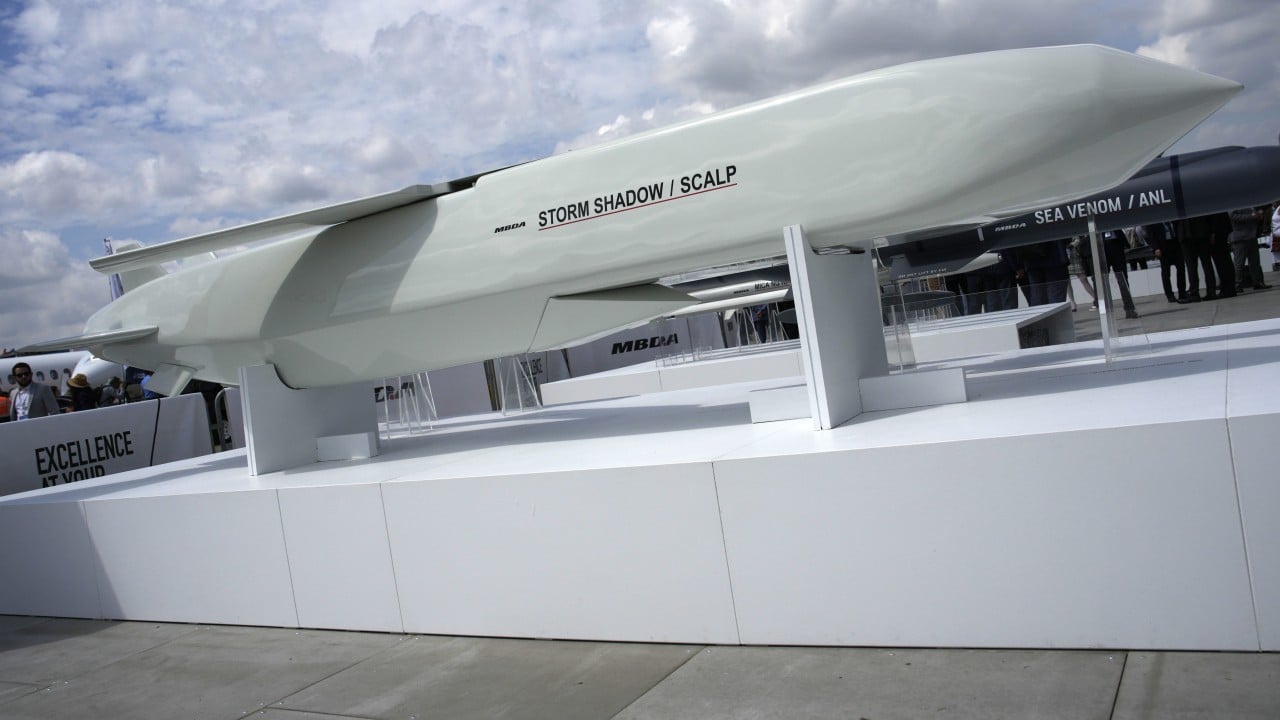
The recent decision by London and Paris to provide Ukraine with classified technical data for the joint production of Storm Shadow and SCALP long-range cruise missiles shifts the conflict from a model of inventory dependency to one of localized industrial autonomy. Moscow has responded with sharp diplomatic warnings, threatening retaliation against British and French military facilities both within Ukraine and abroad. Beyond the immediate diplomatic friction lies a fundamental restructuring of logistical risk and defense economics.
The Cost Function of Industrial Decentralization
Traditional military aid relies on a linear supply chain: Western arsenals export finished precision-guided munition systems directly to the front lines. This model faces a hard bottleneck governed by finite stockpiles and long replenishment cycles. By transitioning the blueprints and classified component data for deep-strike platforms to Ukrainian soil, the UK and France alter the operational cost function for both defenders and aggressors.
Localizing production reduces transit vulnerabilities inherent in cross-border logistics. Finished munitions traveling from European factories present high-value targets across extensive transit corridors. Shifting assembly nodes closer to the theater of operations creates a distributed network.
The economic trade-offs of this shift reveal distinct operational pressures:
- Capital Expenditure Redirection: Ukraine absorbs the initial friction of establishing secure manufacturing cells, while Western partners provide intellectual property rather than capital-intensive hardware blocks.
- Vulnerability Concentration: While supply lines shorten, the physical manufacturing infrastructure inside Ukraine transforms into high-priority kinetic targets for Russian precision strikes.
- Deterrence Threshold Distortion: Supplying production methods rather than raw munitions tests the boundary of direct state-on-state attribution, complicating traditional deterrence frameworks.
The Mechanics of Escalation Control
Russian Foreign Ministry statements characterizing the transfer as playing with fire reflect a strategic anxiety over the permanence of Ukraine's strike capabilities. When an ally donates a fixed batch of missiles, the supply curve is finite and predictable. When an ally transfers manufacturing technology, the supply curve becomes elastic, theoretically constrained only by raw material access and component manufacturing throughput.
This elasticity changes target prioritization for the Russian aerospace forces. Intelligence gathering now prioritizes identifying decentralized workshops, component machining facilities, and supply nodes for microelectronics rather than static storage depots. Consequently, British and French defense planners accept a calculated risk: that their technical fingerprints on domestic Ukrainian production will draw direct retaliatory targeting against industrial or military infrastructure within allied borders.
Precedent and the Washington Variable
The bilateral agreement between Kyiv, London, and Paris sets a procedural precedent for broader defense technology sharing. Historical patterns in the conflict demonstrate a sequential escalation ladder. The prior authorization of main battle tanks opened the political space for heavier armor variants from multiple coalition partners. Similarly, licensing cruise missile blueprints creates internal political pressure on Washington to evaluate domestic co-production arrangements for high-demand assets such as Patriot interceptor systems.
The structural implication is clear. Western defense strategy is pivoting toward indigenous industrial resilience for Ukraine. This minimizes long-term fiscal strain on European treasuries while institutionalizing a persistent deep-strike threat profile against Russian logistics hubs.
Prioritize intelligence collection on decentralized component manufacturing networks, harden domestic defense industrial bases against asymmetric sabotage, and insulate supply chains for high-purity guidance system sub-components from external choke points.