The immediate attribution of internal security failures to foreign intelligence networks functions as a classic mechanism of political survival when state apparatuses confront structural domestic threats. Following the June 2026 assault on the Sindh Rangers provincial headquarters in Karachi, Pakistani officials rapidly issued statements connecting the attack to "Indian proxies." This response aligns with a predictable pattern of externalizing threat vectors to manage public perception, obscure law enforcement deficits, and preserve institutional legitimacy. A rigorous decomposition of the incident reveals that the state’s explanatory framework contradicts the operational realities of the groups involved, specifically Jamaat-ul-Ahrar and the broader Tehreek-e-Taliban Pakistan network.
To understand the gap between political rhetoric and empirical security analysis, one must isolate the tactical realities of the Karachi attack from the geopolitical narrative deployed immediately thereafter by Islamabad.
Operational Diagnostics of the Karachi Assault
The attack on the paramilitary Sindh Rangers installation in the Gulistan-e-Jauhar locality followed an established kinetic profile associated with indigenous sectarian and anti-state militant formations. The mechanism of execution relied on a multi-stage infiltration vector:
- Perimeter Breach: A vehicle-borne improvised explosive device rammed the primary gate, aiming to collapse structural barriers and cause maximum initial casualties.
- Kinetic Penetration: Armed militants deployed automatic firearms and hand grenades to penetrate the internal compound layout.
- Sustained Engagement: A 90-minute gun battle ensued, requiring supplementary tactical intervention from the Special Security Unit and the Anti-Terrorist Force before the perimeter could be re-secured.
The casualty distribution—four paramilitary personnel killed and multiple security operatives wounded—demonstrates a high degree of local tactical familiarity. Pakistani security forces neutralized six attackers and captured one alive, identifying the surviving militant as an Afghan national.
Shortly after the operation concluded, Jamaat-ul-Ahrar, an ideological splinter and operational affiliate of the Tehreek-e-Taliban Pakistan, issued a formal claim of responsibility. This operational footprint presents an immediate contradiction to the narrative of external state sponsorship. Jamaat-ul-Ahrar possesses an established history of local recruitment, independent funding mechanisms via extortion networks in Karachi's industrial hubs, and an ideological framework fundamentally rooted in the subversion of the Pakistani constitutional framework.
The Triad of State Deflection
The strategic utility of accusing New Delhi of orchestrating local insurgencies can be categorized under a three-part structural model of state survival:
1. The Information Asymmetry Buffer
By classifying local militancy as a foreign covert operation, the state shifts the evaluation criteria from a failure of domestic policing and intelligence collections to an unequal conflict against a larger external adversary. This serves to buffer the internal political elite against immediate accountability for security oversight failures.
2. The Budgetary and Mandate Rationale
Framing low-intensity urban warfare as an existential interstate proxy conflict justifies the continued centralization of security resources and the preferential allocation of national capital to military and paramilitary entities over civil administration and judicial infrastructure.
3. Bilateral Deflection
The timing of the accusations directly corresponds to heightened international scrutiny regarding cross-border terrorism emanating from safe havens within Pakistan. Projecting the image of a victim of external subversion provides a rhetorical counterweight during multilateral diplomatic engagements.
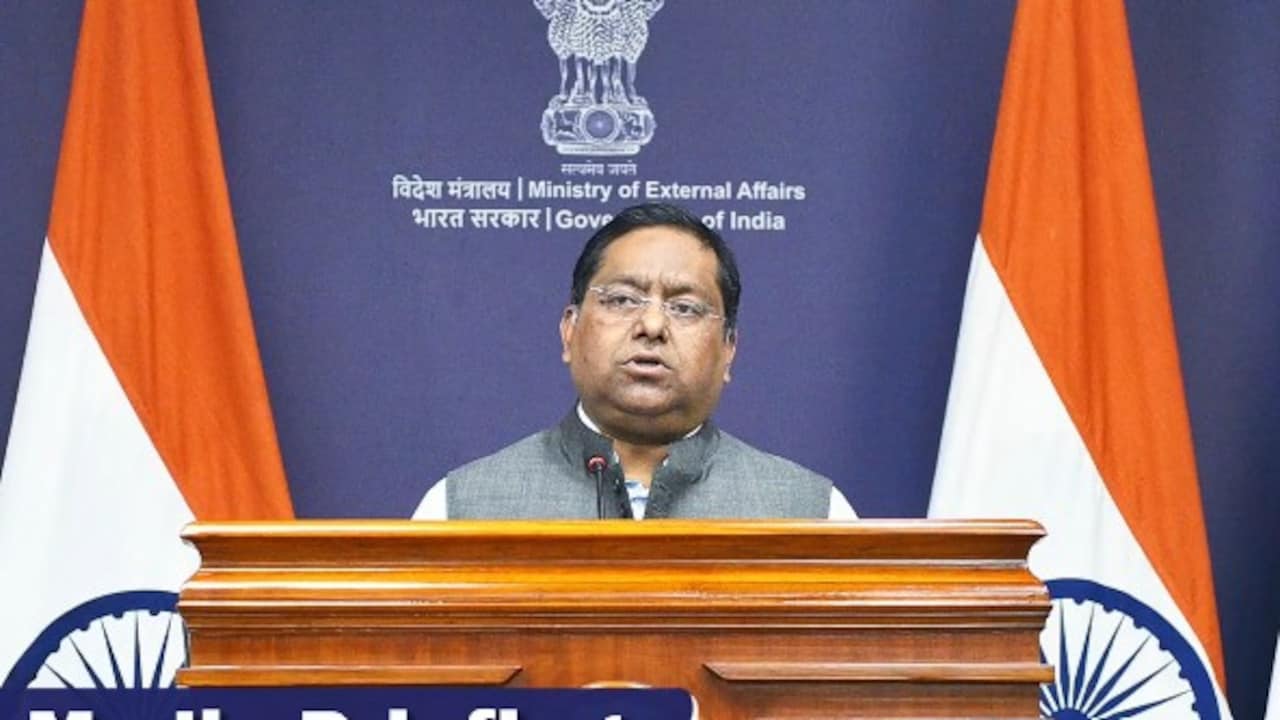
The response from the Indian Ministry of External Affairs focused directly on this institutional behavior. The statement issued by spokesperson Randhir Jaiswal termed the allegations "baseless" and noted that the persistent state practice of pointing fingers at external entities serves to delay critical internal reform. The formal diplomatic position urged Islamabad to execute "credible action against the terror infrastructure on its territory" and discontinue its reliance on armed proxies as a tool of regional leverage.
The Strategic Bottleneck of Asymmetric Governance
The structural flaw in Pakistan's defensive security model lies in its historical bifurcation of militant networks into operational categories based on utility rather than methodology. This creates a domestic policy bottleneck:
[State Tolerance/Sponsorship of Legacy Proxy Groups]
                       │
                       ▼
[Proliferation of Domestic Safe Havens and Ideological Echo Chambers]
                       │
                       ▼
[Splintering and Realignment of Fractured Groups (e.g., Jamaat-ul-Ahrar)]
                       │
                       ▼
[Kinetic Backlash Against Domestic Paramilitary Targets (The Karachi Incident)]
The capture of an Afghan national among the Karachi attackers underscores a critical regional variable: the deteriorating security dynamics along the western border. The line between domestic insurgent groups like the Pakistani Taliban and regional actors operating out of eastern Afghanistan has become increasingly porous. While Islamabad has conducted retaliatory air strikes inside Afghan territory, the persistent failure to secure urban centers like Karachi from infiltrating cells highlights a deep systemic breakdown in municipal surveillance and border-control logistics.
When a state repeatedly treats a deeply rooted domestic insurgency as an imported phenomenon, it actively undermines its own counter-terrorism efficacy. The optimization of internal security requires an analytical pivot away from geopolitical scapegoating toward the systematic deconstruction of the localized financial and ideological networks that sustain cells inside major commercial centers. Until municipal policing, intelligence synthesis, and border-security architectures are decoupled from external political messaging, the structural vulnerabilities exposed in Karachi will continue to manifest across Pakistan’s urban infrastructure.

:max_bytes(150000):strip_icc()/parts-of-a-swamp-cooler-2718628-a477e6f0787b4f8bb62ddf2def31d495.png)