The television in the corner of the Doha cafe does not have the sound turned on, but everyone is watching it anyway. On the screen, a split-image display shows a flash of desert dust from a military exercise on one side, and a politician waving from the steps of an airplane on the other. Below them, a bright red ticker flashes with words like combat, deadlock, and imminent.
A waiter named Tariq pauses with a tray of mint tea. He looks at the screen, then looks out the window at the quiet street where life moves at its usual Sunday pace. He sighs, a small, nearly invisible puff of exhaustion, and moves on. This is how geopolitics feels to the people who actually live in the gaps between the headlines. It is a constant, low-frequency hum of anxiety, punctuated by sudden, loud alarms that usually turn out to be nothing at all. Meanwhile, you can read related events here: The Hidden Cost of Streamlining Nuclear Safety Standards.
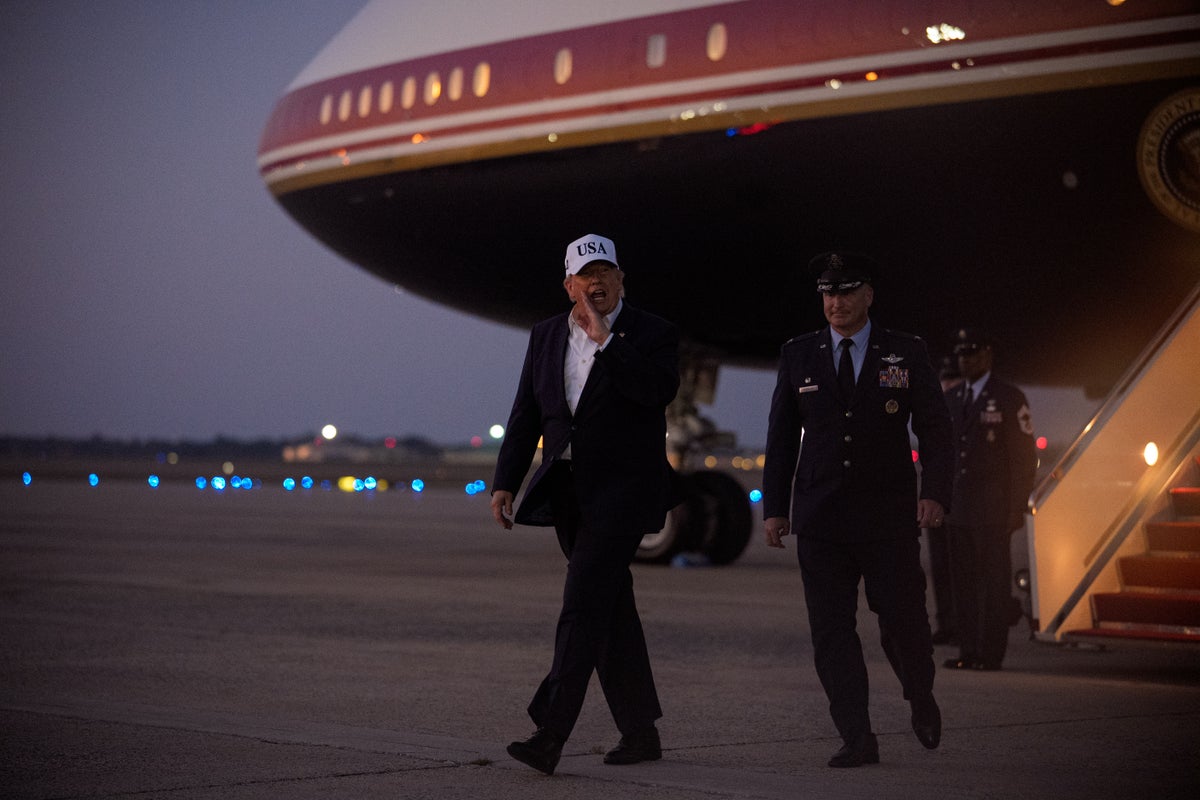
For 48 hours, the world held its breath. The news cycles insisted that a spark in the Persian Gulf was about to ignite a conflagration. Then, just as quickly as the fever rose, the temperature broke. Donald Trump brushed off the threat of renewed war with Iran, calling the panic overblown. Simultaneously, Qatari diplomats emerged from closed-door sessions to report "positive progress" in talks that everyone had written off as dead.
We are conditioned to look at these moments as grand chess matches played by giants. But if you look closer, the real story is found in the friction between the loud theater of political rhetoric and the quiet, grueling work of backchannel diplomacy. To see the bigger picture, check out the detailed article by NPR.
The Friction of Loud Anchors and Quiet Rooms
To understand how close we came to a crisis—and how far away we actually are—you have to look at the dual tracks of international tension.
Track one is public. It is loud, performative, and designed for consumption. When a superpower shifts naval assets or a regional adversary test-fires a missile, it is an act of theater. Each side must appear unyielding to its domestic audience. Acknowledging fear is a political liability. Therefore, the language used in public is always maximalist. It speaks of red lines, ultimate consequences, and total readiness.
Track two is entirely different. It takes place in carpeted hotel conference rooms in neutral capitals like Doha or Muscat. It smells of stale coffee and bad catering. In these rooms, the language is transactional, dry, and painfully slow. The people sitting across from each other are not shouting slogans; they are arguing over the precise placement of commas in a memorandum of understanding.
The danger arises when the noise from track one begins to drown out the work of track two.
Consider the mechanics of a diplomatic deadlock. It rarely happens because one side suddenly decides they want war. It happens because both sides have painted themselves into corners with their own rhetoric. If a leader spends months telling their citizens that the adversary is a monster that cannot be trusted, that leader cannot easily sit down and sign a deal with them the next Tuesday without looking weak.
This is where mediation becomes a physical necessity rather than a political luxury.
The Mechanics of the Middleman
What does "positive progress" actually mean when a negotiation is deadlocked? It does not mean a peace treaty is about to be signed on a white house lawn. It means something far more fragile.
Imagine two people standing on opposite sides of a chasm, trying to pass a fragile glass vase to one another. If either steps forward, they fall. If they throw it, it breaks. A mediator is the person who builds a temporary, swaying rope bridge, walks to the middle, takes the vase from one side, and carries it to the other.
In this case, Qatar acts as that bridge.
The strategy relies on a concept known in diplomatic circles as "proximity talks." When two adversaries refuse to sit in the same room because the mere act of shaking hands would cause a political scandal at home, the mediator sits with Side A in the morning, takes notes, translates the demands into language that won't trigger an immediate rejection, and walks down the hall to present them to Side B in the afternoon.
Progress in this environment is measured in inches. It looks like this:
- An agreement to change a single word in a joint statement to save face.
- A commitment to not increase uranium enrichment levels for a specific three-week window.
- A quiet promise to allow a specific cargo ship to pass through a strait without inspection.
These are not grand victories. They do not make for exciting television. But they are the tiny wooden wedges driven into the gears of a war machine, slowing it down just enough to prevent the wheels from turning.
The Reality of the Rhetoric
When the American president dismissed the fears of renewed combat, it wasn't necessarily an act of diplomacy; it was a recalculation of leverage.
In the calculus of modern conflict, unpredictability is a currency. If an adversary believes you are genuinely terrified of war, they will push harder, assuming you will back down to avoid it. By projecting total nonchalance—by treating the prospect of a massive regional conflict as a minor nuisance barely worth discussing—a state attempts to rob its opponent of that leverage.
But this posture carries a hidden cost.
When leadership treats the threat of violence as a bluffing game, the margin for error shrinks to almost nothing. A misread radar signal on a patrol boat, a nervous finger on a surface-to-air missile battery, or a stray drone flying off course can instantly turn a rhetorical bluff into a physical reality. The history of the twentieth century is littered with wars that nobody actually wanted, started by people who were convinced the other side would back down first.
The public watches the headlines and feels the spike in adrenaline. We worry about gas prices, about draft notices, about the terrifying scale of modern weaponry. Then the news cycle shifts to a celebrity scandal or an economic report, and the anxiety evaporates, replaced by a vague sense that the danger was never real to begin with.
But it was real. It is always real.
The People in the Gaps
Back in the Doha cafe, the waiter Tariq clears the empty tea glasses. The news segment has changed. The red ticker is gone, replaced by a weather report showing a heatwave moving across the region.
The politicians will fly back to their respective capitals. They will claim victory. The commentators will analyze the statements, looking for hidden meanings in the syntax and the posture of the spokespeople. The markets will stabilize, and the price of oil will drop a few cents.
But the underlying structural faults that created the crisis remain completely untouched. The deep, historical grievances, the economic sanctions that grind down ordinary lives, the proxy forces waiting for orders in the shadows—they haven't gone away. They are just waiting for the next spark, the next rumor, the next time the quiet rooms fail to hold the loud ones back.
The glass vase is still sitting on the swaying rope bridge. For today, nobody dropped it. The world moves on, entirely unaware of how heavy that small silence really is.