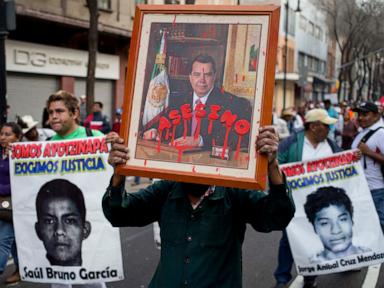
The recent detention of former Guerrero governor Ángel Aguirre over twelve years after the September 2014 disappearance of forty-three students from the Ayotzinapa Rural Teachers College strips away the illusion of political closure in modern state-cartel collusion. Standard media reporting frames this development as a delayed victory for accountability. A rigorous structural analysis reveals something entirely different: the arrest represents a calculated friction point within a deeply entrenched preservation system, underscoring how institutional actors architect information vacuums to protect administrative survival.
To understand why this case continues to fracture Mexican political legitimacy, one must deconstruct the operational mechanisms of the cover-up, the economic incentives driving state-cartel integration, and the structural failure points that allowed high-level officials to sanitize a mass crime in real time.
The Architecture of State-Level Obfuscation
The primary vector of failure in the initial Ayotzinapa investigation was not mere incompetence. It was an intentional, top-down information suppression protocol executed by the executive branch of Guerrero state. Federal Attorney General data confirms that the suppression mechanism relied on three distinct variables: physical asset destruction, jurisdictional fragmentation, and narrative substitution.
Physical asset destruction manifested most clearly around the security infrastructure of Iguala. On the night of the attack, municipal and state security forces intercepted multiple buses commandeered by the students. Closed-circuit recording devices, specifically those positioned near the Palace of Justice, captured tactical movements of state entities neutralizing the student transit. Testimony gathered by federal prosecutors establishes that Aguirre directly ordered the confiscation and subsequent purging of these digital files.
This action created an evidentiary void. By stripping the state of objective video telemetry, investigators were forced to rely on compromised witness testimonies and manipulated municipal logs. The cost function of this operation was low for the perpetrators—short-term political shielding—while the systemic cost was catastrophic, permanently disabling the chain of custody required for criminal prosecution.
Jurisdictional fragmentation compounded the obstruction. By isolating the event as a localized municipal conflict between the Iguala police department and a regional faction known as Guerreros Unidos, state officials successfully deflected federal scrutiny during the critical first seventy-two hours. This structural compartmentalization ensured that local police actions were treated as rogue anomalies rather than systemic outputs of a corrupted regional governance model.
The Economic Engine of Cartel-State Integration
The underlying driver of the September 26 violence remains anchored to structural trade routes rather than ideological conflict. Guerrero occupies a critical geographical chokepoint for the cultivation and transit of opium poppy and refined heroin destined for North American markets. Controlling this corridor requires absolute territorial monopoly, achieved through direct alignment between municipal police forces, state political machinery, and cartel leadership.
The students commandeered commercial buses—a traditional, semi-institutionalized tactic employed by Ayotzinapa cohorts to travel to political demonstrations. However, intelligence intercepts from parallel United States Drug Enforcement Administration investigations into Chicago distribution cells indicate that these specific transit vectors were occasionally utilized by local syndicates for cross-border narcotics logistics without the students' explicit knowledge.
When the student body inadvertently commandeered a bus loaded with illicit product or earmarked for cartel transport, it triggered a violent defensive reflex from Guerreros Unidos, executed via municipal proxy forces in Iguala and Cocula. The subsequent disappearance of forty-three individuals was an over-correction designed to eliminate witnesses and reassert territorial dominance. The state administration, deeply financially and politically intertwined with regional security rents, inherited the crisis and immediately pivoted from governance to damage containment.
The Chronology of Institutional Decay
The longevity of the Ayotzinapa impunity cycle exposes a four-phase decay model across successive federal administrations:
- Phase One: Immediate Eradication and Fabrication (2014–2018). Under the Peña Nieto administration, federal and state agencies advanced the historical truth, a heavily debunked narrative claiming victims were incinerated in a municipal rubbish dump at Cocula. This phase prioritized administrative self-preservation through engineered scientific impossibilities, shielded by officials like former Attorney General Jesús Murillo Karam.
- Phase Two: Retrospective Reclassification (2018–2024). The López Obrador administration formally designated the massacre a state crime, creating specialized truth commissions and securing international data transfers, such as delayed DEA wiretap intercepts. Despite political rhetoric, structural prosecution stalled due to military pushback and entrenched bureaucratic resistance within the judicial branch.
- Phase Three: Targeted Structural Disruption (2024–Present). Under President Claudia Sheinbaum, prosecutors initiated a granular re-evaluation of original digital evidence logs and secondary testimonies, directly piercing the executive immunity shield that protected historical actors like Aguirre.
This trajectory demonstrates that accountability in structural corruption cases does not advance linearly. It moves in punctuated bursts triggered by political realignment and the gradual decay of legacy protection networks.
The Friction Points of Modern Prosecution
The arrest of a former state governor over a decade after the fact highlights structural vulnerabilities within the current prosecutorial framework. Legal actions initiated long after a crime occur face severe degradation vectors:
Witness reliability degrades exponentially. Coerced statements extracted during early interrogations risk contamination, providing defense counsels with immediate constitutional challenges. Furthermore, physical evidence is largely non-existent; forensic teams have successfully identified bone fragments belonging to only three of the forty-three victims, leaving the biological status of the remaining forty formally unverified. Without a complete forensic baseline, prosecutors must build cases entirely on circumstantial paper trails, financial auditing of illicit enrichment, and high-level accomplice turning.
The political fallout also introduces systemic friction. Human rights organizations, including the Agustín Pro Juárez Human Rights Center, have routinely criticized federal prosecutors for maintaining opaque operational silos, failing to brief victims' families prior to high-profile arrests. This operational secrecy alienates the primary stakeholders who have sustained the pursuit of truth for over a decade, turning judicial milestones into contentious public relations events rather than clear legal resolutions.
Execute future legal strategies by bypassing political theater and prioritizing asset-tracing models that map illicit financial flows between regional political campaigns and cartel syndicates, tying executive liability directly to the economic engine that made the Iguala collusion possible.