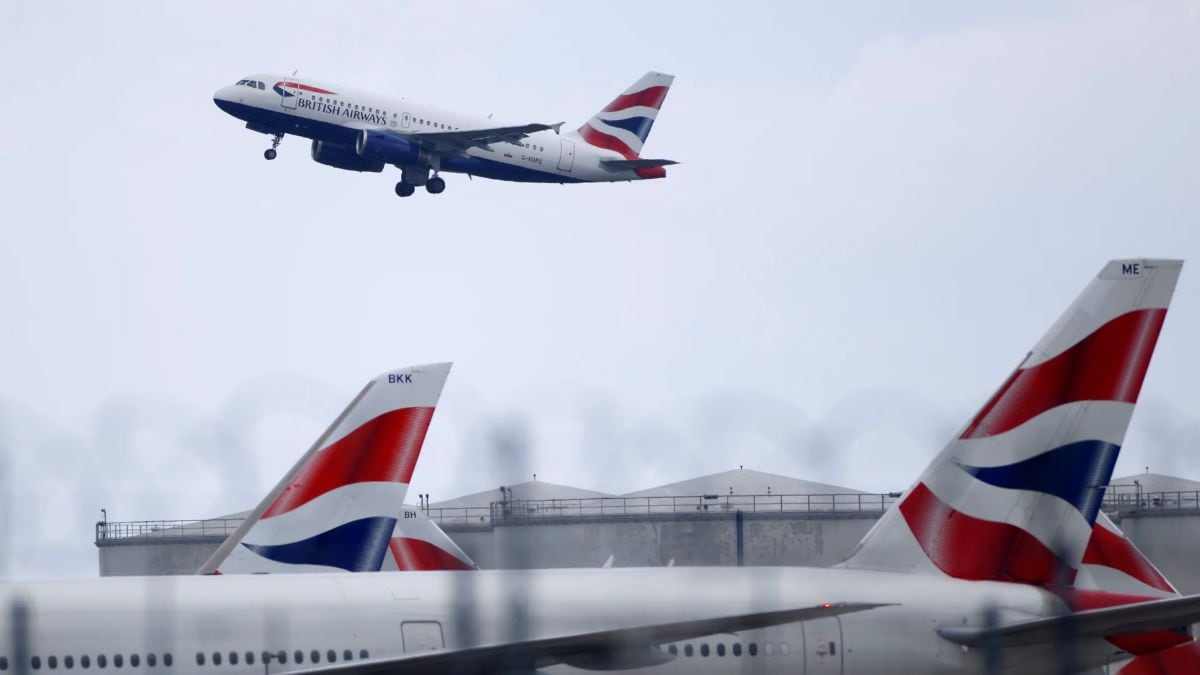
Commercial aviation safety is governed by strict redundancy and standardized contingency protocols designed to handle catastrophic system anomalies at cruising altitude. When a widebody or narrowbody aircraft declares an emergency mid-flight—signaled by transponder code 7700—the decision-making hierarchy shifts immediately from schedule optimization to structural preservation, weight reduction, and crew resource management. Analyzing a high-altitude emergency descent, such as a British Airways flight descending 28,000 feet over the Atlantic or Irish airspace before returning to its origin airport, requires examining the underlying operational parameters, mechanical thresholds, and decision trees that dictate how modern flight crews handle extreme contingencies.
The Operational Mechanics of Squawking 7700
Transponder code 7700 is the universal international alert setting for a general emergency. When air traffic control or the flight crew identifies an abnormal condition—ranging from cabin depressurization and engine failure to severe electrical anomalies or structural compromise—the pilot flying engages the emergency code. This action immediately highlights the aircraft on air traffic control radar scopes globally, prioritizing radio frequencies and clearing adjacent sectors of conflicting traffic. In other updates, take a look at: The Structural Mechanics of Educational Insolvency in France.
The issuance of 7700 triggers a mandatory cascade of protocol adjustments across ground and air infrastructure:
- Air traffic control assigns a direct, protected block of airspace, halting normal sequencing and arrivals.
- Emergency response services at the destination or diversion airfield are placed on high alert, mobilizing firefighting, medical, and rescue assets to the perimeter.
- Airline operations control centers establish a direct data and voice link with the flight deck, analyzing telemetry to assist the captain in diversion calculus.
The primary objective during this initial phase is situational stabilization. The crew isolates the primary failure using electronic centralized aircraft monitor checklists or electronic flight bag references, determining whether the aircraft can continue to its destination under degraded capability or if an immediate diversion is mathematically and operationally mandated. NPR has provided coverage on this important topic in great detail.
The Physics and Physiology of a Rapid Descent
When an emergency requires dropping flight levels rapidly—such as a suspected uncontained engine issue, severe flight control degradation, or an explosive cabin depressurization—
Operational Mechanics Of Commercial Aviation Emergency Diversions
travel, news
Commercial aviation operates under an assumption of redundancy, where single-point failures are isolated by structural, mechanical, and procedural safety margins. When a routine intercontinental transport sector—such as a British Airways service from London to Chicago—abruptly executes a 28,000-foot descent, squawks the emergency transponder code 7700, and returns to its point of origin, it represents a controlled transition from normal operations to contingency management. Understanding this event requires stripping away sensationalized narratives and examining the immutable constraints of flight envelope management, aircraft systems architecture, and air traffic control routing logic.
The Transponder Code 7700 Protocol
In civil air traffic management, the transponder broadcasts aircraft identification, altitude, and position. When a flight crew selects code 7700, they instantly signal an emergency to all surrounding radar units and automated air traffic management systems.
This code functions as a high-priority interrupt in the operational flow. It triggers visual and auditory alerts on radar displays across multiple control sectors, bypasses standard routing queues, and immediately commands airspace clearing along the aircraft's projected trajectory. The decision to squawk 7700 is not taken lightly; it signals that the flight deck has transitioned from managing a routine technical anomaly to requiring absolute priority for navigation, altitude selection, and airfield access.
The primary operational drivers for code 7700 deployment generally fall into three discrete categories:
- Structural or mechanical anomalies affecting flight control integrity or engine performance.
- Environmental or cabin pressure failures requiring immediate descent to a breathable altitude layer.
- Medical emergencies requiring rapid access to specialized ground-based medical facilities.
The Aerodynamics of Rapid Descent
When a widebody transport aircraft operating at high altitude experiences a critical pressurization loss or systems failure, the flight crew must initiate a rapid descent profile. This maneuver is governed by strict aerodynamic boundaries designed to maximize downward vertical velocity without exceeding structural load limits.
At typical cruising altitudes near 38,000 feet, the atmosphere is thin, and the true airspeed is significantly higher than the indicated airspeed. To descend to a safe altitude—typically 10,000 feet or below where supplemental oxygen is unnecessary—the flight crew deploys flight spoilers or speed brakes, throttles engines to idle, and pitches the nose down while maintaining control within the aircraft operating speed limits.
The physics of this descent involve a delicate balance between kinetic energy management and structural preservation:
- Dynamic Pressure: Excessive speed at lower, denser altitudes can overstress the airframe. The crew must manage Mach number transitions to indicated airspeed carefully.
- Thermal Dissipation: Rapid descent causes structural cooling and requires precise management of engine temperatures to prevent thermal shock.
- Terrain Clearance: Over oceanic routes or mountainous terrain, descent profiles must be cross-referenced continuously against minimum safe altitude charts to prevent controlled flight into terrain.
The Cost Function of Return-to-Origin Decisions
Deciding to turn back to the departure airport rather than continuing to the destination or diverting to an alternate en-route airfield is an exercise in complex cost-benefit analysis. Aviation operations optimize for safety first, followed by regulatory compliance, passenger welfare, and economic efficiency.
When a British Airways flight bound for Chicago reverses course over the Atlantic or the Irish airspace corridor and returns to London, the operational friction is immediate and severe. The economic cost function incorporates several compounding variables:
- Fuel Burn and Weight Limits: Large commercial airliners often depart with maximum fuel loads optimized for long-haul sectors. Landing safely may require burning off fuel in holding patterns or landing overweight, which triggers mandatory structural inspection protocols before the aircraft can fly again.
- Crew Duty Time Limitations: International flight crews operate under strict regulatory caps regarding hours of service. An unscheduled return often forces a cancellation or lengthy delay due to crew exhaustion legalities.
- Ground Infrastructure: Returning to a primary hub like London Heathrow provides access to heavy maintenance engineering teams and spare parts inventories that regional diversion airports lack, minimizing total time out of service.
Airspace Deconfliction and Priority Routing
Managing an emergency descent and return across busy oceanic and European transit corridors requires precise coordination between multiple air traffic control agencies. As the aircraft drops from cruise altitude, it must cross through active flight levels populated by other heavy transport category aircraft.
Air Traffic Control executes emergency routing protocols by clearing a vertical and lateral buffer zone around the distressed aircraft. Automated separation tools vector surrounding traffic away from the emergency vector. This creates an invisible cylinder of protected airspace, ensuring that the descending aircraft can maneuver without collision risk while its crew focuses entirely on checklist execution and system troubleshooting.
Operational resilience in modern transport aviation relies on these precise handoffs between automated alerting systems, flight deck procedures, and ground control infrastructure. The system absorbs anomalies by trading economic efficiency for absolute containment, ensuring that unexpected operational deviations resolve predictably within established safety parameters.
Operational Deployment of Maintenance and Engineering Contingencies
Once the aircraft touches down at the origin airport, the operational focus shifts from flight deck management to technical forensics and airframe validation. Maintenance control units deploy specialized diagnostic teams to interrogate flight data recorders, engine monitoring systems, and avionic fault logs.
The regulatory framework governing this phase demands absolute proof of airworthiness before the asset re-enters the active schedule. Structural inspections focus heavily on pressure bulkheads, flight control actuators, and landing gear assemblies that absorbed high descent loads during the emergency turnaround. Only after these systems pass non-destructive testing and functional verification does the aircraft return to commercial service, completing the closed-loop cycle of safety management.


