The mechanics of American jurisprudence rely on the premise of self-correction. When a lower court errs, appellate structures intervene; when systemic bias corrupts a proceeding, constitutional safeguards are engineered to reset the baseline. Yet, the legal odyssey of Curtis Flowers, who died at the age of 56, reveals a staggering exception to this feedback loop. Over twenty-two years of incarceration, six distinct trials for the same quadruple homicide, and repeated interventions by the United States Supreme Court exposed a system where procedural persistence outlasted substantive justice. Evaluating the case requires examining not merely an individual miscarriage of justice, but the institutional cost functions and incentives that allowed a single prosecution office to try the same defendant six times for the identical crime.
The Cost Function of Repeated Prosecutions
In standard prosecutorial resource allocation, an acquittal or a reversed conviction triggers a cost-benefit analysis. State resources are finite, and the probability of securing a different outcome diminishes as evidence degrades, witnesses relocate or pass away, and public expenditure mounts. However, in Flowers v. Mississippi, the normal economic constraints of state prosecution dissolved.
The state initiated six separate trials led by the same District Attorney, Doug Evans, targeting the same defendant for the 1996 murders at Tardy Furniture in Winona, Mississippi. This iterative loop bypassed the standard dampening feedback mechanisms of the legal system.
- First Trial (1997): Resulted in a conviction and death sentence, subsequently overturned due to prosecutorial misconduct and evidentiary errors.
- Interim Trials (Second through Fifth): Yielded a mix of convictions—all subsequently reversed on appeal—and mistrials driven by evidentiary flaws and persistent racial disparities in jury selection.
- Sixth Trial (2010): Resulted in another death sentence, which ultimately formed the basis of the landmark 2019 Supreme Court reversal.
The recurrence of capital trials without a shifting evidentiary foundation demonstrates a structural vulnerability: the absence of a statutory ceiling on retrials for identical charges when institutional stubbornness supersedes empirical reality. The murder weapon was never recovered, and no DNA or fingerprints linked Flowers to the scene. The state's case relied heavily on circumstantial testimony and shifting jailhouse informant accounts, yet the prosecution apparatus possessed the bureaucratic inertia to reset the board and play the same hand six times.
Peremptory Challenges and the Mechanics of Jury Exclusion
The constitutional turning point of the litigation centered on the Fourteenth Amendment's Equal Protection Clause, specifically as interpreted through Batson v. Kentucky. The mechanics of jury selection in the Flowers trials became a masterclass in the systemic evasion of constitutional mandates.
In the six trials combined, the state exercised peremptory strikes against 41 of the 42 Black prospective jurors it had the opportunity to remove. Mathematical probability renders this distribution anomalous, pointing directly to a calculated systemic filter designed to engineer a specific demographic outcome in the jury box.
When the case reached the Supreme Court in 2019, Justice Brett Kavanaugh, writing for the 7-2 majority, dissected the historical record of the prosecution's strikes:
- The state engaged in exhaustive questioning of Black prospective jurors while asking white jurors minimal questions.
- The state offered shifting, pretextual justifications for striking Black individuals that applied equally to accepted white jurors.
- The historical pattern across the six trials established clear discriminatory intent.
This quantitative disparity exposed the core limitation of Batson enforcement: prosecutors could easily invent race-neutral rationales for strikes unless appellate courts aggressively scrutinized the statistical reality. By the time the high court intervened, the judicial process had consumed more than two decades of an innocent man's life simply to enforce a baseline constitutional protection against discriminatory jury vetting.
The Mechanics of Exoneration and Institutional Retreat
The resolution of the Flowers case did not arrive via a sudden confession or the miraculous discovery of new physical evidence. It arrived through the exhaustion of the state's political and legal capital.
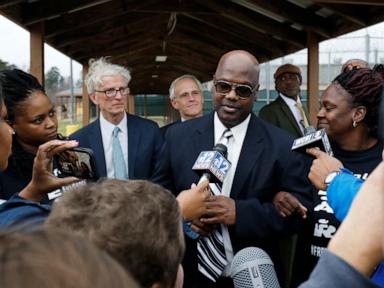
In late 2019, a Mississippi judge set bond, allowing Flowers to walk out of custody while the threat of a seventh trial still loomed. The turning point of institutional self-correction occurred only when District Attorney Doug Evans finally recused his office in January 2020, shifting jurisdiction to the Mississippi Attorney General’s Office.
An independent review conducted by Attorney General Lynn Fitch’s office revealed what defense counsel and investigative journalists had documented for years: the evidentiary foundation was fundamentally hollow. In September 2020, the state moved to dismiss all charges, formally concluding the 23-year ordeal.
The systemic takeaway from this transition is clear. The correction of a systemic error required an extraordinary convergence of factors: national investigative media scrutiny, elite appellate representation, a direct ruling from the United States Supreme Court, and a rare voluntary recusal by a localized prosecutor's office. Relying on these exceptional variables as a safety net guarantees that other wrongful prosecutions without matching visibility will remain uncorrected.
Strategic Forecast on Prosecutorial Accountability
The legacy of Curtis Flowers offers a stark diagnostic of American criminal procedure. The structural incentives governing district attorneys prioritize finality and conviction preservation over objective truth-seeking. Without institutional penalties for repeated, unconstitutional retrials, the system permits individual actors to exhaust the life of a defendant through sheer procedural endurance.
Reform cannot depend on appellate courts intervening after six iterations of the same trial. Future structural resilience requires statutory limits on retrials absent newly discovered, incontrovertible physical evidence, alongside independent state-level oversight boards empowered to strip immunity and intervene when a local prosecution office exhibits patterns of systemic bias and evidentiary bankruptcy. Until the cost of wrongful prosecution outweighs the political cost of dropping a flawed case, the structural loop that trapped Curtis Flowers will remain active.