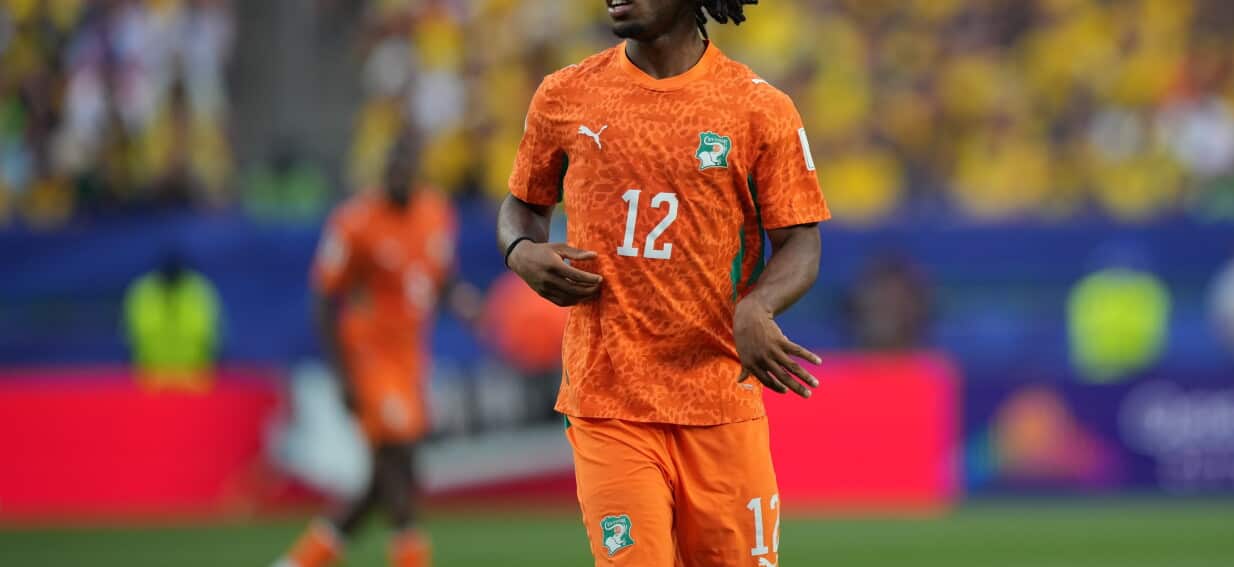
Elite international football tournaments are won by coaches who maximize game-state variance through precise structural adjustments. While standard sports commentary credited Switzerland's 4-1 victory over Bosnia and Herzegovina at SoFi Stadium to a generic display of individual brilliance, the actual mechanism of the victory was a textbook execution of fatigue exploitation and structural overload. By analyzing the data points from the match, we can deconstruct how Swiss manager Murat Yakin manipulated game structures to alter the match trajectory.
The first 70 minutes of the match represented a strategic bottleneck for Switzerland. Despite controlling domestic possession metrics, the Swiss national team struggled to penetrate Bosnia's low block. The Bosnian defensive system relied heavily on maintaining compact horizontal lines, restricting space between the midfield and defensive units. The primary bottleneck lay in the final third, where starting winger Dan Ndoye was forced into low-efficiency sequences, including a high-risk bicycle kick that required an alert save from Bosnian goalkeeper Nikola Vasilj.
The Three Pillars of the Swiss Second-Half Overload
The structural breakthrough occurred in the 71st minute, triggered by an asymmetrical tactical shift that can be categorized into three operational phases:
- The Inverted Winger Substitution: In the 71st minute, Johan Manzambi replaced Dan Ndoye. Instead of maintaining standard wing width, Manzambi operated as an inverted interior threat, altering the defensive tracking assignments of the Bosnian backline.
- The Second-Ball Trigger: Three minutes after entering the pitch, Manzambi capitalized on an unstable clearance attempt by Bosnian defender Amar Memic. Rather than waiting for the ball to settle, the right-footed SC Freiburg midfielder executed an optimal technical volley in the 74th minute, establishing a 1-1 variance shift that fundamentally altered Bosnia's low-block defensive priorities.
- The Numerical Overload via Disciplinary Dismissal: Bosnia's defensive structural integrity collapsed in the 80th minute when Tarik Muharemovic was dismissed following a red card for a dangerous tackle on forward Breel Embolo just outside the penalty box. This left Bosnia with 10 men, creating a permanent structural overload for the final ten minutes of regular time.
Deconstructing the Cost Function of a Ten-Man Deficit
The final ten minutes illustrated how quickly a defensive system degrades when forced to cover identical pitch surface area with 9.1% fewer human assets. The physical toll on a 10-man team creates a compounding fatigue loop. Switzerland exploited this deficit through rapid horizontal ball circulation, isolating tired Bosnian defenders in wide spaces.
The second Swiss goal in the 84th minute was a direct consequence of this space optimization. Manzambi retrieved possession, passing to Embolo, who quickly exploited the unorganized defensive line to slide a cross to Rubén Vargas. Because Bosnia lacked the defensive numbers to protect both the near and far posts simultaneously, Vargas completed a low-barrier finish.
The structural breakdown continued into the 90th minute. Captain Granit Xhaka initiated a sequence finding Vargas in deep space. With the Bosnian defensive line fully decompressed due to exhaustion, Vargas easily located Manzambi, who secured his second goal of the match, making him the youngest Swiss player to score a brace at a World Cup at 20 years and 247 days. The final tactical sequence concluded in stoppage time when Xhaka converted a penalty kick following a defensive foul in the area, sealing the 4-1 result.
Tactical Limitations and Group B Trajectory
Despite the high scoreline, an objective strategic assessment highlights clear performance boundaries for both squads:
- Swiss Final-Third Inefficiency: For 73 minutes, Switzerland failed to convert possession into high-value Expected Goals (xG). Against an opponent that does not pick up a red card or suffer late-game fatigue, this lack of early verticality remains a vulnerability.
- Bosnian Disciplinary Volatility: Coach Sergej Barbarez's team had been on a nine-match competitive unbeaten streak, qualifying through playoff victories over Wales and Italy. Their defensive strategy held co-hosts Canada to a draw last week in Toronto. However, maintaining a low block requires absolute disciplinary precision. Yellow cards to Amar Dedic and Edin Dzeko early in the second half signaled a breakdown in emotional control, which eventually culminated in Muharemovic's red card.
The group standings now reflect a massive shift. After a frustrating 1-1 opening draw against Qatar where Switzerland conceded an equalizer in the 94th minute, this victory puts them in direct control of Group B. Bosnia and Herzegovina, despite conceding late goals, still possess qualification potential due to their opening draw with Canada, provided they stabilize their defensive transition phases.
The strategic play moving forward for Switzerland involves starting matches with higher tempo variation rather than relying on late-stage substitutions to rescue stagnant possession sequences. For Bosnia, the operational priority must be restoring structural discipline to their defensive line, as their low-block system cannot survive sustained numerical disadvantages.