The legislative failure to enact permanent Daylight Saving Time (DST) in the United States is not a failure of consensus on the annoyance of biannual clock changes; it is a structural optimization problem dictated by geography, circadian biology, and institutional risk aversion. While the House of Representatives passed the Sunshine Protection Act by a bipartisan 308–117 margin in July 2026 and President Donald Trump has applied sustained executive pressure to eliminate the fall-back transition, the Senate remains an immovable bottleneck. Analyzing the Senate's skepticism requires stripping away partisan narratives and examining the underlying spatial, historical, and procedural mechanics that govern time-zone policy.
The Geographic Asymmetry of Solar Noon
To understand why the House passes permanent DST while the Senate blocks it, one must look at how representation is apportioned. House districts are drawn by population density, concentrating voting power in major metropolitan corridors—particularly along the Eastern Seaboard—where commercial interests favor late-afternoon daylight. The Senate, by contrast, grants equal representation to states regardless of population, giving disproportionate veto power to geographically expansive, northern, and western-edge time-zone states.
A time zone spans approximately 15 degrees of longitude, which corresponds to one hour of solar rotation. Within any single time zone, solar noon—the moment the sun reaches its highest point in the sky—occurs roughly 60 minutes later on the western border than on the eastern border. Under standard time, this variance is tolerable. Under permanent DST, the entire clock is shifted forward by one hour year-round, compounding the longitudinal lag during the winter solstice.
Consider the operational impact on states situated on the western fringes of time zones, such as Indiana (Eastern Time), Ohio (Eastern Time), or western North Dakota (Central Time). During late December and early January, permanent DST pushes sunrise past 9:00 AM. In northern cities like Detroit, Indianapolis, or Fargo, morning commuters and school-aged children would navigate peak transit hours in pitch darkness for nearly four months of the year.
This creates a fundamental zero-sum trade-off in daylight allocation:
- The Eastern/Southern Optimization: Cities like New York, Atlanta, and Miami gain usable evening daylight between 5:00 PM and 6:30 PM during winter months, stimulating retail, recreation, and outdoor hospitality without pushing morning sunrise past 8:15 AM.
- The Western/Northern Penalty: States represented by key Senate skeptics—including Sen. Todd Young of Indiana and Sen. Bernie Moreno of Ohio—absorb the full brunt of delayed winter sunrises, trading morning visibility and safety for marginal evening light in freezing temperatures.
Because Senate passage requires either unanimous consent or a 60-vote cloture threshold to overcome a filibuster, a small coalition of senators from western-edge and northern states can indefinitely halt legislation that passes the House with ease.
Historical Precedent and the Repeal Cycle
Political actors frequently treat permanent DST as an untested innovation, ignoring empirical data from previous federal experiments. Sen. Tom Cotton of Arkansas explicitly pointed to this institutional memory when rejecting executive pressure, noting that Congress has enacted permanent DST multiple times and repealed it each time once constituents experienced winter mornings.
The primary case study is the Emergency Daylight Saving Time Energy Conservation Act of 1973, signed into law by President Richard Nixon during the OPEC oil embargo. Enacted in January 1974 to reduce winter heating and lighting demand, the policy immediately collided with real-world operational friction:
- Public Backlash: Approval ratings for the measure plummeted from 79 percent in December 1973 to 42 percent by February 1974 as parents confronted the reality of sending children to bus stops in total darkness.
- Safety Externalities: Several states, including Florida, reported spikes in early-morning traffic fatalities involving schoolchildren during the first weeks of implementation, forcing local school districts to delay start times and disrupting working parents' schedules.
- Negligible Energy Gains: Subsequent Department of Transportation analyses determined that while evening electricity consumption dropped slightly, morning heating and lighting demand increased, resulting in virtually zero net energy savings.
Congress repealed the measure in October 1974—just ten months into a scheduled two-year trial—restoring standard time for the winter of 1974–1975. For veteran legislators and Senate leadership, including Majority Leader John Thune of South Dakota, the 1974 reversal serves as a cautionary model: voters punish lawmakers far more severely for dark winter mornings than they reward them for eliminating a twice-yearly clock adjustment.
Executive Framing Versus Legislative Risk Calculus
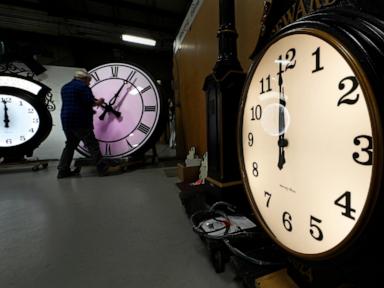
The divergence between President Trump's advocacy and Senate inaction illustrates a classic principal-agent disconnect in American governance. Executive messaging frames the issue around visible, relatable friction points: the inconvenience of manually resetting household and municipal clocks, the physical hazard of climbing high steeples to adjust mechanical timepieces, and the economic and recreational benefits of extended evening light for industries such as golf and retail.
From a behavioral economics perspective, Trump's argument targets salient transactional friction—the immediate, twice-annual annoyance every citizen experiences when losing an hour of sleep in March or resetting devices in November. Because digital devices now automate the vast majority of clock updates, the tangible cost of the transition has actually declined over the past two decades, even as rhetorical frustration remains high.
Senate leadership operates under an entirely different risk matrix. Unlike a president who is term-limited or focused on broad national messaging, senators face localized accountability from school boards, agricultural lobbies, transportation authorities, and regional broadcasters.
- Agricultural Disruption: Livestock and dairy operations operate on biological cycles tied to solar time, not statutory clocks. Pushing morning schedules forward disrupts milking, feeding, and transport logistics during winter months.
- Circadian Misalignment: Sleep medicine researchers and organizations like the American Academy of Sleep Medicine consistently oppose permanent DST, arguing that human circadian rhythms rely on morning sunlight to suppress melatonin and regulate cortisol. Chronic morning darkness induces social jet lag, increasing risks for metabolic disorders, cardiovascular events, and workplace accidents.
- Asymmetric Political Blowback: If the Senate passes permanent DST and winter morning accidents spike, the blame falls squarely on the chamber that cast the deciding votes. If the Senate simply lets the House bill expire without a floor vote, the status quo persists, and public frustration dissipates within days of the November clock change.
Procedural Bottlenecks in the Post-Midterm Calendar
Legislative timing further compounds the structural resistance. Following the November 3, 2026 midterm elections, the Senate returned to Washington for a compressed lame-duck session. In a calendar dominated by must-pass appropriations bills, judicial confirmations, and defense authorization, floor time is the scarcest resource in the upper chamber.
Bringing a controversial bill to the Senate floor requires leadership to burn valuable procedural days on cloture motions and amendment votes. Because permanent DST lacks unanimous support—evidenced by blunt dismissals from senators like Moreno ("No way") and Young's characterization of the House bill as a "non-starter"—floor consideration cannot be fast-tracked via unanimous consent. Majority Leader Thune, who has previously voted against similar measures, has zero incentive to expend limited floor time on legislation that fractures his own caucus along geographic lines.
Furthermore, the binary framing of the current debate—status quo versus permanent DST—obscures the third option favored by chronobiologists and several western lawmakers: permanent Standard Time. Under permanent Standard Time, biannual clock changes are eliminated entirely, solar noon aligns closely with 12:00 PM across time zones, and winter sunrises occur at their earliest natural point. However, permanent Standard Time faces fierce opposition from the retail, recreation, and tourism sectors, which rely on summer evening light to drive consumer spending.
Until Congress resolves the underlying regional conflict between eastern commercial interests and western safety concerns, the legislative deadlock will hold. The House will continue to pass popular, low-cost signaling bills eliminating the clock change, while the Senate will continue to absorb the pressure and bury the legislation in committee or run out the clock on the legislative calendar.
For policy strategists, industry lobbyists, and state-level legislators seeking to end biannual clock changes, pushing federal permanent DST is a dead-end strategy. The only viable path forward requires abandoning the one-size-fits-all federal mandate in favor of two targeted mechanisms: amending the Uniform Time Act of 1966 to allow individual states to opt into permanent DST independently (currently, federal law only permits states to opt into permanent Standard Time, as Arizona and Hawaii have done), or redrawing time-zone boundaries westward so that states on the western edges of Eastern and Central time zones shift into Central and Mountain time before locking their clocks. Without structural adjustments to longitudinal boundaries or state-level opt-in authority, the twice-yearly clock change will remain permanent federal policy.
To explore the legislative arguments and recent Senate reactions in greater detail, watch the coverage of Senate is skeptical about making daylight saving time permanent despite Trump's pressure, which outlines the specific objections raised by key lawmakers ahead of the fall clock change.


