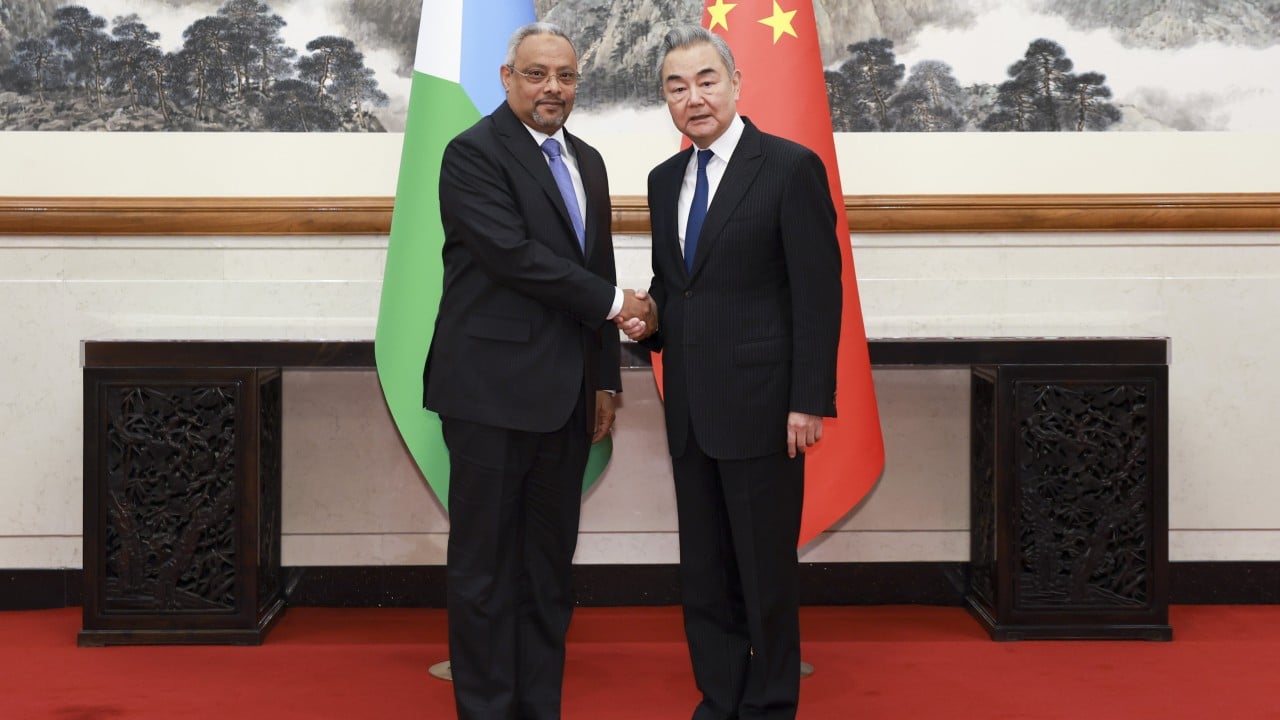
Joint diplomatic communiques calling to keep a maritime chokepoint open rarely alter vessel routing on their own, because commercial shipping responds to threat probabilities, insurance premiums, and transit economics rather than diplomatic phrasing. When a major external power issues a joint statement with a regional state urging open passage through Bab al-Mandeb, the underlying mechanism is signaling and coalition framing, not immediate physical de-escalation.
To understand what such a joint statement actually accomplishes—and where standard news coverage misreads it—this analysis breaks down the structural mechanics of chokepoint diplomacy, maps the logic behind typical headline reporting, establishes the boundary between confirmed facts and analytical hypotheses, and lays out an operational framework for evaluating shipping risk and diplomatic leverage.
Deconstructing Standard Chokepoint Reporting
Typical news coverage of a joint statement between China and a regional nation regarding Bab al-Mandeb treats the diplomatic text as an operational inflection point. That framing relies on three implicit assumptions that rarely hold up under scrutiny.
The first assumption is diplomatic-to-operational equivalence: treating an official call for freedom of navigation as a force that lowers risk on the water. Commercial maritime operators evaluate kinetic threat exposure, war-risk insurance surcharges, and rerouting lead times. A joint statement changes diplomatic posture and bilateral alignment, yet it does not remove anti-ship missiles, drones, or non-state actors operating along adjacent coastlines.
The second assumption is bilateral sufficiency: implying that two signatories can underwrite corridor security simply by declaring it desirable. Bab al-Mandeb sits between the Arabian Peninsula and the Horn of Africa, linking the Red Sea and Gulf of Aden to the wider Indian Ocean and Suez corridor. Corridor security is a multi-actor equilibrium involving littoral states, naval patrols, commercial carriers, cargo owners, and marine insurers. Two capitals aligning on text does not compel every armed faction or shipping line to comply.
The third assumption is static rerouting: treating passage through the strait as a binary on/off switch rather than a continuous cost adjustment. When threat levels rise, vessels either pay higher war-risk premiums to transit the corridor or divert around alternative routes such as the Cape of Good Hope, absorbing longer voyage durations, higher fuel burn, and altered container and tanker schedules.
The Structural Mechanics of Bab al-Mandeb Leverage
Bab al-Mandeb functions as a classic maritime chokepoint where narrow geography concentrates global trade flows and magnifies localized disruptions. Because alternative routes add substantial distance and time between Asian manufacturing or Gulf energy hubs and European or Mediterranean markets, even partial or intermittent disruption reverberates across freight rates, inventory buffers, and delivery schedules.
In this environment, a joint diplomatic statement operates through four distinct channels:
- Bilateral alignment signaling: It formalizes shared messaging between Beijing and a regional partner, projecting diplomatic coordination and positioning both parties as proponents of commercial stability without committing either side to escalatory military intervention.
- Narrative positioning: It frames the issuing states around trade continuity and regional stability, contrasting diplomatic appeals with unilateral pressure or kinetic escalation.
- Regional reassurance: It signals attention to neighboring capitals and trade partners whose economies depend on Red Sea and Gulf of Aden throughput, port operations, or regional stability.
- Diplomatic optionality: It preserves room for behind-the-scenes outreach with regional actors while keeping formal commitments bounded by the text of the communique.
The Cost Function of Maritime Disruption
For supply-chain and strategy leaders, the practical impact of any chokepoint tension is governed by a disruption cost function rather than diplomatic rhetoric. Total transit cost rises when any of four variables increases:
- Insurance and risk premiums: Hull and cargo war-risk pricing adjusts rapidly to perceived attack frequency and severity, directly raising per-voyage expense.
- Transit time and fleet utilization: Longer detours tie up vessels for additional days or weeks, reducing effective global fleet capacity and tightening schedule reliability.
- Fuel and operating expenses: Extended steaming distances increase bunker consumption and crew or charter costs per delivered unit.
- Inventory and working capital drag: Longer lead times force importers and manufacturers to hold larger safety stocks or absorb stockout and expedited-freight penalties.
A joint statement can shape expectations around diplomatic engagement, yet it does not automatically compress those four cost drivers unless accompanied by verifiable reductions in physical threats or concrete operational arrangements.
Known Facts Versus Educated Hypotheses
Separating confirmed structural realities from analytical hypotheses prevents over-interpreting diplomatic headlines.
Known Facts
- Bab al-Mandeb is a narrow maritime strait connecting the Red Sea to the Gulf of Aden between the Arabian Peninsula and the Horn of Africa, serving as a critical link in maritime trade between the Indian Ocean and the Mediterranean via the Suez Canal.
- Joint statements issued by states calling for open passage are formal diplomatic instruments that express policy positions and bilateral alignment; a communique by itself does not constitute a binding security guarantee or an enforceable maritime exclusion regime.
- Commercial shipping companies make routing, speed, and insurance decisions based on operational safety, contract terms, and unit economics, weighing corridor transit against longer alternative routes.
- External powers with global trade and energy interests—including China and regional states—maintain strategic equities in uninterrupted maritime commerce through key Middle Eastern and East African waterways.
Educated Hypotheses
- A first-of-its-kind joint statement with a regional nation likely reflects an effort to institutionalize shared diplomatic messaging and elevate regional coordination on Red Sea and Gulf of Aden stability, rather than signaling an imminent bilateral naval enforcement operation.
- Such a statement may be intended in part to reassure regional partners and commercial stakeholders of diplomatic engagement while avoiding direct entanglement in local military conflicts.
- Unless matched by tangible de-escalation on the ground or credible risk reduction for commercial vessels, marine insurers and carriers are unlikely to reverse precautionary routing or pricing solely on the strength of a joint declaration.
Translating Chokepoint Diplomacy Into Operational Decisions
Relying on diplomatic communiques as a leading indicator of supply-chain normalization is a common analytical error. A more disciplined approach treats joint statements as context signals to be cross-checked against operational indicators.
- Audit lane exposure by SKU and commodity: Map which raw materials, components, and finished goods rely on Red Sea or Gulf of Aden transit, distinguishing single-source bottlenecks from multi-region alternatives.
- Track operational metrics ahead of diplomatic headlines: Monitor actual vessel transits, rerouting rates around southern Africa, war-risk insurance commentary, and spot freight rate spreads rather than treating official statements as proof of safe passage.
- Separate diplomatic intent from enforcement capacity: Evaluate who signed the statement, what specific commitments—if any—are included, and which armed or commercial actors actually control risk along the corridor.
- Stress-test lead times and buffer inventory: Model two-to-four-week transit variability on exposed lanes and pre-negotiate flexible air, rail, or alternate-port contingencies before acute bottlenecks form.
Strategy Limitations and Failure Modes
Every analytical framework has blind spots, and treating chokepoints purely through a trade-and-diplomacy lens carries clear limitations. First, diplomatic opacity means the most consequential negotiations or backchannels often occur outside public communiques, making over-reading or under-reading a single statement hazardous. Second, asymmetric local dynamics mean regional disputes and non-state actors frequently respond to local political, ideological, or security incentives rather than external economic appeals. Third, over-hedging costs can erode margins if a firm builds expensive permanent buffers for a disruption that proves brief or localized.
In volatile maritime corridors, the highest-value strategic move is to pair dual-sourced supply routing with pre-authorized contingency triggers tied to verifiable shipping and insurance data—allowing an organization to shift volume and inventory buffers on objective operational thresholds rather than reacting to diplomatic statements alone.