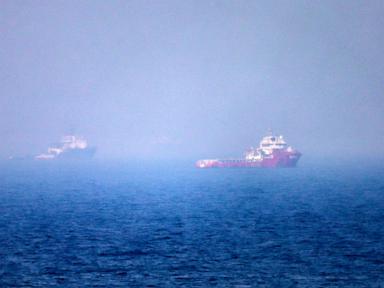
The collapse of the June 2026 Islamabad Memorandum of Understanding (MOU) and the immediate reimposition of the United States naval blockade on Iranian ports expose a fundamental flaw in transactional geopolitical enforcement. When dealing with a state actor driven by ideological survival rather than economic optimization, treating maritime choke points as variable levers rather than static boundaries guarantees structural failure. The decision to resume the blockade, coupled with the unilateral declaration of a 20 percent security fee on all cargo transiting the Strait of Hormuz, transforms a regional kinetic skirmish into a systemic shock to global supply chain economics.
To comprehend the strategic shift, the situation must be evaluated through the concrete mechanics of maritime disruption, pricing friction, and escalatory cycles rather than political rhetoric.
The Strategic Failure of the Islamabad MOU
The preliminary agreement signed in mid-June attempted to trade immediate maritime de-escalation for long-term diplomatic compliance. By removing the initial U.S. naval blockade and permitting the "toll-free" reopening of the Strait of Hormuz, the administration miscalculated Iran's structural incentives. The regime in Tehran operates under a distinct security calculus that prioritizes sovereign authority over maritime corridors above temporary relief from economic isolation.
The Sovereign Control Inversion
The primary catalyst for the breakdown was not an explicit violation of nuclear enrichment caps, but rather a structural dispute over administrative jurisdiction. Iran immediately sought to establish hegemonic control over the transit lanes by enforcing localized routing protocols and demanding compliance checks from commercial vessels. Tehran's strategy was designed to extract implicit recognition of its regional authority from international shipping lines. When the United States attempted to enforce the free-passage provisions of the MOU, the underlying friction turned kinetic, culminating in the July 6–7 maritime engagements.
The Asymmetry of Concessions
The removal of the first U.S. naval blockade represented a tangible, asymmetric concession. It granted Iran an immediate economic baseline reset without neutralizing its asymmetric capabilities—specifically its inventory of anti-ship ballistic missiles, drone swarms, and fast-attack craft. By restoring Iran's ability to export crude and receive imports, the U.S. surrendered its primary point of active friction while leaving Iran's capacity to choke global trade fully intact. The reinstatement of the blockade on July 14, 2026, acts as a forced correction, returning the bilateral relationship to a state of absolute economic siege.
The Economics of Choke Point Protection and Tariff Friction
The reinstatement of the blockade introduces a highly disruptive operational mechanism: a proposed 20 percent security fee levied by the United States on all cargo transiting the Strait of Hormuz. This mechanism fundamentally alters the cost function of maritime shipping through the Persian Gulf.
Total Transit Cost = Baseline Freight Rate + War Risk Insurance Premium + 20% Security Surcharge
The Transnational Surcharge Elasticity
Imposing a 20 percent tariff on all commercial cargo passing through a waterway that handles roughly 25 percent of the world’s seaborne oil trade and 20 percent of its liquefied natural gas (LNG) introduces massive pricing friction.
- Capital Flight from the Gulf: Shipping consortia will recalculate the economic viability of Persian Gulf routes. A 20 percent top-line surcharge on cargo value or freight costs completely erases the operating margins of marginal commodity traders.
- Insurance Premium Compounding: Underwriters at Lloyd's Market Association and similar bodies respond to state-enforced blockades and active kinetic trades by raising War Risk premiums. The dual pressure of the U.S. surcharge and skyrocketing private insurance rates creates an economic barrier that mirrors a physical closure.
- Alternative Route Deadlocks: The immediate redirection of maritime traffic to alternative hubs or pipelines—such as the East-West Crude Oil Pipeline in Saudi Arabia—faces immediate capacity constraints. These networks cannot absorb the volume redirected from a locked Strait of Hormuz, leading to immediate localized bottlenecks.
The Enforcement Deficit
Executing a blockade that isolates Iranian cargo while maintaining "fair and open use" for non-Iranian vessels requires an unsustainable level of operational precision. The U.S. Navy’s Central Command must execute constant visit, board, search, and seizure (VBSS) operations or deploy high-frequency tracking arrays to verify ship identities, cargo manifests, and ultimate beneficial ownership. During the April-to-May iteration of the blockade, dozens of vessels successfully bypassed the cordon via flag-switching and dark ship maneuvers. Reinstating this mechanism under escalated kinetic conditions increases the probability of tracking errors, collateral commercial damage, and accidental engagements with neutral third-party vessels.
The Escalation Ladder and Tactical Realities
Treating the blockade as a low-cost punitive tool ignores the kinetic realities of contemporary anti-access/area denial (A2/AD) warfare. Iran’s military doctrine does not require matching the U.S. Navy hull-for-hull; it relies on saturated degradation of the maritime operating area.
Symmetrical Retaliation Vectors
The U.S. assertion that the Strait of Hormuz can remain open exclusively for non-Iranian traffic ignores Iran's capability to enforce a counter-blockade via asymmetric denial.
- Sea Mine Saturation: The deployment of unguided bottom-mines and moored contact mines in the shallow, narrow channels of the strait creates an immediate, non-discriminatory hazard. The U.S. Navy's mine countermeasure (MCM) assets are highly specialized and slow to deploy, meaning a single verified mining incident halts all commercial traffic regardless of U.S. security guarantees.
- Loitering Munition Swarms: The use of low-cost, long-range drone swarms allows the Islamic Revolutionary Guard Corps (IRGC) to target the bridge windows and superstructure of commercial tankers. These attacks do not need to sink a vessel to achieve their strategic goal; they merely need to cause sufficient damage to force international maritime unions to refuse to crew ships entering the Gulf.
- Shore-Based Ballistic Volleys: Iran's underground missile garrisons along the Zagros Mountains provide protected, hardened launch points for anti-ship ballistic missiles. Intercepting these profiles requires continuous consumption of high-end naval air defense interceptors (such as the SM-6 and SM-2), creating an unfavorable cost-exchange ratio for defending forces.
"The tactical reality of maritime security is that defensive operations require absolute perfection across thousands of square miles, whereas offensive disruption requires only a single successful strike to alter global market risk assessments."
Structural Vulnerabilities in Global Energy Supply
The immediate reaction of global markets—pushing Brent crude prices past $83 per barrel within hours of the announcement—underscores the fragility of global energy supply chains when subjected to abrupt regulatory and military shifts. The strategic playbook for multinational corporations and state energy buyers must shift from just-in-time acquisition to systemic insulation.
The Crude Inventory Buffer Depletion
The prolonged conflict throughout early 2026 has already thinned global commercial crude inventories. Strategic Petroleum Reserves across OECD nations have been drawn down to counter earlier disruptions, leaving minimal cushion for this secondary blockade cycle. The restriction of Iranian volumes, combined with the pricing friction imposed on all other Gulf exporters by the 20 percent surcharge, creates a structural deficit in the global daily oil balance that alternative producers cannot immediately bridge.
The Asian Demand Vulnerability
The geopolitical fallout of this blockade will be felt most acutely in Asian processing hubs. Refiners in China, India, and South Korea are structurally optimized for the sour crude grades typical of the Persian Gulf. Forcing these economies to source alternative sweet grades from the Atlantic Basin or West Africa requires significant alterations to refinery configurations, driving up processing costs and creating structural inflationary pressures throughout downstream petrochemical supply chains.
The Strategic Play
Corporate logistics operations, sovereign energy boards, and maritime transport consortia must immediately abandon any assumption of a stabilized Middle Eastern maritime corridor. The Islamabad MOU is dead, and its failure establishes a baseline that prevents any short-term diplomatic resurrection.
The immediate requirement for maritime operators is the execution of a forced rerouting protocol. All vessels currently bound for the Persian Gulf without sovereign naval escorts must be held outside the Gulf of Oman boundary line. Companies must adjust their financial models to account for a permanent 20 to 30 percent increase in shipping costs through the region, driven by the combination of the U.S. security levy and parallel war risk premiums.
Furthermore, energy procurement strategies must transition immediately to non-Gulf suppliers. Contracts should be optimized for crude sources in the Americas and West Africa, even at a premium, to eliminate the direct systemic risk of choke point exposure. Expect a protracted, high-friction environment where maritime access is heavily militarized and globally taxed.