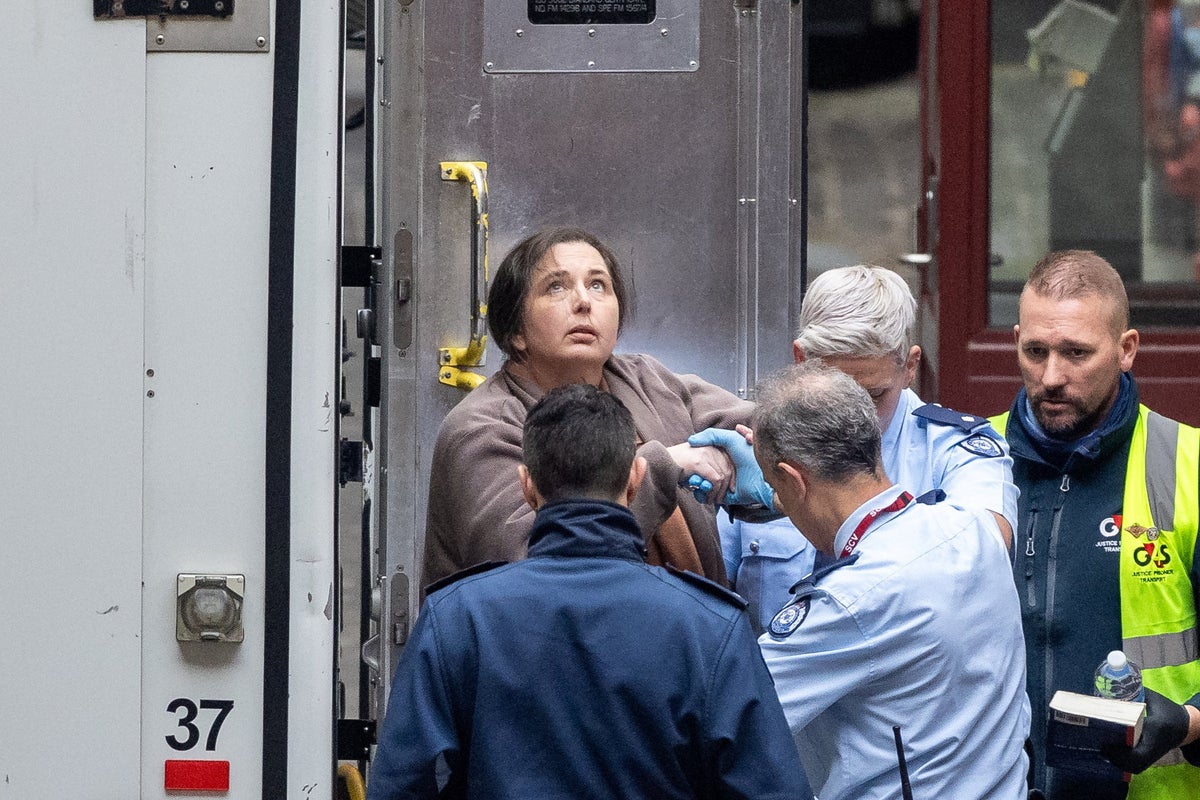
The courtroom was quiet enough to hear the hum of the fluorescent lights overhead, that steady, low-frequency drone that seems to suck the oxygen straight out of a room. Down at the defense table, lawyers were shuffling papers with a deliberate, anxious slowness. Every rustle sounded like a dry leaf scraping across concrete.
Outside, the press corps milled behind police barricades, cameras pointed like gun barrels toward the steps, waiting for a spark. But inside, the battle was not being fought with sensational headlines or dramatic outbursts. It was being fought in the microscopic margins of procedure, where a single misspoken word or a misplaced juror can derail months of public anticipation.
This is the strange reality of high-stakes criminal trials. We look at the defendant, the grim face in the dock, the alleged crimes, and the towering stacks of evidence. We want the law to be a blunt instrument of absolute moral clarity. We want black and white. Yet the legal system itself is remarkably porous, constructed from archaic rules, human error, and procedural tripwires that can turn a multi-million-dollar prosecution into a procedural reset button in a matter of seconds.
Consider what happens when a trial begins to fracture.
Months of testimony evaporate. Jurors, who have put their lives, jobs, and families on hold to sit in judgment, are told their service was for nothing. They pack their notebooks, hand in their badges, and walk back out into a world that has kept spinning while they were trapped in a time warp of gruesome evidence and legal technicalities.
The defense team representing Erin Patterson knows this reality intimately. In legal battles of this magnitude, where the shadow of a life sentence hangs over the accused like a permanent winter cloud, defense strategies rarely rely solely on proving innocence in a traditional cinematic fashion. Instead, they hunt for institutional failure. They look for the loose threads in the prosecution’s sweater, pulling gently until the whole garment begins to unravel.
A catastrophic hotel mistake. That was the phrase whispered through legal circles as news of the latest appeal broke.
To the untrained observer, a hotel mix-up sounds trivial. A booking error. A missed reservation. A minor logistical inconvenience that might frustrate a traveling salesperson. But in the hyper-controlled environment of a sequestered or managed jury trial, logistics are destiny. When the physical safety, privacy, and isolation of a jury are compromised—even briefly, even accidentally—the foundational integrity of the trial is instantly called into question.
Imagine being one of those jurors. You are thrust into a sealed ecosystem, tasked with deciding a matter of life and death, cut off from your spouse, your children, and the steady anchor of your daily routine. You rely entirely on the court to manage the boundary between your isolated duty and the outside world. When that boundary fails, panic follows.
Did someone see something they shouldn't have? Did an outside voice penetrate the sterile bubble of deliberation? Did a logistical slip-up expose the panel to the relentless wave of media coverage crashing against the courthouse doors?
Lawyers do not need to prove that actual tampering occurred to shatter a proceeding. They only need to prove that the opportunity for contamination existed, that the rules designed to protect the sanctity of the verdict were breached. The law is profoundly superstitious about outside influence. It treats a compromised jury room the way a master clockmaker treats a speck of dust inside a delicate Swiss movement. One foreign particle, and the gears lock up.
This is where the Erin Patterson case sits right now. Suspended in amber.
The public wants closure. The families of the victims want a definitive reckoning. Society craves the catharsis of a verdict, a period placed at the end of a terrifying sentence. But the machinery of justice does not care about our emotional timeline. It moves at the glacial pace of procedural review, bogged down by appeals, technicalities, and the relentless defense argument that the game was played with a marked deck.
Every criminal trial is a fragile contract between the state and the citizen. The state promises to follow the rules meticulously, down to the last comma and protocol, before it takes away a person’s liberty. In exchange, the public agrees to accept the verdict as legitimate, even when it is difficult to swallow.
When the state drops the ball on logistics, communication, or hotel accommodations, that contract frays.
We forget that prosecutors and judges are human beings operating under immense psychological pressure. They are sleep-deprived, constantly second-guessed, and working within an overburdened judicial infrastructure that is held together by little more than institutional habit and caffeine. Mistakes happen. A clerk misreads a schedule. A coordinator books the wrong wing of a hotel. A communication breakdown occurs between court security and hospitality staff.
In a routine civil dispute, such an error is corrected with an apology and a refund. In a murder trial, it becomes the cornerstone of an appeal. It becomes the wedge that forces open the courtroom doors and demands a do-over.
The public reaction to these twists is always the same. Frustration. Cynicism. A deep, gnawing suspicion that the wealthy or the accused can manipulate loopholes to escape accountability. People shake their heads at the news, muttering about technicalities letting monsters walk.
Yet, those exact same loopholes are the only things standing between an innocent person and a runaway state machine. The rules that protect a high-profile defendant from a flawed trial are the exact same rules that protect an ordinary citizen from police overreach or judicial tyranny. You cannot have a system that is ruthless and efficient for the guilty while remaining gentle and protective for the innocent. It is an all-or-nothing proposition.
As the legal teams prepare their arguments, the core narrative shifts away from the kitchen table in regional Victoria where a fatal meal was served. It moves into the sterile, high-ceilinged appellate courts where judges in wigs and robes will dissect the meaning of a logistical failure.
They will weigh prejudice against procedure. They will ask whether a mistake was fatal to the process or merely an embarrassing stumble.
And while they debate, time moves forward. Memories fade. Witnesses grow older. The emotional wound inflicted on a community refuses to heal because the scab is constantly being torn off by legal maneuvers.
There is no neat resolution to be found here. No sudden flash of absolute truth that will satisfy everyone watching from the sidelines. There is only the grinding gears of the court, turning slowly, awkwardly, trying to fix a broken process with more process.
The lights in the courtroom remain on. The paper keeps shuffling. And somewhere in a cell, waiting for the next word from a judge, the silence is heavier than ever.


.jpg)
