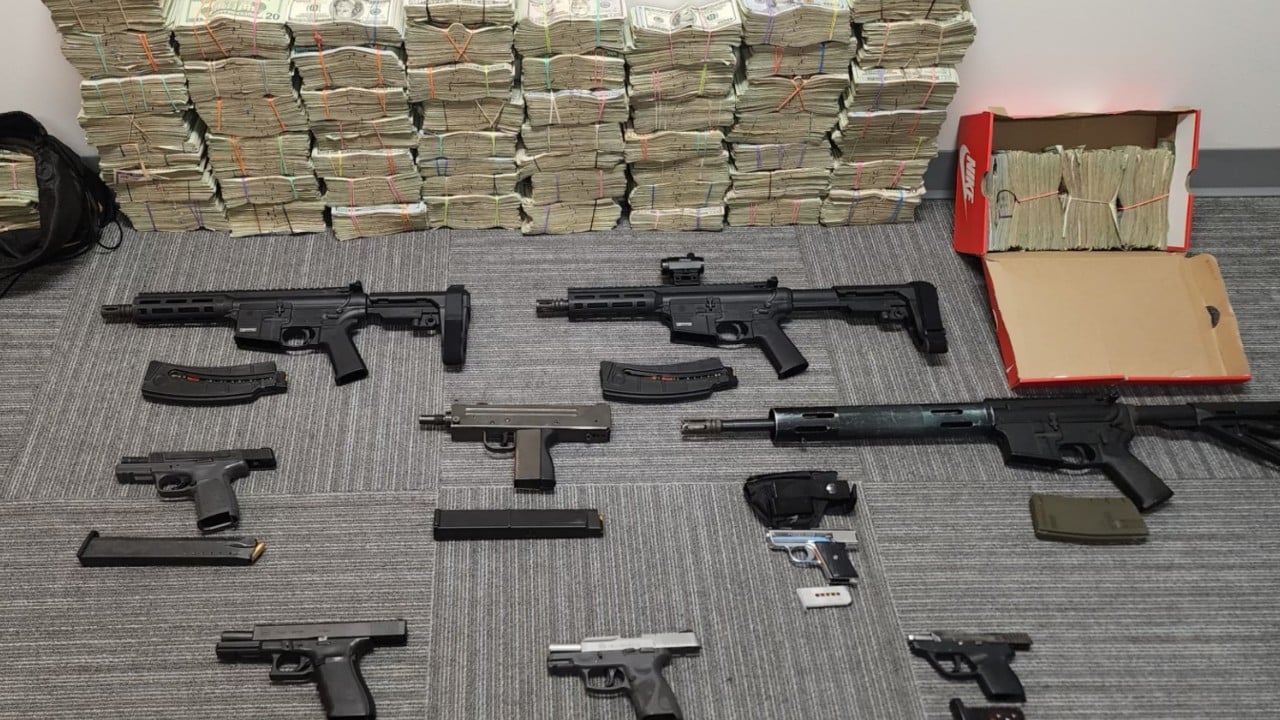
Money does not scream when it moves. It does not flash blue lights or slam against pavement. In the quiet back booths of suburban diners and beneath the humming fluorescent lights of nationwide bank branches, paper wealth changes hands with the dull, rhythmic thud of bricks sliding into place. Ninety-two million dollars is a heavy thing to hide.
Consider the mechanics of the invisible. Drug cartels sitting in the sun-baked plazas of Mexico do not wire their profits through standard checking accounts with neat little memos attached. Street corners in Chicago, New York, and Los Angeles generate mountains of physical currency—crumpled twenties, tightly banded fifties, neat blocks of hundred-dollar bills smelling faintly of ink and dust. This cash must vanish. It must cross oceans, scrub its face, and return as respectable corporate revenue.
Enter the shadow accountants.
Jianfei Lu sat quietly inside this machinery. At thirty years old, he was not a cinematic kingpin with an exotic pet and a scarred cheek. He was an administrator of the unseen. Court documents reveal a portrait of terrifyingly mundane efficiency: Lu acting as both courier and manager, procuring fake driver licenses, walking into major financial institutions with fraudulent identities, and depositing structured packets of cash just beneath the threshold where tellers are forced to ask uncomfortable questions.
To watch someone launder money from the outside is to watch an ordinary errand. A man in a standard jacket steps out of a sedan. He carries a plain backpack or a worn leather briefcase. He waits in line behind a mother depositing a birthday check. When his turn comes, he slides a stack of bills across the counter, hands over an ID bearing a stranger's name, and signs a slip of paper. The transaction takes ninety seconds. The system accepts it. The digital ledger ticks upward.
Behind that single counter interaction lies a sprawling transnational web. Lu and his co-conspirators, operating within a sophisticated Chinese money laundering organization, synchronized their movements with overseas masters. While organizers like Enhua Fang coordinated bulk pickups from domestic drug traffickers, Lu managed the logistical pipeline, ensuring that the blood money generated by narcotics distribution was fed into a network of shell company bank accounts.
Scale is difficult to comprehend when numbers stretch into eight figures. Ninety-two million dollars is not just a statistic printed in a Department of Justice press release. It represents thousands of individual tragedies amplified, packaged, and converted into sterile digits on a screen. Every dollar cleaned through Lu's network was tethered directly to the importation and distribution of illegal drugs, fueling the very engine that tears communities apart street by street.
Yet, the architecture of modern crime relies entirely on this separation of duties. The person who sells the poison on the street corner never meets the person who registers the shell company in a distant province. They are separated by encrypted messaging applications, rotating burner phones, and layers of intermediaries who convince themselves that they are simply moving currency, not complicity. They tell themselves they are financiers, facilitators, businessmen navigating a globalized economy.
Then the door opens.
Federal indictments do not arrive with cinematic explosions. They arrive with early morning knocks, handcuffs clicking in sterile hallways, and the cold realization that digital footprints outlive the most carefully crafted fake identity. The multi-agency investigation that cracked this cell did not rely on luck. It traced the paper trail of artificial names, tracked the anomalies in bank deposits, and watched as the walls of the shell companies slowly collapsed inward.
Fifteen years in a federal prison is a long time to contemplate the velocity of cash. For Jianfei Lu, the sentence marks the abrupt halt of a career spent whispering transactions into the global financial system. The network has been dismantled. The cell is closed.
The ledger is balanced, but the shadows remain long, waiting for the next hand to pick up the briefcase.


.jpg)
