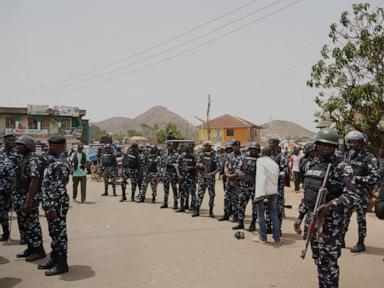
The fatal targeting of at least 20 civilians in the Kawel community of Bokkos, Plateau State, reveals a structural vulnerability in Nigeria's domestic defense architecture rather than a spontaneous security breach. When an unidentified armed group launched an assault on Sunday morning using firearms and machetes, killing 18 victims on-site and mortally wounding two others, the subsequent operational response highlighted a recurring systemic failure. Local police engaged the assailants, forcing a tactical retreat, but failed to secure arrest metrics or establish immediate deterrence.
To understand why North-Central Nigeria remains stuck in this loop of violence, analysts must look past the immediate body counts and deconstruct the core mechanical failures of state authority, geographical vulnerability, and economic competition. If you liked this post, you should look at: this related article.
The Triad of Operational Failure
The persistence of mass-casualty events in the Middle Belt relies on three interconnected structural deficits that allow non-state armed groups to operate with near-total impunity.
1. The Geographic Asymmetry of Surveillance
The Bokkos Local Government Area sits at the intersection of Nigeria’s deep rural interior and rugged topography. Armed groups exploit this terrain to maximize tactical surprise. By choosing soft targets in peripheral agrarian communities, attackers ensure that the response window for centralized state forces is fundamentally compromised. The terrain limits heavy vehicular deployment, leaving rural populations isolated during the critical initial phases of an assault. For another look on this story, check out the recent update from The Guardian.
2. The Deterrence Velocity Deficit
While police units did arrive to exchange gunfire and repel the attackers, the intervention failed to achieve kinetic containment. Forcing a retreat without executing arrests indicates a gap in rapid-pursuit capabilities. Security forces consistently lack the real-time reconnaissance equipment, aerial support, and localized mobility required to track and neutralize mobile guerrilla cells once they melt back into the surrounding bush.
3. Institutional Information Blinds
The refusal of victims' families to permit autopsies, combined with immediate burials, removes standard forensic loops from the investigation. This lack of data hampers the state's ability to map the exact logistics, weaponry, and tactical signatures of the attackers. Without structural investigative data, state actors cannot build predictive models to anticipate where the next assault will land, leaving them in a purely reactive stance.
The Middle Belt Resource Friction Model
The conflict in Plateau State is fundamentally driven by resource scarcity, accelerated by demographic shifts and environmental changes. The region serves as a geographic buffer zone connecting the arid, predominantly Muslim north with the humid, predominantly Christian south.
[Desertification in Far North]
       │
       ▼
[Southward Migration of Pastoralists]
       │
       ▼
[Spatial Friction in Middle Belt (Plateau State)] ──► [Arable Land & Water Scarcity]
       │
       ▼
[Tactical Violence & Mass-Casualty Attacks]
This structural collision generates an intense zero-sum competition over two primary economic assets:
- Arable Land Footprints: Expanding agricultural cultivation reduces the historic transit corridors used by nomadic herders, leading to direct property friction.
- Hydrological Access Points: Climate-driven degradation in the far north forces pastoral populations southward, overloading the existing water infrastructure of sedentary agrarian communities like Kawel.
When these economic frictions are left unmanaged by local courts or formal land-use registries, communities default to localized, asymmetric warfare. The absence of state-backed mediation causes minor property disputes to quickly escalate into coordinated massacres.
The Limits of Reactive Humanitarian Interventions
Following the Kawel assault, state leadership ordered immediate relief operations through emergency management and humanitarian agencies. While essential for short-term stabilization, this response highlights a deeply flawed policy framework that prioritizes post-disaster funding over proactive security investments.
Humanitarian aid acts as a temporary buffer rather than a permanent fix. It treats the physical symptoms of displacement without fixing the underlying security vulnerability. Deploying capital to rebuild destroyed villages yields zero long-term return if the state fails to secure the local perimeter. Until the underlying cost function shifts—making the execution of these raids tactically and physically unviable for armed groups—civilian populations will remain permanently exposed to recurring security shocks.
The state must transition its security architecture away from reactive paramilitary patrols toward localized, data-driven policing centers. This shift requires deploying permanent tactical outposts in high-risk zones, establishing biometric rural surveillance grids, and standardizing property dispute courts to resolve resource friction before it escalates into kinetic violence.


