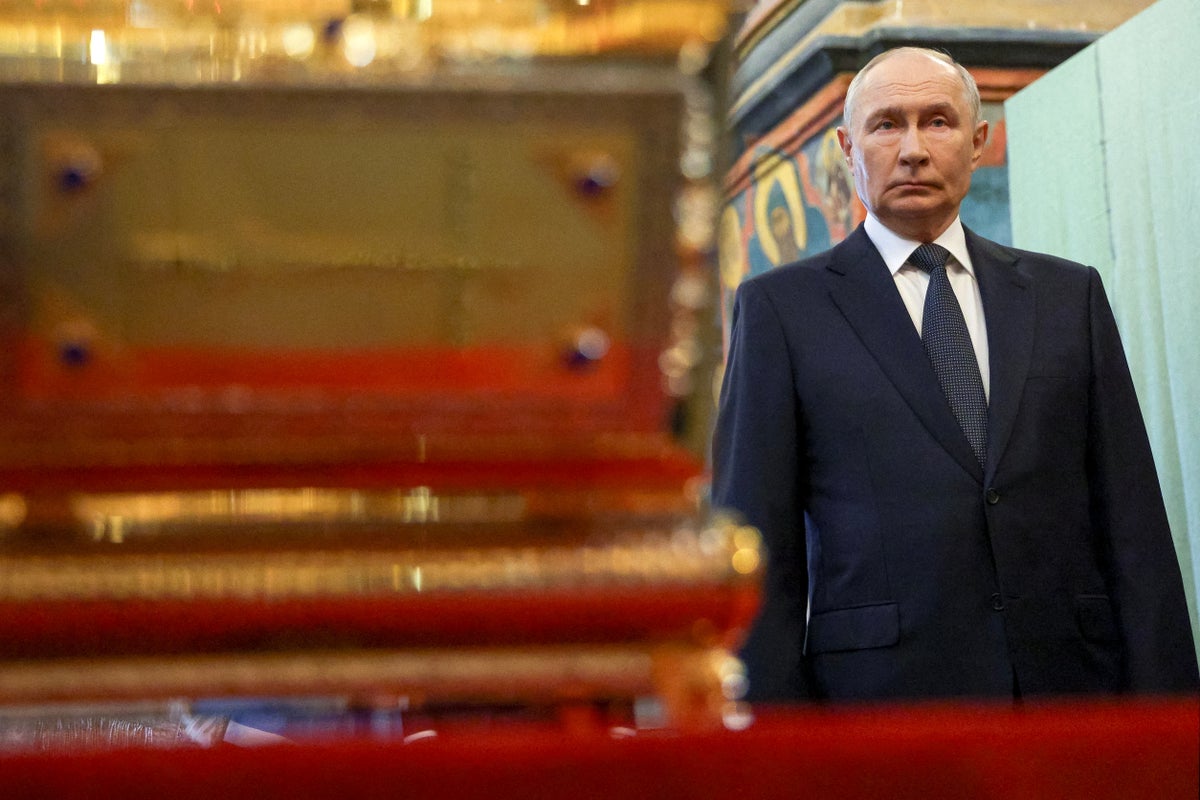
The recent unearthing of Grand Prince Dmitry Donskoy's crypt inside Moscow's Cathedral of the Archangel provides an optimal case study in how material archaeology intersects with statecraft. While public narratives frame the discovery as a fortuitous byproduct of routine masonry restoration, the operational reality of high-status medieval excavation involves a rigorous feedback loop between historical text analysis, anthropological forensics, and political utility. Analyzing the discovery requires breaking down the event into its component variables: the physical evidence, the historical verification matrix, and the structural function of the site itself.
The Physical and Forensic Baseline
The discovery materialized during ongoing restoration work near the southern wall of the Cathedral of the Archangel, an architectural focal point within the Kremlin fortress. Historians previously assumed the remains of Donskoy—who died in 1389 at age 39—resided elsewhere within the multi-chambered necropolis. The unexpected positioning inside a southern crypt disrupted long-held cartographic maps of the cathedral's internal burials.
To validate the authenticity of the skeletal remains, forensic specialists applied a triad of physical metrics that align closely with medieval primary sources:
- Skeletal Completeness: The recovered bones are nearly complete, allowing for an unbroken osteological profile.
- Anthropometric Data: The skeleton belonged to a male standing just under 180 centimeters (approximately 5 feet 11 inches), a stature matching chronicled descriptions of the grand prince.
- Pathological Timeline: Analysis indicates death by natural causes occurring between the physiological age bracket of 35 and 45. Donskoy died at age 39.
The convergence of these parameters minimizes statistical variance, rendering alternative identifications highly improbable within the specific geographic and historical constraints of the crypt.
The Geopolitical Infrastructure of the Cathedral
Built between 1505 and 1508 by Italian architect Aleviz Novy, the Cathedral of the Archangel serves as the primary dynastic necropolis for more than 40 Russian tsars and grand princes. The spatial distribution of tombs within the cathedral is not accidental; it reflects a carefully managed hierarchy of power and lineage.
When structural interventions unearth high-value historical figures, the physical confirmation of bones acts as an empirical anchor for state continuity. Donskoy represents a critical transition node in Russian state formation. His leadership involved two primary operational achievements: scaling the geopolitical footprint of Muscovy and executing the 1380 tactical defeat of Mongol forces from the Golden Horde near the Don River. By routing external military pressure and constructing the initial stone fortifications of the Kremlin, Donskoy transformed Muscovy from a localized collection of tribute-paying principalities into a centralized regional power.
The Mechanics of Historical Validation
The identification process relies on triangulation between material artifacts, physical anthropology, and archival documentation. When church authorities and restoration experts presented the find, they operated within a well-defined verification loop:
- Stratigraphic Context: The depth and material composition of the white-stone sarcophagus matched 14th-century elite burial protocols.
- Chronological Consistency: The degradation state of the organic material matches a late-14th-century interment timeline.
- Corroborating Testimony: Written chronicles detailing Donskoy's physical presence and final disposition provide the necessary qualitative overlay to the quantitative osteological data.
This multi-disciplinary approach eliminates the vulnerabilities associated with relying solely on text or rumor. Archaeology strips away centuries of myth-making, substituting it with measurable osteological reality.
Strategic Operational Play
For administrative bodies and institutional planners observing the intersection of heritage preservation and state communications, unexpected archaeological discoveries inside critical governance zones require immediate protocol integration. Establish a dual-track verification framework: sequester physical artifacts for independent, multi-institutional forensic testing while simultaneously mapping the spatial iconography of the find against existing historical records. This prevents information bottlenecks and ensures that material discoveries reinforce institutional authority through verifiable, peer-reviewed physical evidence rather than speculative public relations narratives.