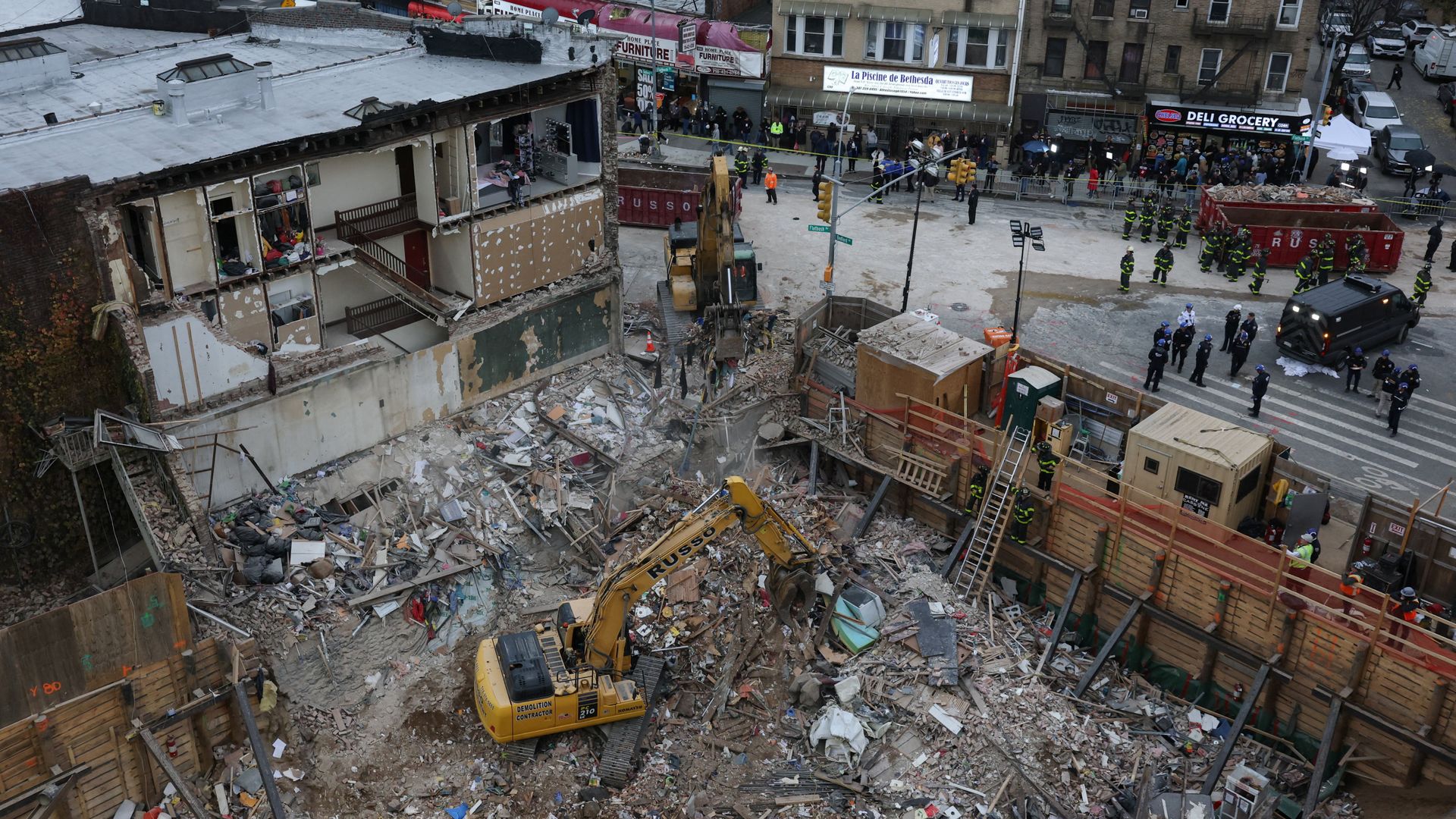
Structural failures in high-density urban environments rarely stem from singular, unforeseeable anomalies. Instead, they represent the terminal phase of compounding operational negligence, regulatory arbitrage, and compromised load-bearing integrity. When municipal authorities initiate a criminal conduct probe following a fatal building collapse in New York City, the investigation transitions from standard civil tort liability—where financial restitution settles disputes—to prosecutorial scrutiny under state penal codes. Understanding this transition requires dissecting the mechanics of structural failure, the evidentiary thresholds required for criminal negligence or manslaughter charges, and the systemic friction between municipal oversight and private development incentives.
The Mechanics of Progressive Collapse
Buildings do not fail instantaneously without prior physical degradation unless subjected to extreme external kinetic energy. In standard urban construction or demolition scenarios, collapse occurs through a sequence of localized load-transfer failures. Every structure operates as a balanced system of dead loads (the weight of the structure itself) and live loads (occupants, equipment, environmental forces, and temporary construction materials).
- Primary Member Overload: Construction crews frequently stage heavy materials—such as masonry pallets, steel beams, or wet concrete—on floor slabs not yet cured to design strength or engineered to bear concentrated point loads. When a localized slab exceeds its shear or flexural capacity, it fails.
- Load Redistribution Failure: In a properly engineered frame, adjacent columns and beams absorb the redistributed weight of a failed section. However, when corners are cut during shoring, bracing, or concrete curing, adjacent members lack the reserve capacity to absorb the sudden dynamic shock.
- Progressive Pancake Failure: The falling mass of an upper floor strikes the slab below with kinetic energy far exceeding static design limits. This triggers a vertical chain reaction, collapsing floor upon floor until the debris reaches the foundation.
Criminal investigators focus heavily on the delta between the approved architectural drawings stamped by a licensed Professional Engineer (PE) and the actual field conditions at the time of failure. A deviation from the Structural Stability Sequence—such as removing load-bearing walls before installing temporary steel needle beams—transforms an engineering mistake into an actionable violation of the New York City Building Code.
Separating Civil Negligence from Criminal Conduct
The deployment of a District Attorney's office alongside the Department of Buildings (DOB) signals that investigators suspect conduct exceeding ordinary carelessness. In New York jurisprudence, establishing criminal liability in a construction fatality requires proving specific mental states (mens rea) defined under Article 15 of the New York Penal Law.
- Criminally Negligent Homicide (Penal Law § 125.10): Prosecutors must prove that a defendant failed to perceive a substantial and unjustifiable risk that death would occur. The failure to perceive this risk must constitute a gross deviation from the standard of care that a reasonable person would observe in the situation. For a site superintendent or contractor, ignoring visible structural cracking, bowing support columns, or repeated stop-work orders establishes the baseline for this gross deviation.
- Manslaughter in the Second Degree (Penal Law § 125.15): This charge elevates the threshold from failure to perceive a risk to conscious disregard of a known risk. If documentary evidence—such as text messages, daily logs, or whistleblower emails—demonstrates that management knew a retaining wall was compromised or that temporary shoring was inadequate, yet ordered workers to proceed to meet a financial deadline, the conduct crosses into recklessness.
- Reckless Endangerment (Penal Law § 120.20 / § 120.25): Even before a fatality occurs, creating a grave risk of death to others through non-compliant structural work satisfies the elements of this offense. In a collapse where victims are killed and others survive, prosecutors stack these charges per victim to maximize statutory exposure.
The Principal-Agent Problem in Urban Subcontracting
The structural vulnerability of urban job sites is frequently rooted in the fragmented hierarchy of modern construction management. Developers routinely insulate themselves from direct operational liability through multi-tiered subcontracting arrangements.
At the top sits the property owner or developer, who transfers construction risk to a General Contractor (GC) via a fixed-price or Guaranteed Maximum Price (GMP) contract. The GC subsequently divides the scope of work among specialized subcontractors for excavation, foundation, concrete superstructure, and steel erection. Under fixed-price contracts, subcontractors only increase profit margins by compressing labor hours or reducing material costs.
This financial architecture creates a severe principal-agent problem. The developer demands speed to minimize interest payments on construction loans, which carry high daily carrying costs. The subcontractor, operating on thin margins, is incentivized to bypass time-consuming safety protocols—such as waiting 28 days for concrete cylinders to reach full compressive strength before stripping formwork—to move crews to the next billable phase.
When an incident occurs, each tier attempts to diffuse responsibility. The developer points to the GC's contractual obligation to maintain site safety; the GC points to the subcontractor's direct supervision of the laborers; the subcontractor claims they were merely executing plans provided by the architect or engineer of record. Criminal probes cut through these corporate veils by targeting individuals with direct operational control, stripping away the liability shields afforded by Limited Liability Companies (LLCs).
Forensic Reconstruction and Evidentiary Chains
Once rescue and recovery operations conclude and victims are formally identified, the site transforms into a forensic crime scene. Investigators cannot rely on witness testimony alone, as surviving workers may face coercion, fear immigration consequences, or lack visibility into upstream engineering decisions. Instead, forensic engineers and prosecutorial investigators construct a physical and digital timeline.
First, material sampling is conducted on the debris field. Core samples of concrete are extracted and subjected to compression testing in independent laboratories to verify if the mix met the specified Pounds per Square Inch (PSI) rating or if it was diluted with excess water to make pouring easier. Steel connections are examined under electron microscopes to distinguish between ductile failure (bending before breaking, indicating overload) and brittle fracture (snapping cleanly, indicating defective metallurgy or improper welding).
Second, investigators subpoena the digital paper trail. Modern construction sites generate vast amounts of metadata. Investigators cross-reference:
- DOB Filing Records: Checking whether permits were pulled for structural alterations or if work was performed under deceptive "cosmetic renovation" filings to avoid rigorous structural plan exams.
- Site Safety Logs: Analyzing whether mandatory pre-shift inspections were actually performed or if supervisors engaged in "pencil-whipping"—signing off on identical safety checklists days in advance.
- Geolocation and Communications: Subpoenaing cell phone records, WhatsApp threads, and Procore project management logs to establish exact timelines of who ordered specific load-bearing elements to be altered or removed.
Limitations of Municipal Regulatory Enforcement
A persistent misconception following high-profile collapses is that increased municipal inspection frequency alone prevents structural failures. While the New York City Department of Buildings maintains strict statutory codes, reactive inspection models face inherent structural limitations.
Inspectors operate on a snapshot basis. An inspector may visit a site at 10:00 AM, verify that perimeter netting and shoring conform to plans, and depart. By 2:00 PM, a site supervisor facing schedule pressure may order the removal of critical cross-bracing to maneuver a piece of heavy machinery, fundamentally altering the load path of the structure. Unless an inspector is permanently stationed on-site—a logistical impossibility across tens of thousands of active permits—enforcement relies heavily on self-certification and post-incident auditing.
Furthermore, administrative fines levied by municipal agencies are frequently treated by undercapitalized or unscrupulous contractors as a routine cost of doing business rather than a deterrent. A $10,000 fine for working without a permit or violating a Stop Work Order is economically negligible compared to the $50,000-per-day carrying cost of delaying a commercial real estate closing. Only when enforcement shifts from administrative fines to criminal prosecution—carrying the threat of prison sentences and permanent revocation of professional licenses—does the economic calculus of non-compliance change.
Restructuring Accountability in High-Risk Development
To eliminate the systemic incentives that lead to fatal collapses, institutional stakeholders—including lenders, insurers, and municipal regulators—must alter the risk-transfer mechanisms governing urban construction.
- Mandatory Escrow for Structural Monitoring: Municipal building departments should require developers of projects exceeding specific height or excavation thresholds to fund an independent, third-party structural engineering monitor. Unlike the contractor's engineer, this monitor reports directly to the municipal authority and holds unilateral authority to halt work via automated stop-work triggers if real-time strain gauges or tiltmeters exceed design tolerances.
- Piercing Corporate Shields for Repeat Offenders: State legislatures must expand statutory strict liability to hold parent LLCs and individual managing members financially and criminally accountable when a subsidiary shell company accumulates multiple Class 1 (immediately hazardous) violations prior to a catastrophic failure.
- Lender-Mandated Telemetry: Commercial real estate lenders must tie construction loan drawdowns not merely to visual progress milestones, but to verified digital telemetry—requiring timestamped photographic evidence of shoring installations and independent laboratory concrete cure certifications before releasing capital tranches.
Until financial liquidity is directly conditioned on verified structural compliance, the operational friction between speed and safety will continue to produce preventable fatalities, forcing prosecutors to litigate engineering failures in criminal courtrooms after lives are already lost.