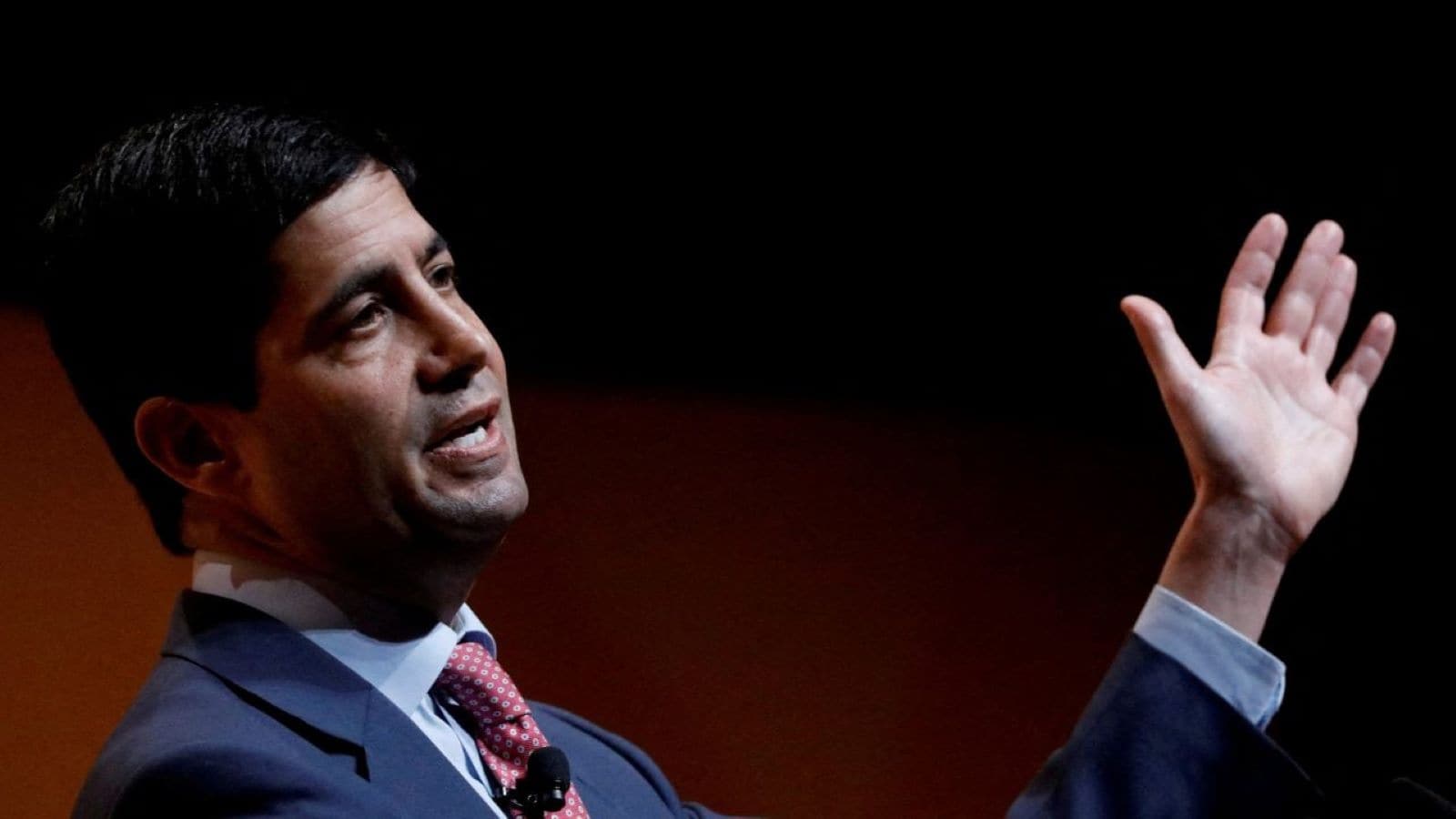
The ascension of Kevin Warsh as the 17th Chairman of the Federal Reserve Board of Governors breaks decades of institutional protocol and exposes a structural rift in the mechanics of American monetary policy. Sworn in at the White House East Room rather than the traditional, politically insulated confines of the Federal Reserve itself, Warsh inherits a macroeconomy trapped in a stagflationary pincer. Core consumer prices have broken above the central bank's explicit targets, driven by a 17.9% year-over-year surge in energy costs fueled by the ongoing conflict with Iran.
The analytical mistake made by casual observers is viewing Warsh's appointment merely through a lens of political theater or executive overreach. The reality is far more complex, governed by a rigid mathematical and operational trilemma that cannot be resolved through executive decrees or partisan alignment. To understand the trajectory of global capital markets under the Warsh Fed, one must deconstruct the structural constraints, the underlying cost functions, and the operational friction points that will dictate monetary policy over the next four years.
The Three Structural Pillars of the Current Macroeconomic Pincer
The Federal Reserve does not operate in a vacuum; it executes policy through a transmission mechanism that is currently bottlenecked by three distinct, competing variables.
                          [The Policy Trilemma]

                        /                       \
                       /                         \
                      /                           \
                     v                             v
       [Exogenous Commodity Shock]  <------->  [The Fiscal Dominance Constraint]
       (Supply-Side Energy Inflation)           ($6.7T Fed Balance Sheet Burden)
                      \                           /
                       \                         /
                        \                       /
                         v                     v
                        [The Executive Mandate]
                      (Political Pressure to Cut)
1. The Exogenous Supply-Side Shock
Monetary policy is designed to manage demand-side fluctuations. When the economy overheats due to excess credit expansion, raising the federal funds rate dampens aggregate demand, cooling inflation. However, the current inflation spike—marked by a 3.8% headline annualized expansion—is structurally driven by supply-side disruptions from the war in Iran. Central banks lack the tools to drill oil or secure global shipping lanes. When energy costs spike by double digits, the input cost of every physical supply chain rises, rendering traditional interest rate hikes less effective at targeting the root cause of price growth while maximizing the collateral damage to economic output.
2. The Fiscal Dominance Constraint
Warsh enters office with the Federal Reserve balance sheet sitting at approximately $6.7 trillion. This massive portfolio of Treasuries and mortgage-backed securities represents what Warsh himself has defined as "fiscal policy in disguise." When the central bank holds trillions in government debt, it creates an acute loop of fiscal dominance:
- High interest rates increase the borrowing costs of the federal government, ballooning the deficit via net interest outlays.
- Conversely, keeping interest rates artificially low to monetize this debt directly dilutes purchasing power and fuels structural inflation.
The second limitation is operational: Warsh’s stated objective to aggressively shrink this balance sheet means the Fed will be actively draining liquidity from the banking sector, putting natural upward pressure on long-duration yields, irrespective of where the short-term policy rate is set.
3. The Executive Mandate vs. Market Credibility
The political environment surrounding this appointment introduces an acute credibility discount. The executive branch has explicitly demanded aggressively lower interest rates to fuel domestic growth, labeling the prior regime's cautious approach as counterproductive. Yet, the global bond market has already begun bidding up interest rates across the curve. This indicates that fixed-income investors are pricing in a premium for structural inflation. If the Warsh Fed cuts rates to satisfy executive pressure while energy shocks are actively bleeding into consumer expectations, it risks unanchoring long-term inflation expectations, triggering a capital flight from long-duration US Treasuries.
The Policy Cost Function: Why No Clean Options Exist
To evaluate the next logical moves of the Federal Open Market Committee (FOMC), the situation must be framed as a optimization problem under severe constraints. The central bank faces two primary mathematical failure modes, with no neutral equilibrium available.
Failure Mode A: The Supply-Shock Accomodation (The Dovish Error)
If the FOMC prioritizes executive demands and lowers nominal interest rates while supply-side energy costs are escalating, the real interest rate ($r = i - \pi$, where $i$ is the nominal rate and $\pi$ is inflation) turns deeply negative.
This policy path accelerates velocity of money in the domestic economy, compounding the structural supply shock with secondary demand-side overheating. The long-term cost is an embedded inflationary spiral, requiring a much higher terminal rate later to correct, mirroring the policy failures of the mid-1970s.
Failure Mode B: The Pro-Cyclical Tightening (The Hawkish Error)
If Warsh reverts to his historical doctrinal stance as an inflation hawk and supports a rate hike to combat the energy-driven price spike, the Fed risks forcing a highly leveraged corporate sector into a severe contraction. Raising borrowing costs during a supply-side energy crisis does nothing to lower the price of crude oil, but it directly compresses corporate profit margins and consumer discretionary income. This policy route risks engineering a sharp stagflationary recession, where unemployment rises alongside sticky, energy-driven price indices.
The Structural Reforms: Re-Engineering the Fed's Operational Framework
During his initial statements, Warsh outlined a desire to lead a "reform-oriented" central bank that escapes "static frameworks and models." This is an explicit critique of the Fed's reliance on the Phillips Curve and the New Keynesian Dynamic Stochastic General Equilibrium (DSGE) models, which consistently failed to predict the persistence of post-pandemic inflation.
The strategic play under a Warsh chairmanship will likely focus on three operational shifts designed to change how the central bank measures and reacts to economic data.
- De-emphasizing the 2% Inflation Target: Rather than rigidly chasing a backward-looking personal consumption expenditures (PCE) metric that is warped by geopolitical oil shocks, the Fed may shift toward stabilizing broad nominal GDP (NGDP) growth. This allows the central bank to absorb supply-side shocks without triggering pro-cyclical policy panic.
- Quantitative Tightening as a Primary Instrument: Instead of using the federal funds rate as the sole steering wheel, Warsh is highly likely to utilize accelerated balance sheet reduction to cool credit markets. By letting Treasuries roll off the balance sheet faster, the Fed can tighten financial conditions at the long end of the curve without needing to execute politically volatile nominal rate hikes at the short end.
- Eliminating Forward Guidance: The practice of telling the market exactly what the Fed plans to do quarters in advance has boxed the FOMC into corners when data shifts rapidly. Expect a transition to an intentionally ambiguous, strictly data-dependent stance that restores tactical flexibility to the committee.
The Strategic Play for Institutional Asset Allocation
The policy matrix under the new regime requires a fundamental rebalancing of risk parameters across institutional portfolios. The standard assumption that the Federal Reserve will act as a structural backstop for equity markets via interest rate cuts must be discarded.
The primary allocation pivot requires a significant reduction in duration risk within fixed-income portfolios. With the Fed actively looking to shrink its $6.7 trillion balance sheet and the global bond market demanding a higher inflation premium, the term premium on 10-year and 30-year US Treasuries will structurally widen. Fixed-income strategies must migrate toward the short end of the curve, utilizing floating-rate notes and Treasury bills to preserve capital liquidity.
Simultaneously, equity allocations must be reindexed away from high-beta, growth-oriented sectors that depend on cheap capital and long-tail valuations. Capital should be reallocated toward self-funding, high-free-cash-flow enterprises within the energy, defense, and industrial infrastructure sectors. These specific sectors act as a natural hedge against supply-side commodity shocks and benefit directly from the structural reshoring of capital, outperforming the broader indices in an environment where nominal interest rates remain higher for longer than the consensus forecasts imply.