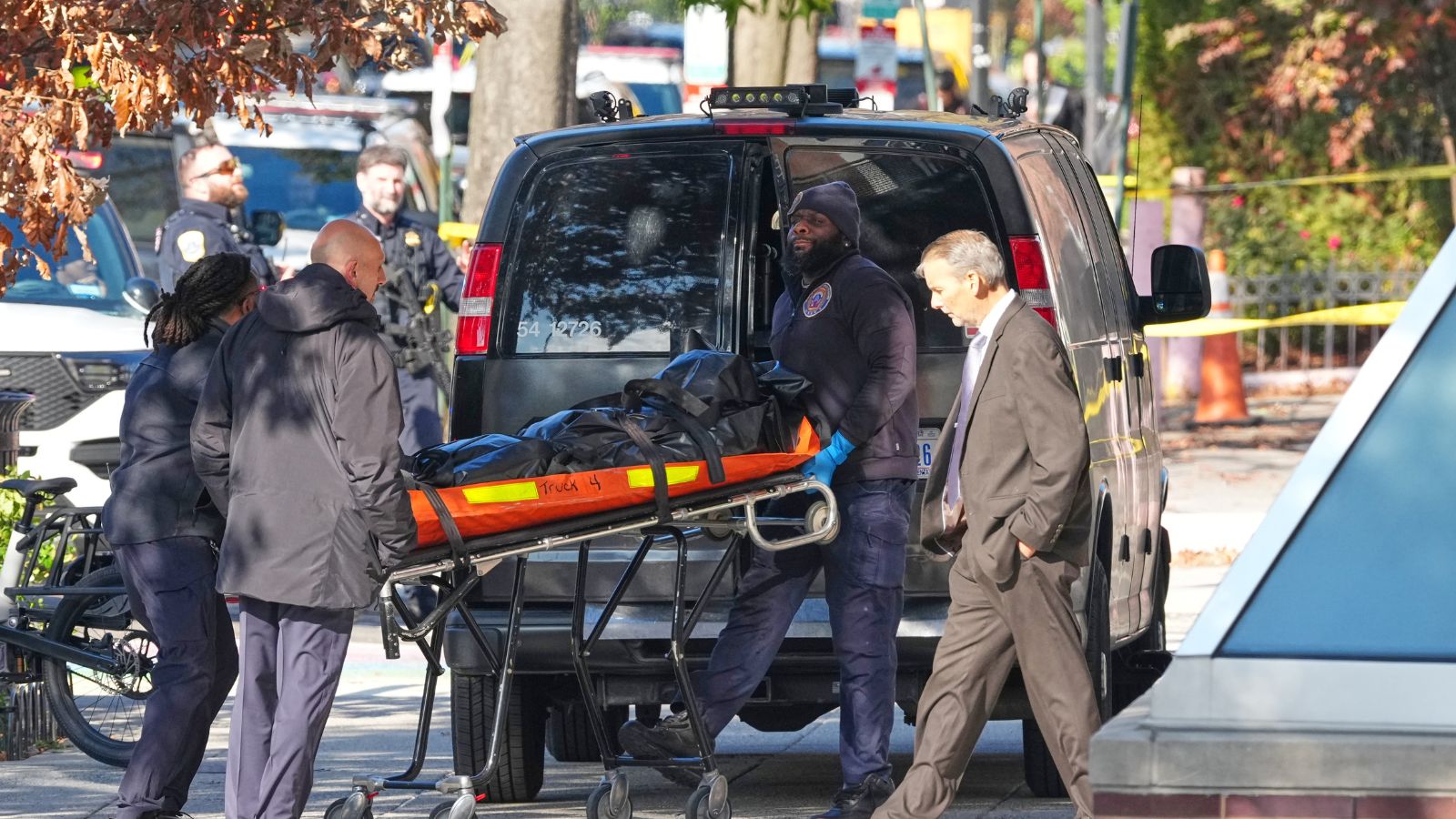
Standard reporting on the Washington, D.C. shooting—in which a physician fatally shot a building manager following a dispute over mold—reduces a systemic operational failure to a sensational headline. Treating targeted workplace violence as an inexplicable anomaly obscures the structural mechanics that precede it. When high-stakes tenant disputes intersect with unaddressed environmental hazards, rigid property management hierarchies, and acute psychological stress, the resulting friction follows a predictable escalation curve. Analyzing this incident through behavioral threat assessment, property risk management, and clinical stress frameworks reveals how routine maintenance complaints degrade into catastrophic outcomes.
The Structural Anatomy of Property-Tenant Friction
Commercial and residential real estate operations rely on asymmetric power dynamics. Property managers act as gatekeepers for capital expenditure, habitability compliance, and lease enforcement. Tenants, regardless of their external socioeconomic status, occupy a subordinate position regarding physical infrastructure. When an environmental hazard such as fungal growth emerges, this structural asymmetry creates immediate operational friction.
The mechanics of a mold dispute typically unfold across three distinct operational failures:
- Diagnostic Divergence: Tenants experience environmental contaminants through somatic symptoms, property damage, and perceived health threats. Property managers evaluate the same complaint through liability exposure, remediation cost, and insurance deductibles. Without an objective, third-party industrial hygiene baseline, both parties operate from incompatible definitions of reality.
- Bureaucratic Latency: Maintenance workflows in managed properties are designed to filter out minor complaints and defer capital outlays. Standard ticketing systems introduce multi-week delays between initial reporting, inspection, vendor bidding, and physical remediation. To a tenant experiencing ongoing exposure, administrative latency registers as deliberate negligence rather than standard operating procedure.
- Liability Deflection: Legal counsel and risk management protocols often instruct property personnel to avoid admitting fault or confirming hazardous conditions in writing. While this posture protects the corporate entity from immediate litigation, it invalidates the tenant's lived experience and signals institutional hostility.
When a dispute involves a medical professional, diagnostic divergence intensifies. A physician possesses specialized training in pathology, immunology, and environmental health hazards. Unlike a lay tenant who might accept a property manager's reassurance that discoloration is merely cosmetic mildew, a clinician evaluates microbial growth through the lens of mycotoxin exposure, respiratory compromise, and chronic inflammatory response. Professional expertise transforms a maintenance annoyance into a documented biological threat, compressing the tenant's tolerance for administrative delay.
Behavioral Threat Assessment and Grievance-Fueled Violence
Targeted violence in professional or residential settings rarely stems from spontaneous psychotic breaks. Behavioral threat assessment research—specifically frameworks developed by the United States Secret Service National Threat Assessment Center and the FBI Behavioral Analysis Unit—demonstrates that targeted attacks are the terminal phase of a discernible pathway.
The pathway to targeted violence operates through five sequential stages:
- Grievance Formation: The subject experiences a perceived injustice, loss, or threat to personal well-being. In property disputes, the grievance is anchored to a tangible physical environment that the individual cannot easily escape due to lease obligations, relocation costs, or practice disruption.
- Ideation: The subject concludes that standard institutional remedies—municipal code enforcement, civil litigation, lease termination—are ineffective or too slow. Violence shifts from an unthinkable act to a viable mechanism for resolving the impasse or exacting retribution.
- Research and Planning: The subject transitions from abstract anger to operational preparation, identifying specific targets who personify the obstructing institution. In commercial and residential buildings, the on-site building manager absorbs the totality of corporate policy friction, becoming the sole visible avatar of systemic unresponsiveness.
- Preparation: Acquisition of tools, weapons, or tactical positioning required to execute the plan.
- Breach and Execution: Circumventing physical security controls to confront the target directly.
A critical distinction separates affective violence (reactive, emotionally charged, impulsive) from predatory violence (planned, purposeful, emotionless). Workplace shootings rooted in prolonged administrative disputes frequently exhibit hybrid characteristics. A long-gestating grievance builds chronic baseline arousal, while a specific precipitating event—an eviction notice, a dismissive email, a refused repair—triggers an acute shift from civil dispute to lethal confrontation.
High-status professionals are not immune to this trajectory; in certain respects, their occupational conditioning accelerates it. Physicians operate in environments characterized by high cognitive load, chronic sleep deprivation, and elevated burnout rates. Furthermore, medical training instills an expectation of agency, rapid diagnostic intervention, and authoritative compliance. When a clinician encounters an immovable bureaucratic barrier regarding a perceived health threat, the collision between high professional agency and institutional helplessness generates severe psychological strain.
The Cost Function of Deferred Environmental Remediation
From a pure risk-management perspective, failing to resolve environmental complaints rapidly represents a miscalculation of expected value. Property management firms routinely optimize for short-term operating expense (OpEx) reduction while underpricing tail-risk exposure.
Consider the economic variables governing a standard commercial or residential mold complaint:
- Direct Remediation Cost ($C_r$): Localized moisture intrusion, drywall replacement, and HEPA filtration typically cost between $1,500 and $15,000 depending on square footage and HVAC involvement.
- Legal and Regulatory Exposure ($C_l$): Municipal housing code violations, constructive eviction claims, and personal injury litigation escalate costs into the tens or hundreds of thousands of dollars, accompanied by prolonged management distraction.
- Catastrophic Tail Risk ($C_t$): Physical assault, loss of life, permanent reputational destruction, criminal investigation, and total operational shutdown of the asset.
Property managers frequently treat $C_r$ as a certainty to be avoided and $C_t$ as a zero-probability event. This heuristic fails when interpersonal hostility escalates. Once a tenant exhibits fixation, aggressive communication, or repeated boundary violations, the probability of severe operational disruption rises non-linearly. Spending $5,000 on immediate, transparent environmental testing and remediation eliminates the primary catalyst for escalation. Deferring that expenditure to protect quarterly net operating income (NOI) leaves the asset exposed to catastrophic human and financial loss.
Limitations of Standard Security and De-escalation Protocols
Post-incident analyses inevitably call for tighter physical security, metal detectors, or conflict-resolution training for building staff. While these measures address isolated vulnerabilities, each carries strict operational limits that organizations must recognize:
- Access Control Ceilings: Commercial and multi-family residential buildings function on tenant accessibility. Unlike courthouses or secure government facilities, standard office and apartment complexes cannot subject credentialed tenants to daily ballistic screening without destroying the asset's marketability and throughput. A tenant with legitimate access bypasses perimeter defenses entirely.
- Training Decay Under Acute Stress: Verbal de-escalation training equips staff to manage agitated individuals during routine service failures. However, once a subject has crossed into predatory planning and arrives armed, verbal judo cannot neutralize a kinetic threat. Relying on front-line managers to talk down a determined attacker shifts an unfair burden onto under-protected personnel.
- Privacy and HIPAA Constraints: Even when a tenant displays severe behavioral deterioration, property managers lack access to clinical records and possess limited legal standing to compel psychiatric evaluation. Civil commitment thresholds require imminent, documented danger to self or others, leaving a wide operational gap where hostile but non-explicit behavior goes unchecked.
Operational Protocol for High-Friction Tenant Disputes
To prevent environmental and administrative disputes from reaching lethal thresholds, property management firms and corporate real estate operators must decouple technical remediation from interpersonal conflict.
1. Establish Objective Environmental Triggers
Remove subjective judgment from building managers regarding health-related complaints. Implement a mandatory 48-hour threshold: any formal complaint involving water intrusion, fungal growth, or air quality automatically triggers an independent, third-party industrial hygiene inspection. Sharing raw laboratory results directly with the tenant eliminates diagnostic divergence and demonstrates institutional good faith.
2. Separate Policy Enforcement from Front-Line Personnel
Building managers should never serve as the sole point of contact for adversarial communications, lease terminations, or denied claims. When a tenant shifts from routine service requests to hostile, repetitive, or litigious correspondence, route all subsequent communication through a centralized risk-management or legal liaison. Removing the on-site manager from the adversarial loop deprives a fixated individual of a localized target.
3. Implement Behavioral Threat Assessment Triage
Train regional directors and security leads to recognize pre-incident behavioral indicators rather than waiting for explicit threats of violence. Key markers include:
- Escalating frequency and intensity of communications disproportionate to the underlying issue.
- Statements indicating hopelessness, desperation, or an inability to tolerate the current living or working environment.
- Personalization of institutional policies, where the tenant blames a specific employee for corporate decisions.
- Unannounced appearances at administrative offices outside standard business hours.
When two or more markers appear concurrently, organizations must engage external behavioral threat assessment specialists, document all interactions chronologically, and adjust physical security postures—such as requiring two-person teams for any unit entry or relocating front-desk personnel behind reinforced barriers.
4. Execute Rapid Financial Off-Ramps
When a dispute reaches an intractable impasse, the optimal financial move is an immediate, penalty-free lease termination coupled with relocation assistance. Retaining a hostile tenant to preserve twelve months of rental revenue violates basic risk-adjusted return principles. Paying a tenant to exit the property cleanly terminates the grievance cycle, restores operational stability for building staff, and eliminates the physical proximity required for workplace violence.