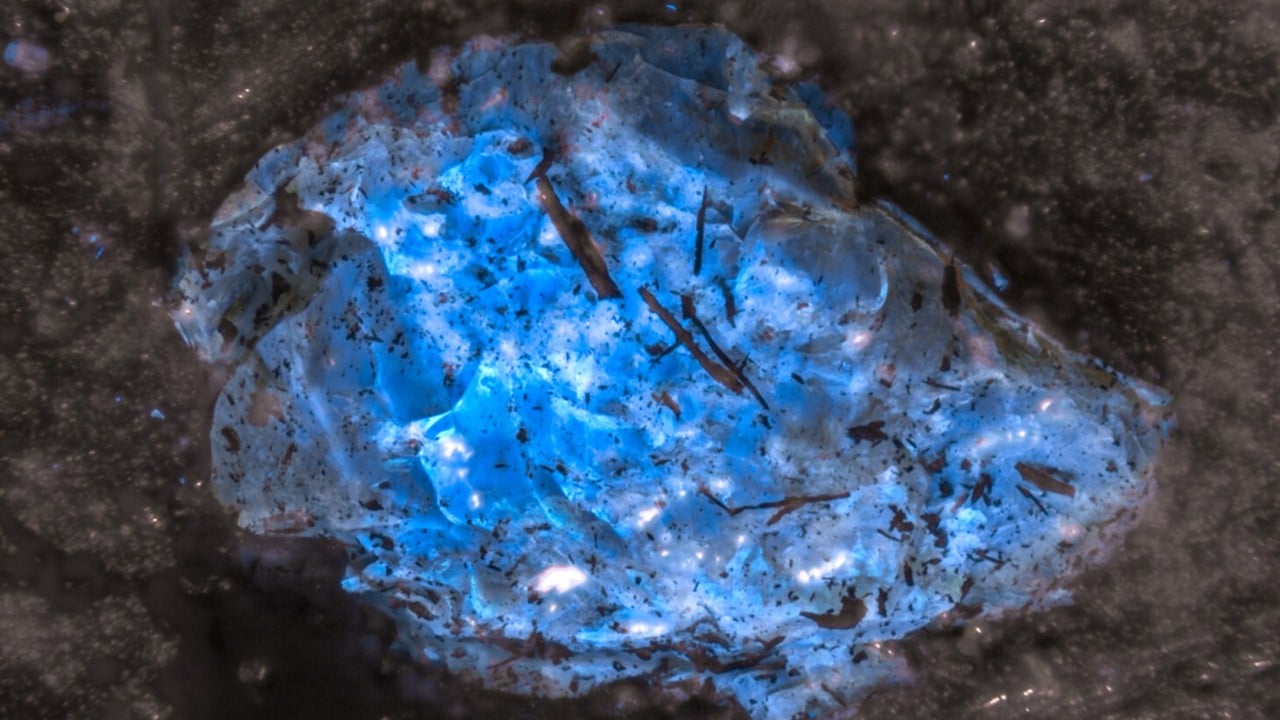
A team of Chinese researchers recently unearthing the world's oldest known amber from a coal seam in Xinjiang has fundamentally altered what paleobotanists thought they knew about ancient ecosystems. The discovery pushes the timeline of fossilized tree resin back millions of years, offering an unprecedented window into prehistoric forest conditions and the atmospheric chemistry of a vastly different Earth. This finding is not merely a neat geological curiosity. It serves as a direct key to unlocking how ancient environments responded to dramatic climate shifts long before human activity entered the equation.
For decades, the scientific community operated under a consensus regarding the appearance and preservation of early amber deposits. Most known specimens date back to the Cretaceous period, with smaller troves found in younger Cenozoic strata. Finding reliable, intact resin samples from earlier periods remained a persistent challenge because organic materials of that age typically degrade, oxidize, or transform completely into coal without leaving behind the golden time capsules scientists crave. The Xinjiang discovery shatters that upper limit.
Breaking Down the Xinjiang Stratigraphy
The excavation took place within a notoriously difficult geological formation in northwestern China. Coal seams in this region have long attracted industrial interest, but paleontology departments now view them as high-priority zones for deep-time research. The amber pieces were embedded deep within organic-rich layers that formed during a critical transition phase in Earth's history.
Pressure, temperature, and absolute isolation conspired to protect the resin. When tree resin flows down a bark fracture, it captures whatever is immediately adjacent. Dust motes, microscopic fungal spores, and occasionally tiny arthropods get trapped in a sticky polymer matrix. Over millions of years, this matrix undergoes polymerization, hardening into the translucent material we recognize today. The specific geochemical environment of the Xinjiang coal bed prevented the usual destructive oxidation process.
Why Early Resin Preservation Matters
Tree resin acts as an environmental sponge. As it hardens, it seals microscopic pockets of atmospheric gas and organic particulate matter inside its core. Analyzing these tiny gas bubbles gives researchers a direct sample of ancient air.
- Oxygen concentrations during the deposition period varied wildly compared to modern baselines.
- Carbon dioxide fluctuations recorded inside the amber match up with major volcanic pulses.
- Micro-inclusions reveal fungal pathogens that targeted ancient gymnosperms long before flowering plants dominated the globe.
Traditional paleontology relies heavily on compressed leaf fossils and petrified wood. These macro-fossils tell a compelling story about plant structure and regional distribution, but they rarely preserve soft tissues or atmospheric chemistry with high fidelity. Amber changes that equation entirely. By capturing biological samples at a cellular level, the Xinjiang deposit provides baseline data that structural fossils simply cannot match.
The Chemistry of Deep-Time Fossilization
Fossilization is usually a brutal, destructive filter. Most biological matter decays into nothingness within weeks of death. Resin is the rare exception because its complex mix of terpenes and phenolic compounds resists microbial decay. Yet, surviving for hundreds of millions of years requires more than just initial chemical resistance.
The coal-forming environment in Xinjiang provided a low-oxygen burial context. Without oxygen, aerobic bacteria could not consume the polymer chains. Furthermore, the surrounding coal matrix acted as a physical buffer, protecting the fragile amber nuggets from tectonic shearing and groundwater leaching.
Analytical Techniques Used by the Research Team
Modern paleontology is as much about physics and chemistry as it is about hammers and field notebooks. The research team employed advanced spectroscopic techniques to verify the age and composition of the amber without destroying the samples.
Fourier-transform infrared spectroscopy mapped out the molecular bonds inside the resin. This confirmed that the material had fully matured past the copal stage into stable, ancient amber. Simultaneously, high-resolution mass spectrometry identified specific terpenoid markers that point directly to extinct conifer families as the original resin producers.
These analytical hurdles are immense. Contamination from modern hydrocarbons is a constant threat when excavating near commercial coal operations. The team had to implement clean-room protocols directly at the extraction site to ensure that organic residues found inside the amber were genuinely ancient rather than modern pollutants seeping through groundwater channels.
Rewriting Botanical History
Conifers dominated terrestrial ecosystems long before broadleaf trees evolved to claim ecological supremacy. These ancient gymnosperms used sticky resin as a primary defense mechanism against wood-boring insects and fungal attacks. When an insect tried to bore into the cambium layer, it drowned in a viscous trap.
The Xinjiang amber contains direct evidence of these prehistoric predator-prey dynamics. While amber from later periods often boasts diverse insect inclusions like ants, beetles, and early flies, older deposits offer a glimpse into a simpler, harsher biological landscape. The organisms trapped in these early resin flows represent the foundational lineages of modern terrestrial arthropods.
Comparative analysis between the Xinjiang specimens and younger Burmese or Baltic amber reveals a steady evolution in resin chemistry. Trees gradually adapted their chemical defenses as new classes of herbivorous insects evolved. This long-term arms race between flora and fauna shaped the structure of ancient forests, dictating which plant species survived global extinction events and which ones vanished forever.
The geographical location of the discovery adds another layer of complexity. Xinjiang today is characterized by arid basins and vast deserts, a stark contrast to the lush, humid tropical or subtropical environments that fostered the resin-producing trees millions of years ago. Continental drift and massive tectonic shifts moved this landmass across different climatic zones over deep time. The amber serves as a physical marker of these grand geographical migrations, confirming paleomagnetic models with tangible biological data.
Geologists are already re-evaluating core samples from neighboring basins across Central Asia. If the conditions that preserved this amber existed in Xinjiang, similar coal measures elsewhere might hold parallel treasures. Exploration teams are currently drafting new survey parameters to target deep strata that were previously ignored because they lacked obvious vertebrate fossils.
The golden drops pulled from the dark coal of Xinjiang do not just sit quietly in a museum drawer. They stand as hard proof that Earth's history holds countless surprises beneath the surface, waiting for the right combination of technology and persistence to bring them into the light.