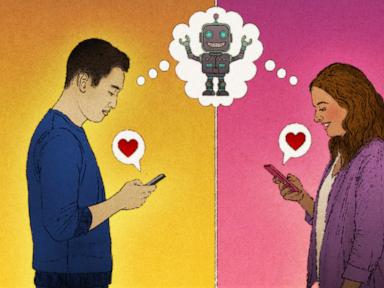
The screen glowed with a mocking intensity at 2:14 AM. For the fourteenth time that night, I stared at a flashing cursor in a tiny text box. Her name was Sarah. Her profile picture showed her laughing in front of a giant, crumbling bookstore in Chicago, looking effortlessly cool. Under her bio, she had written: "Tell me your favorite opening sentence from a novel, and I might just let you buy me a coffee."
My mind was a complete, agonizing blank.
I am a data analyst by trade. I can map complex customer journeys and optimize conversion rates in my sleep. But when it comes to the terrifying, high-stakes poker game of digital courtship, my brain short-circuits. I usually resort to safe, terribly dull openers like, "Hey, how's your week going?"—the digital equivalent of cardboard. They rarely get a reply. I felt that familiar, creeping sense of inadequacy. Modern romance had become an exhausting gauntlet of performative wit, and I was failing it.
Then, I did something that felt like a quiet betrayal of my own humanity. I opened a secondary app on my phone, uploaded three screenshots of Sarah’s profile, and typed a single prompt: Give me a witty, slightly self-deprecating opener about classic literature that sounds like a tired twenty-something wrote it.
Three seconds later, the machine spat out its answer.
"It’s a truth universally acknowledged that a single man in possession of a good fortune must be in want of a wife... but since I only have twenty bucks and a library card, will a recommendation for a sci-fi thriller do?"
I copied it. I pasted it. I hit send.
My heart hammered against my ribs, a cocktail of excitement and sharp, sudden shame. It worked beautifully. Within two minutes, Sarah replied with a laughing emoji. We were off to the races. But as the conversation flowed over the next three days, guided by a silent, invisible digital puppet master sitting in my palm, a chilling realization took root.
She wasn't falling for me. She was falling for a data model.
The Ghost in the Dating Machine
What I experienced in the quiet isolation of my apartment is no longer an anomaly. It is the new baseline of human connection. Across the globe, millions of lonely singles are outsourcing their charm to artificial intelligence.
A quiet revolution has transformed dating apps from simple matchmakers into automated behavioral laboratories. In the early days of Tinder and Bumble, the technology simply put two people in the same digital room. The rest was up to you. Today, a sprawling ecosystem of AI-powered "wingman" apps—with names like YourMove, Rizz, and Plug—act as digital Cyrano de Berganacs, whispering perfectly calibrated prose into the ears of the romantically insecure.
The numbers tracking this shift are staggering. Recent industry surveys reveal that nearly half of Gen Z and millennial dating app users have either used AI to polish their profiles or actively generate opening lines. It is a booming economy built entirely on our collective fear of rejection.
Consider how these systems actually function. They do not understand love. They do not know what it feels like to have your stomach drop when someone looks you in the eye. Instead, they treat conversation as an optimization problem. The algorithms analyze vast datasets of successful text exchanges, measuring response times, word lengths, and emotional sentiment. When you ask an AI what to say next, it calculates the statistical probability of a positive response based on millions of past human interactions.
It is highly effective. It is also deeply disorienting.
To understand the scale of this, we have to look at the sheer friction of modern dating. Let us look at a hypothetical user named Marcus. Marcus is thirty-two, works fifty hours a week in healthcare, and is thoroughly burnt out. Every evening, he spends thirty minutes swiping. When he finally gets a match, the pressure to stand out among dozens of other suitors is immense. The cognitive load required to be constantly funny, engaging, and emotionally available to a complete stranger is exhausting.
When Marcus uses an AI to draft a message, he isn't trying to deceive anyone. He is simply trying to survive the digital meat grinder. The AI removes the friction. It lowers the barrier to entry. It gives him his time back.
But what happens when the friction disappears entirely?
The Death of the Beautiful Mess
There is a profound danger in letting software polish away our rough edges. Human attraction is rarely rational. It thrives on the bizarre, the accidental, and the vulnerable. It lives in the awkward pauses, the poorly timed jokes that somehow land perfectly, and the strange quirks of personal vocabulary.
When we hand our conversations over to a machine, we enter a dangerous territory of hyper-homogenization.
Think about the last truly great conversation you had. It likely didn't follow a linear path. It probably wasn't optimized for maximum efficiency. It was a beautiful mess of tangents, interruptions, and shared vulnerabilities. AI cannot replicate that messiness because it is programmed to avoid failure. It plays the hits. It delivers the safest, most statistically probable version of charm.
If everyone uses the same algorithms to generate their personalities, the digital dating pool begins to taste like distilled water. Clean. Pure. Utterly devoid of flavor.
I felt this acutely during my week-telling lies with Sarah. By the fourth day of our chat, she remarked on how incredibly consistent my energy was. "You're always so quick with a comeback," she texted. "Most guys get boring after two days."
A cold sweat broke out across my neck. My energy wasn't consistent; I was having a miserable, stressful week at work. If left to my own devices, my texts would have been short, distracted, and perhaps a little tired. The AI was projecting an image of a flawless, endlessly witty man who simply did not exist. I was trapped in a digital forgery of my own making.
This creates a terrifying psychological feedback loop. The more success a user experiences with AI-generated text, the less they trust their own organic voice. You begin to believe that your real thoughts, your unedited sentences, are fundamentally inadequate. The machine becomes a crutch, and with every swipe, your own social muscles atrophy just a little bit more.
We are trading long-term emotional resilience for short-term validation.
The Meet-Up Reckoning
The bill for our digital deception always comes due at the coffee shop door.
Eventually, the text-based courtship must transition into the physical world. This is where the automated Cyrano model faces its ultimate, unavoidable stress test. You cannot run a real-time face-to-face conversation through a large language model—at least, not yet without looking completely absurd.
When Sarah and I finally agreed to meet at a small, dimly lit wine bar downtown, the anxiety was suffocating. I couldn't bring the algorithm with me. I couldn't pause our conversation for thirty seconds while I generated three options for a witty retort to her question about my childhood. I was completely, terrifyingly exposed.
The first twenty minutes were excruciating.
I was quiet. I stumbled over my words. The sparkling, literary wit she had grown accustomed to over text was replaced by a nervous guy who accidentally knocked over his water glass within five minutes of sitting down. I watched her eyes. I could see the subtle, confusing math happening behind them as she tried to reconcile the text messages on her phone with the anxious man sitting across from her.
"You seem different than you do over text," she said gently, swirling her Pinot Noir.
It was the moment of truth. I could have made an excuse about a long day at the office or a brewing headache. Instead, the sheer exhaustion of maintaining the facade broke me. I confessed. I told her about the app, the screenshots, and the generated opening line about Jane Austen. I admitted that I was terrified of not being interesting enough for her.
The silence that followed felt like an eternity.
Then, she laughed. It wasn't a polite, dating-app laugh. It was a loud, genuine snort that caused the couple at the next table to look over.
"Thank God," she whispered, leaning in. "I was terrified because I’ve been using a prompt generator to write my replies to you too. I don't even like Jane Austen that much. I just googled 'intellectual bios' last month because I thought it would make me look sophisticated."
We sat there, two frauds stripped of our technological armor, staring at each other. For the first time in four days, the conversation became real. It was awkward, it was clumsy, and it was absolutely magnificent.
The Fragile Future of Desire
Our shared confession saved us, but our story is an outlier. For many, the reveal is catastrophic. When the digital persona collapses under the weight of reality, it leaves behind a bitter trail of cynicism and distrust. We begin to look at every thoughtful message, every poetic compliment, with a jaundiced eye. Did they write that, or did an app do it for them?
When trust is erased from the initial stages of human connection, the entire foundation of romance begins to crumble.
We cannot blame the technology entirely. The rise of AI in dating is a symptom of a much deeper, more systemic loneliness. We live in a culture that demands perfection in every metric—our careers, our bodies, our social media feeds. It was inevitable that we would eventually demand perfection from our hearts, too. We use these tools because we have been conditioned to believe that failure is unacceptable.
But in the architecture of love, failure is a structural necessity.
We learn who we are by making mistakes. We discover what we truly want by sending the wrong text, by enduring the awkward silence, by surviving the rejection and realizing that it didn't kill us. When we automate those uncomfortable moments, we rob ourselves of the very experiences that allow us to grow into people capable of sustaining long-term relationships.
The code can mimic the poetry of desire, but it cannot share the weight of existence. It cannot sit with you in a hospital waiting room. It cannot hold your hand when the world falls apart.
As technology continues to advance, the temptation to automate our vulnerabilities will only grow stronger. The algorithms will become more persuasive, more subtle, and harder to detect. The choice before us isn't whether to banish the machines, but whether we have the courage to remain beautifully, flawedly human in their presence.
Sarah and I stayed at that wine bar until closing time. We didn't use our phones once. We talked about our real, boring hobbies, our embarrassing childhood fears, and the messy realities of our daily lives. It wasn't an optimized conversation. It wouldn't have scored well on any behavioral metric. But it belonged entirely to us.
The next morning, I deleted the wingman app from my phone. I haven't reinstalled it since. I still get tongue-tied sometimes, and my texts are often clumsy and far too long. But when someone replies now, I know exactly who they are talking to.