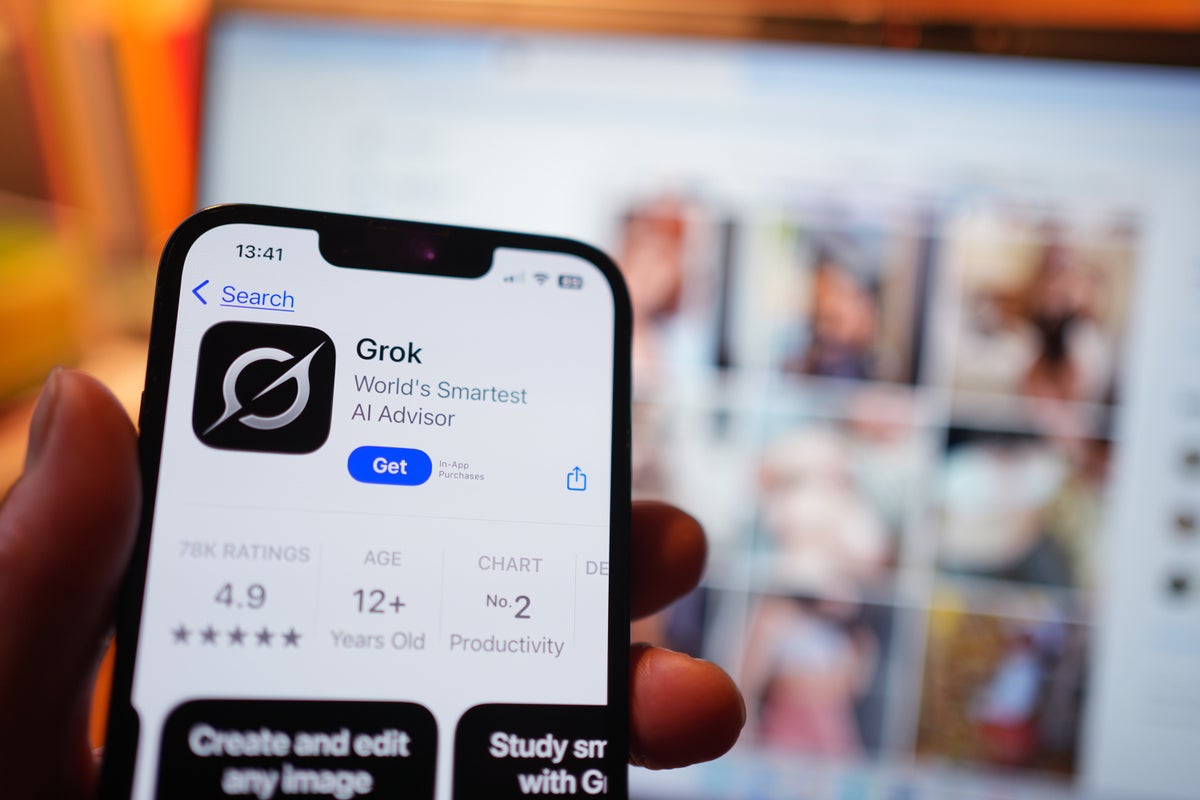
The headlines are predictable. Apple is playing the virtuous gatekeeper, threatening to pull Elon Musk’s Grok from the App Store because of "deepfake concerns." It’s a convenient narrative. It’s also a total fabrication designed to mask a much uglier reality of platform monopolization.
If you believe Apple cares about the integrity of your digital reality, you haven't been paying attention to the last decade of App Store politics. This isn't a safety crusade. It’s a shakedown. It is a calculated regulatory maneuver dressed up in the language of online safety.
The Safety Pretext is a Ghost
Let’s dismantle the "safety" argument immediately. The App Store is currently home to hundreds of "AI Girlfriend" apps, face-swapping tools, and "magic" editors that exist for the sole purpose of generating hyper-realistic, non-consensual imagery. Most of these apps are predatory. They use aggressive subscription models and offer zero transparency.
Yet, Apple allows them to thrive. Why? Because they pay the "Apple Tax." They use In-App Purchases (IAP). They hand over 30% of every dollar to Cupertino without making a fuss.
Grok represents a different kind of threat. It isn't just an app; it’s a feature of X (formerly Twitter), a platform that has become increasingly hostile to Apple’s fee structure. When Apple threatens Grok over "deepfakes," they are using a subjective, loosely defined safety guideline to exert leverage over a competitor who refuses to play by the rules of the walled garden.
The Technical Illiteracy of App Store Policies
Apple’s guidelines regarding "user-generated content" (UGC) are intentionally vague. This vagueness is a feature, not a bug. It allows them to selectively enforce rules whenever a developer gets too big or too independent.
The claim that Grok's image generation (powered by Flux or similar models) is uniquely dangerous ignores how LLMs actually work. Every multimodal model—from OpenAI's DALL-E 3 to Google’s Gemini—has the capacity to generate "problematic" content if the jailbreak is clever enough.
- Deterministic Filters: These are rigid and easily bypassed.
- Probabilistic Guardrails: These rely on the model "deciding" not to be offensive, which is a moving target.
- Post-Processing Censorship: The system checks the image after it’s made.
Apple knows that no AI developer can guarantee 0% "harmful" output. By setting the bar at perfection for Grok while ignoring the cesspool of face-swap apps in the "Top Charts," Apple is admitting that the rules are subjective. In the world of Big Tech, "subjective" is just another word for "political."
The Real War is Over Distribution
I have watched companies spend millions of dollars trying to "comply" with Apple’s shifting goalposts, only to realize the goalposts weren't shifting—they were being moved specifically to block them.
The "Deepfake" narrative is the perfect cover for a distribution war. X is trying to build an "everything app." An everything app that processes its own payments, hosts its own content, and runs its own AI models is a direct existential threat to the iOS ecosystem. If Elon Musk succeeds in making X a self-sustained economy, Apple loses its grip on the most valuable real estate in the world: the home screen.
By threatening to remove Grok, Apple is testing the waters for a full-scale de-platforming of X. They are waiting to see if the public will swallow the "safety" pill. If we accept that Grok is "too dangerous" for the App Store, we are handing Apple the power to decide which AI models are allowed to exist on our devices.
Why "Open" Models Terrify Cupertino
Grok’s integration of more permissive, open-weight-style logic (even if the model itself isn't fully open) is a middle finger to the sanitized, "Polite AI" being pushed by Apple’s partners.
Apple wants AI to be a utility—like a calculator or a weather app. They want it predictable, neutered, and fully integrated into Siri. They do not want a raw, unfiltered pipeline to the internet's collective consciousness.
"Control is not about preventing harm; it is about owning the interface through which the harm is perceived."
This is the mantra of the platform monopolist. If Apple can't control the output, they will kill the input.
The Counter-Intuitive Truth About Regulation
We are told that we need Apple to protect us because the government is too slow. This is a dangerous lie. When a private corporation with a $3 trillion market cap becomes the de facto regulator of speech and technology, we don't get "safety." We get a corporate monoculture.
If you are worried about deepfakes—and you should be—the solution isn't to let a hardware company in California decide which apps you can download. The solution is cryptographic provenance. We need open standards like C2PA that mark an image’s origin at the hardware level. We don't need a digital nanny. But Apple won't push for universal cryptographic standards because that would empower the user. They would rather keep the power in the "Review Team" hands, where they can use it as a cudgel against competitors.
The Strategy for the Disrupted Developer
If you are building in the AI space, do not look at the Grok vs. Apple fight as a celebrity feud. Look at it as a blueprint for your own future.
- Diversify Distribution: If your business model relies entirely on the App Store, you don't have a business; you have a lease that can be terminated without notice.
- PWA is the Only Escape: Progressive Web Apps (PWAs) are the only way to bypass the 30% tax and the arbitrary "safety" purges. Apple knows this, which is why they have been caught trying to cripple PWA functionality in the EU.
- Weaponize the Narrative: Musk is many things, but he understands that in a fight against a monopolist, the only weapon is public perception. Apple hates bad PR more than they love safety.
The Hypocrisy of "Human Rights" in the App Store
Apple frequently wraps itself in the flag of privacy and human rights. Yet, they have repeatedly bowed to the demands of authoritarian regimes to remove VPNs and encryption tools from local App Stores.
When Apple says Grok is a threat to "safety," they mean it is a threat to the status quo. They mean it is a tool they cannot easily switch off if a major advertiser or a government entity gets offended. Deepfakes are just the flavor of the month. Last year it was "misinformation." Next year it will be "mental health."
The terminology changes; the desire for total gatekeeping remains constant.
Stop Asking if Grok is Dangerous
The question isn't whether Grok can make a fake picture of a politician. The question is: why does one company have the power to decide if you are allowed to see that picture?
If we allow the "Deepfake Concern" to justify the removal of major AI platforms, we are consenting to a future where the only AI we can use is the one that has been lobotomized by a corporate legal department. We are trading the messiness of freedom for the polished bars of a digital cage.
The Grok removal threat is a bluff, but it’s a revealing one. It shows that Apple is terrified. Not of deepfakes, but of a world where they are no longer the ones who decide what "safe" looks like.
They aren't trying to save the truth. They're trying to save their margin.
Stop thanking the jailer for locking the door.