The Cold Room
Paper coffee cups stick to the mahogany surface long after the coffee has gone cold. Outside, a grey winter drizzle coats the concrete courtyards of Beijing, blurring the sharp angles of the ministry buildings into smeared charcoal.
I remember the smell of damp wool and ozone in the late nineteen-nineties. We sat across a scarred oak table, breathing heavily into cramped rooms that smelled of green tea and cheap cigarette smoke, trying to decode what the Americans meant by a "rules-based order" and whether Washington understood that sovereignty in the East was not a negotiable draft. Also making news recently: Why Indonesia Cannot Catch a Break After Multiple Major Earthquakes Hit in a Single Day.
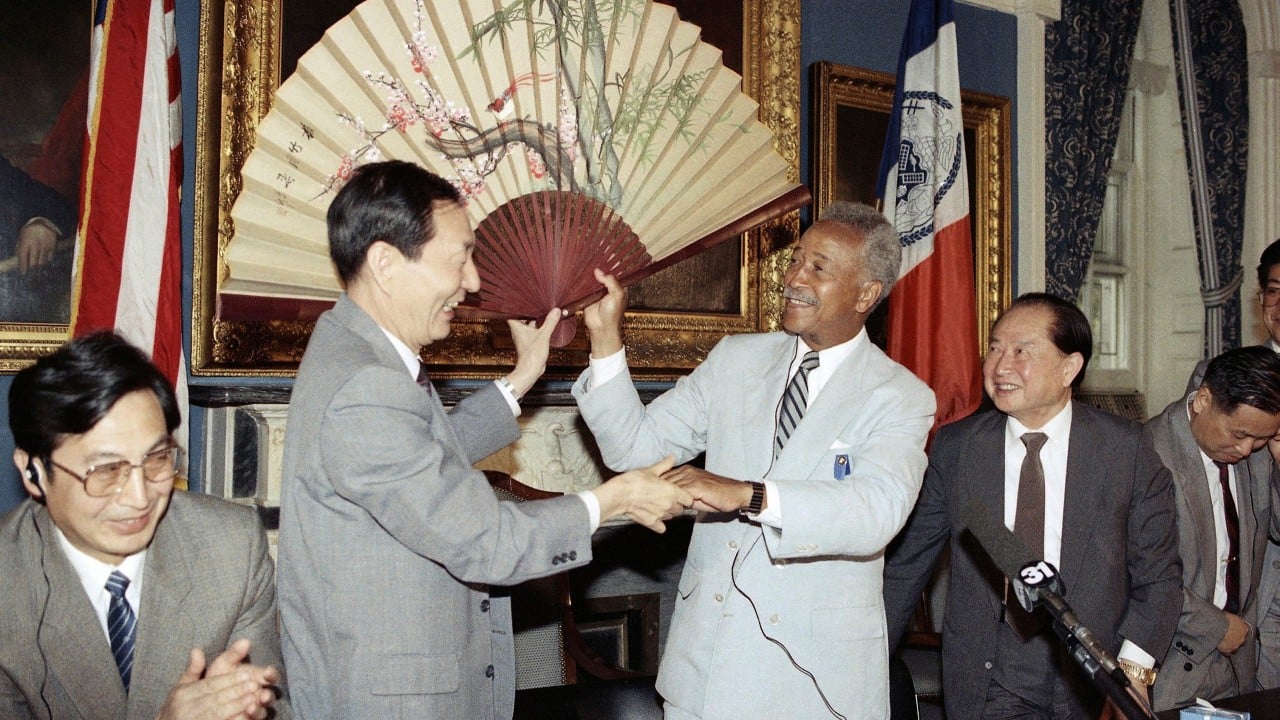
Zhu Rongji sat at the head of that table. He did not look like an emperor. He looked like an exhausted schoolteacher who had spent three consecutive nights grading a mountain of failing exams. His grey hair was unkempt, his tailored suit rummered from hours of hunched concentration, and his eyes carried the heavy, bruised fatigue of a man who had stared into the abyss of state insolvency and refused to blink.
When he spoke, his voice was gravelly, sharp, and entirely stripped of diplomatic varnish. He did not care for rhetoric. He cared for math, compliance, and the brutal reality of an awakening giant that needed to bind its hands with international chains just to prove to the world it could walk straight. More details into this topic are covered by BBC News.
Today, the room is empty. Zhu is gone. And the architecture he spent his final political breath constructing has become a hollow shell, rattling in the crosswinds of a cold war that neither side remembers how to stop.
The Price of Admission
History does not move in straight lines; it stutters, trips, and occasionally falls off a cliff.
To understand what global diplomacy lost with the passing of figures from that generation, you have to remember what the negotiations over World Trade Organization accession looked like from the inside. It was not a polite cocktail party in Geneva. It was a brass-knuckle street fight fought with actuarial tables.
Zhu took domestic risks that modern leaders would find incomprehensible. He gutted inefficient state-owned enterprises, laid off tens of millions of industrial workers, and invited foreign capital into a protected domestic market with the fierce determination of a surgeon cutting out gangrene to save the limb. He believed—deeply, perhaps naively—that economic integration was an unbreakable anchor. If Beijing traded with Chicago, if Michigan manufacturers sold goods to Shanghai, the sheer weight of shared ledgers would prevent political madness.
It was an economic bet masquerading as a geopolitical strategy.
(To be clear: this was a calculated wager built on the assumption that trade creates peace. Economists call this commercial liberalism. I call it the desperate hope of realists who have seen too many trenches filled with young men.)
For a decade, it worked. Container ships carved neat white trails across the Pacific. Silicon Valley engineers shared code with Shenzhen hardware hackers. The friction was there, certainly—intellectual property disputes, currency grumbling, geopolitical posturing—but it was friction within a system. Both sides agreed on the rulebook, even if both sides cheated on the margins.
Then the ledger closed.
The Long Unraveling
Walk through the financial district of Shenzhen today, and the atmosphere feels different. The cafes are still sleek, the espresso machines still hiss, and young founders pitch AI applications with dazzling enthusiasm. Yet beneath the neon hum, there is a palpable chill.
The people who remember the Zhu Rongji era are retiring. They are old men with thinning hair and quiet voices who look at Washington and Beijing trading tariff broadsides and shake their heads in sorrow.
Consider what happens when the translators leave the room.
When you remove personal relationships, when you stop looking across the table at a human being who has skin in the game, diplomacy degrades into performative posturing. Every press conference becomes an audition for domestic cable news. Every trade restriction becomes a weaponized identity marker.
We traded statesmen for spokespeople.
In the late nineties, Zhu could look an American trade representative in the eye and say, "We will reform our banking sector, we will lower our tariffs, because our own people demand prosperity, and prosperity requires discipline." It was an internal admission wrapped in external compliance. He used foreign pressure as a crowbar to pry open domestic monopolies that were choking the Chinese economy.
Who plays that role now?
Who in Beijing has the institutional leverage and the scars to say that absolute self-reliance is a trap? And who in Washington has the patience to understand that China is not a transitory anomaly to be managed, but a permanent geographic and demographic fixture of the planet?
The Anatomy of a Fracture
We live now in the architecture of our own distrust.
Every supply chain decoupling is a brick in a new wall. Every export control on semiconductor lithography equipment is a declaration of permanent suspicion. The tragedy is not that competition exists; competition is natural, healthy, and inevitable between superpowers. The tragedy is the erasure of guardrails.
Think of it like two massive tectonic plates grinding past one another. For thirty years, diplomats like Zhu and his American counterparts acted as seismic dampers. They greased the fault lines with bilateral dialogue, strategic ambiguity, and mutual economic dependence. When an incident occurred—an accidental collision over Hainan Island, a diplomatic spat—they had the institutional muscle memory to de-escalate before the tremors turned to rubble.
Those dampers are gone.
The current crop of strategists treat compromise as a moral failure. To talk is to appease; to negotiate is to capitulate. We have substituted moral vanity for pragmatic diplomacy.
And so, the quiet rooms where deals were hammered out at three in the morning are replaced by soundbites designed to travel thirty thousand miles in milliseconds.
Endings in real life are rarely cinematic. There is no swelling orchestral score when a superpower relationship dies. There is only the quiet notification of a new tariff, the slow exit of foreign direct investment, the empty desk where a liaison used to sit.
Zhu Rongji is gone. The era that tolerated his brand of bruising, pragmatic reform is gone with him.
We are left staring across a widening expanse of grey water, wondering who forgot how to build a bridge.