The air in Tehran’s high-security corridors does not circulate; it weighs. It is a thick, invisible pressure, scented with the metallic tang of old tea and the dry dust of calligraphy scrolls. In this world, power is not measured by the volume of one's shout, but by the precision of one's whisper.
Ali Larijani understands the whisper better than anyone.
For decades, the Western gaze has fixed itself on the fiery rhetoric of presidents or the austere decrees of the Supreme Leader. We look for the lightning. We miss the ground wire. Larijani is that wire. To understand him is to understand how the Islamic Republic actually functions when the cameras are off and the survival of the state is the only currency that matters.
He is often described as the "ultimate insider," a title that feels too thin for a man who has inhabited nearly every vital organ of the Iranian body politic. He has run the state broadcaster, commanded the nuclear negotiations, and held the gavel of the Parliament for twelve years. But these are just lines on a resume. The real story is how a man from a dynasty of clerics became the most pragmatic technician of a revolutionary system.
The Bloodline of the Elite
Power in Iran is frequently a family business. Larijani was born into the equivalent of a clerical aristocracy. His father was a Grand Ayatollah; his brothers have held the reigns of the judiciary and high-level medical councils. This is not just a detail of biography. It is a suit of armor. In a system where a single wrong word can lead to political exile, Larijani’s pedigree gave him the permission to be bold.
Imagine a dinner table where the interpretation of divine law meets the cold reality of geopolitical maneuvering. That was his childhood. It produced a man who is deeply religious but intensely logical. He doesn't view the world through the prism of a zealot; he views it as a mathematician solving for "X," where X is the continued stability of the clerical establishment.
This mathematical approach was most visible during his tenure as the head of the Islamic Republic of Iran Broadcasting (IRIB). He didn’t just manage a TV station. He managed the national psyche. He understood that to control the narrative was to control the people. Under his watch, the IRIB became a sophisticated tool of soft power, blending traditional values with the sharp edge of state interests.
The Nuclear Chessboard
In 2005, the world truly met him. As the Secretary of the Supreme National Security Council, he became the face of Iran’s nuclear ambitions.
The negotiations were a grueling exercise in linguistic gymnastics. Larijani was the man who could look a European diplomat in the eye and deliver a lecture on philosophy while refusing to budge a single centimeter on uranium enrichment. He treated the nuclear file like a game of high-stakes poker where he knew his opponents were playing with a shorter deck.
But even a master player can find himself at odds with the house.
He eventually resigned from the nuclear post because he clashed with the populist, firebrand style of then-President Mahmoud Ahmadinejad. This was a defining moment. Larijani realized that shouting at the West might win votes in the streets, but it wouldn't win concessions at the table. He preferred the quiet room. He preferred the deal.
He saw that the "scorched earth" rhetoric of the hardliners was a luxury the country couldn't afford. He chose to step back, wait, and reinvent himself.
The Long Game of the Gavel
Most politicians would have faded away after such a public resignation. Larijani did the opposite. He pivoted to the Parliament, the Majlis, and turned it into his fortress.
For over a decade, he sat in the speaker’s chair. From that vantage point, he became the indispensable bridge between the erratic demands of the elected government and the absolute authority of the Supreme Leader, Ali Khamenei.
It is a role that requires a terrifying amount of balance.
Think of a tightrope walker crossing a chasm during a windstorm. On one side are the ultra-hardliners who view any diplomacy as treason. On the other are the reformists who want to open the doors to the world. Larijani walked that line with a smirk and a cigarette. He mastered the art of the "middle path," ensuring that the system bent enough to avoid breaking, but never enough to change its fundamental shape.
He was the man who ensured the 2015 Nuclear Deal (JCPOA) actually passed through a hostile parliament. He did it not because he loved the West, but because he knew the Iranian economy was choking. He sacrificed his standing with the radical right to save the state’s lungs. It was a cold, calculated move by a man who values the machine more than the oil that greases it.
The Shadow of the Disqualified
The most shocking chapter of his story didn't happen in a palace, but in a rejection letter.
In 2021, the Guardian Council—the body that vets candidates for the presidency—disqualified Larijani from running. It was a political earthquake. How could a man so loyal, so entrenched, and so vital be told he wasn't "revolutionary" enough?
The answer reveals the current fragility of the Iranian system. Larijani represents a brand of "rational conservatism" that is currently being squeezed out by a new generation of uncompromising hardliners. These younger men don't want the whisper; they want the shout. They see Larijani’s pragmatism as a weakness, a relic of a time when Iran still cared what the world thought.
His disqualification was a signal that the inner circle was tightening. It was an admission that even the most trusted advisers could be discarded if they didn't fit the increasingly narrow mold of the leadership’s vision.
The Return of the Emissary
But Larijani is not easily erased.
In recent months, as tensions with Israel and the West have reached a boiling point, Larijani has re-emerged. He has been sent on high-level missions to Damascus and Beirut. When the Supreme Leader needs a message delivered that requires nuance, gravitas, and a deep understanding of the "invisible stakes," he calls the man he once sidelined.
Why? Because in a crisis, you don't need a populist. You need an architect.
Larijani remains the man who knows where the bodies are buried and where the levers are hidden. He is the link to a more stable, albeit still authoritarian, version of the Islamic Republic. He represents the survival instinct of a regime that is currently facing its greatest existential threats since the 1979 revolution.
The Human Cost of the Middle Path
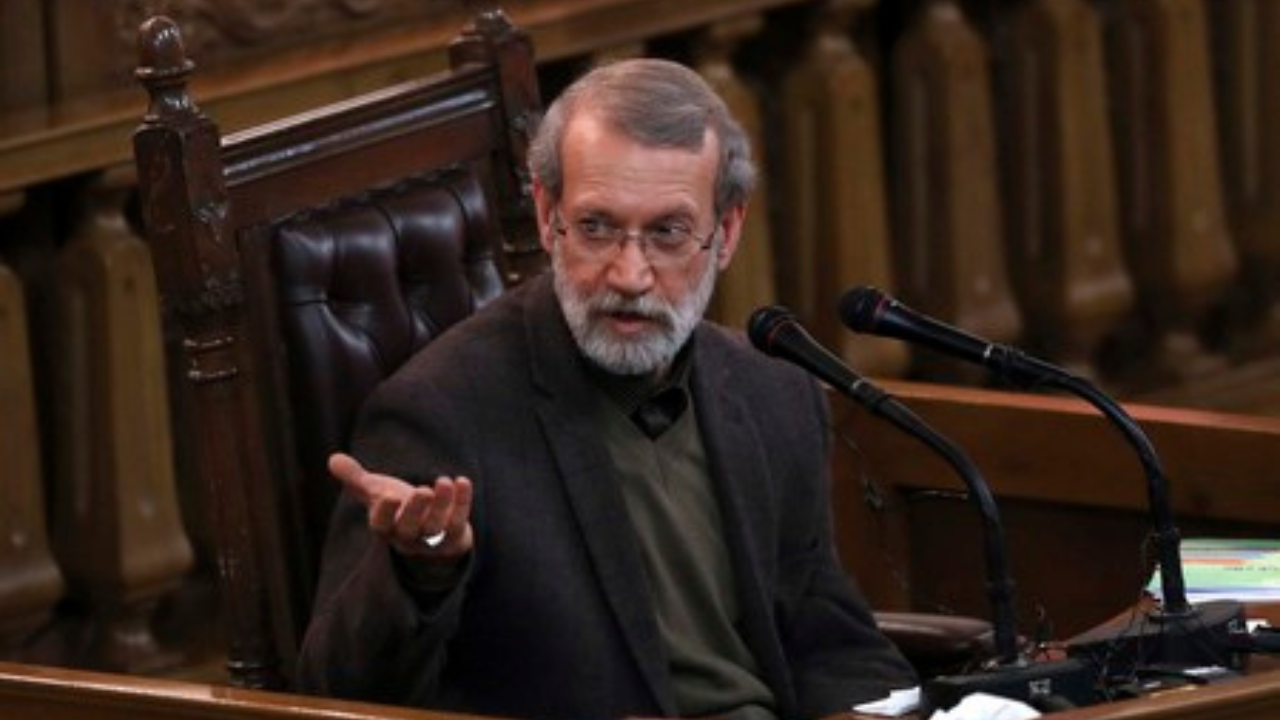
To look at Ali Larijani is to see the face of the Iranian establishment itself: aging, weary, but intensely disciplined.
He lives in the tension between what the revolution promised and what the reality of 21st-century power demands. He is a man who has likely spent more time thinking about the endurance of a political system than about the individual lives of the 85 million people living under it.
There is a certain tragedy in his position. He is too conservative for the youth who crave freedom, and too pragmatic for the radicals who crave a holy war. He exists in a lonely middle ground, a grey zone of his own making.
We often mistake silence for absence. We assume that if someone isn't making headlines, they aren't making history. But the most significant shifts in the Middle East rarely happen in the town square. They happen in the wood-paneled offices where men like Larijani sit, calculating the cost of the next decade.
The sun sets over the Alborz Mountains, casting long, jagged shadows across the city of Tehran. Somewhere in the northern suburbs, behind a gate that doesn't appear on most maps, Ali Larijani is likely reading a report or drafting a memo. He isn't worried about the next election. He is worried about the next century.
He knows that empires don't fall because of a single blow. They fall because the men in the shadows stop knowing how to whisper.
As long as he is still being sent on missions, as long as his counsel is still sought in the dead of night, the whisper remains. The machine continues to hum, fueled by the cold, calculated wisdom of a man who decided long ago that it is better to be the architect of a flawed house than to stand in the ruins of a perfect one.
Would you like me to analyze the specific policy shifts Larijani has championed regarding Iran’s "Look to the East" strategy?