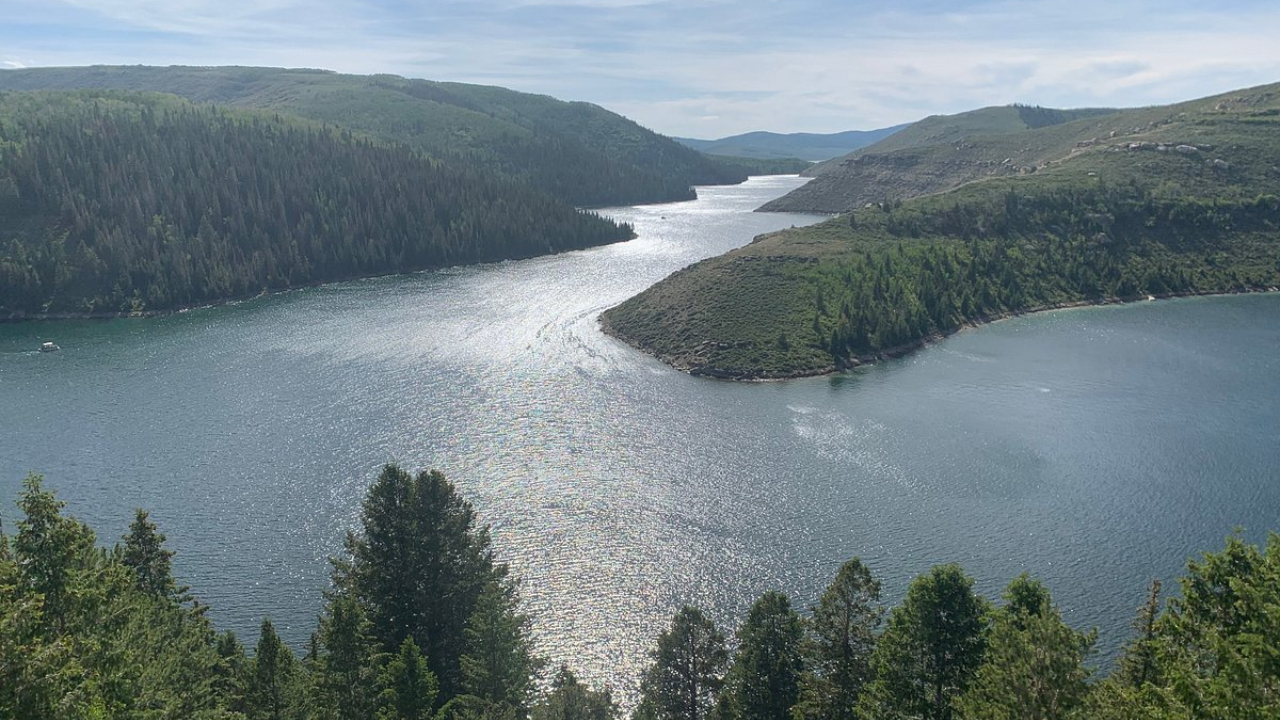
Ecosystem collapse in managed lentic bodies rarely occurs via catastrophic structural failure; instead, it unfolds through progressive trophic displacement. By the late 1980s, Utah's Strawberry Reservoir had transitioned from a premier salmonid fishery into a monotypic biological desert dominated by illegally introduced non-native species, specifically the Utah chub and Utah sucker. Non-native forage fish constituted over ninety percent of the total fish biomass, rendering standard stocking vectors economically and biologically non-viable.
To reverse this trajectory, the Utah Division of Wildlife Resources executed the largest chemical rehabilitation project in fisheries history in August 1990. This operation offers a definitive case study in large-scale aquatic intervention, demonstrating how precise chemical deployment, combined with structural engineering and biological redirection, can reset a broken trophic pyramid.
The Biomechanical Failure of the Unmanaged Reservoir
The degradation of Strawberry Reservoir followed a predictable economic and ecological pathway driven by competitive exclusion. Following the expansion of the reservoir via the Soldier Creek Dam in 1973, the surface area increased past seventeen thousand acres, creating extensive shallow, warm littoral zones optimal for cyprinid proliferation.
Unregulated bait-bucket introductions of Utah chub initiated a cascading failure of the native food web:
- Biomass Monopolization: Chubs and suckers utilized high reproductive rates and broad dietary tolerances to consume available zooplankton, starving out juvenile sport fish.
- Stocking Attrition: Hatchery-raised trout fry stocked by the state faced immediate predation pressure or starvation, resulting in near-zero recruitment into the adult population.
- Economic Degradation: Angler utilization rates plummeted as catch rates and average fish size collapsed, neutralizing the economic engine of the local recreational infrastructure.
Partial remedies, including commercial netting, bag-limit deregulation, and localized biological controls, failed to alter the carrying capacity in favor of game fish. The system possessed a high resilience to minor perturbations, demanding a total structural reset.
The Logistical Mechanics of the 1990 Intervention
Executing a whole-lake rehabilitation across a seventeen-thousand-acre reservoir and one hundred seventy miles of tributary streams required military-scale coordination. The operation targeted the physiological vulnerabilities of gill-breathing organisms using rotenone, a naturally occurring botanical piscicide that inhibits cellular respiration at the mitochondrial level.
The intervention methodology utilized three distinct operational tiers to ensure complete eradication:
- Hydrological Drawdown: Water managers systematically lowered the reservoir to its minimum operational capacity prior to application. This minimized the total chemical volume required, reduced dilution variables, and concentrated surviving fish populations into accessible pools.
- Dispersal Vector Diversification: Field crews deployed heavy machinery, specialized watercraft, deep-water pumps, all-terrain vehicles, and aircraft to distribute liquid and powdered rotenone uniformly across open water and deep bays.
- Spring and Seep Mitigation: Standard liquid applications fail when exposed to upwelling groundwater, which acts as a thermal and chemical refuge for target species. To neutralize this vulnerability, engineers formulated a specialized sinking sand-gelatin-rotenone mixture, applying over two thousand pounds of this compound to more than four hundred fifty seeps and springs.
This comprehensive coverage ensured that greater than ninety-nine percent of the total fish biomass was successfully eliminated within days of application.
The Trophic Reconstruction Paradigm
A chemical reset merely clears the slate; long-term viability requires engineering a self-sustaining predator-prey matrix. If native or illegally reintroduced chubs were allowed to reinhabit the empty ecological niche without competition, the system would revert to its degraded state within a decade.
Wildlife managers restructured the biological inputs through targeted piscivore stocking. Rather than relying solely on traditional rainbow trout strains, biologists introduced Bear Lake cutthroat trout and hybrid tiger trout. These strains exhibited aggressive pelagic piscivory, targeting juvenile chubs and utilizing forage bases that non-piscivorous salmonids ignored. Bioenergetic modeling confirmed that these predators exerted continuous top-down pressure, keeping forage fish populations suppressed below the threshold where they could dominate the biomass.
Furthermore, regulatory frameworks were adjusted to protect the new biological architecture. Strict slot limits and harvest restrictions ensured an adequate standing crop of large, mature apex predators remained in the system to perpetually regulate forage expansion.
Operational Limitations and Risk Vectors
While the Strawberry Reservoir project succeeded, chemical rehabilitation carries inherent structural risks that must be factored into modern management calculus:
- Public and Political Friction: Large-scale eradication projects face severe pushback from user groups over short-term recreational access loss and animal mortality optics.
- Temporary Economic Void: Eliminating ninety-nine percent of fish biomass creates a multi-year lag phase where local tourism and angling economies experience severe contraction before the new fishery matures.
- Re-invasion Vulnerability: Watershed connectivity ensures that illegal re-introductions remain an ever-present risk, meaning the ecosystem requires perpetual monitoring and legal enforcement rather than functioning as a permanent, self-sustaining fix.
Establish strategic compliance patrols at all primary access points and deploy bioenergetic monitoring surveys every three years to measure predator-prey biomass ratios before forage species approach the critical tolerance threshold.