Contemporary media coverage of electoral oversight often reduces structural institutional dynamics to theatrical confrontation. Narratives surrounding organized civic coalitions, partisan observation squads, and administrative choke points frequently frame precinct operations as battlegrounds of intimidation. This framing obscures the underlying mechanical incentives governing precinct behavior. To evaluate how institutional observation systems function under stress, one must deconstruct the operational variables that dictate monitor behavior, legal boundaries, and the economic cost functions of modern democratic administration.
The Tripartite Structure of Precinct Observation
Electoral oversight is not a homogenous phenomenon. It operates through three distinct structural tiers, each governed by separate legal frameworks, operational incentives, and behavioral constraints. Conflating these tiers leads to severe analytical errors in assessing polling place friction.
The first tier consists of official election administrators and sworn poll workers. These individuals operate under direct statutory authority, managing equipment custody, voter authentication, and ballot reconciliation. Their primary operational constraint is systemic throughput capacity. Every administrative bottleneck, whether caused by credential verification delays or equipment latency, increases the duration of voter queues and elevates systemic friction.
The second tier encompasses authorized poll watchers and credentialed observers. Representing political parties, candidates, or non-partisan civic organizations, these actors are legally permitted to monitor the execution of administrative duties. Their operational latitude is bounded tightly by state-specific statutes that dictate spatial positioning, audio volume restrictions, and absolute prohibitions against direct interaction with voters. The presence of these actors introduces a dual-incentive matrix: they serve as transparency mechanisms to deter administrative error while simultaneously generating performance incentives for their respective sponsors.
The third tier involves external civic mobilizations, including faith-based networks, veteran groups, and independent community monitors. Unlike credentialed observers inside the guardrails, these external entities typically operate in the public domain outside the physical threshold of the polling place. Their objective functions generally focus on baseline de-escalation, deterrence of unlawful obstruction, and the provision of calm normative authority.
The Cost Function of Electoral Friction
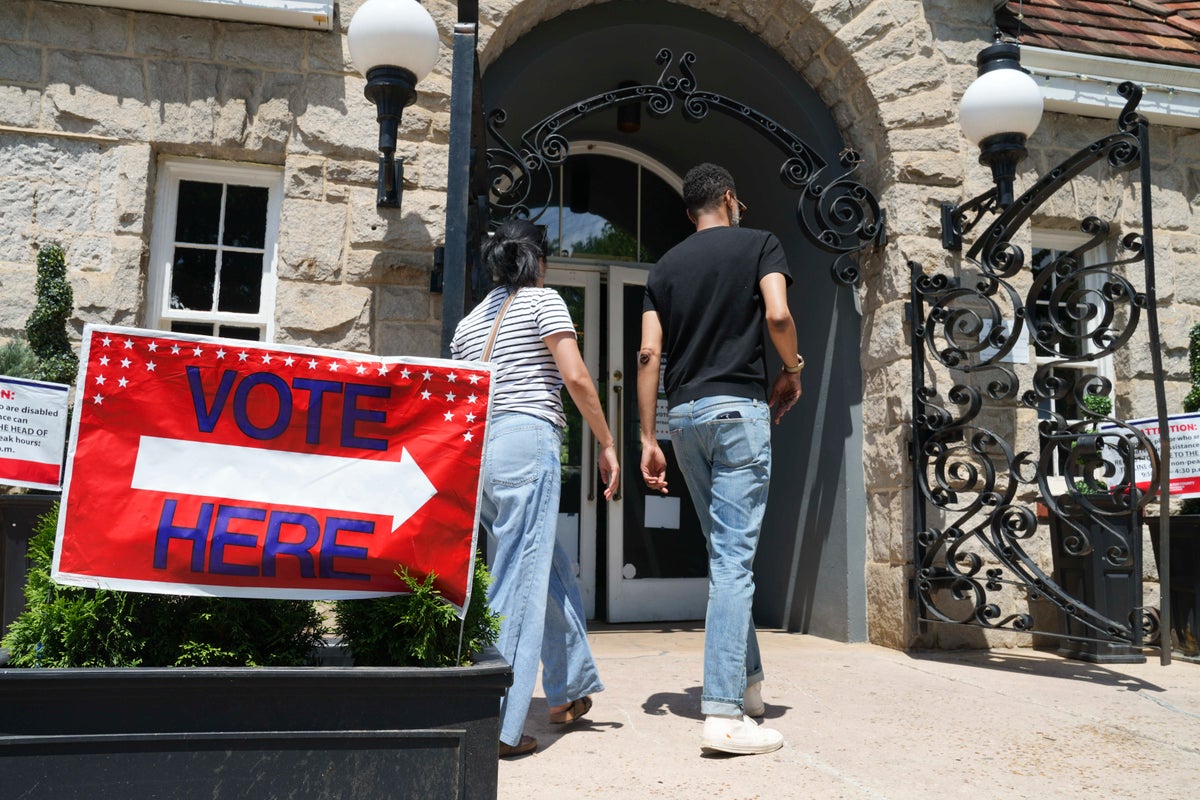
The introduction of intense observation into a polling environment alters the local cost-benefit calculus for both voters and administrators. In microeconomic terms, electoral participation carries a composite transaction cost consisting of time, information acquisition, and psychological friction.
When observation groups or partisan squads project an aura of confrontation, they artificially inflate the psychological component of this transaction cost. For the average voter, perceived hostility at an access point functions as a tax on participation. This creates a quantifiable drop in turnout efficiency, disproportionately affecting risk-averse demographics.
Conversely, when observation is staffed by trusted demographic cohorts—such as retired military personnel or recognized local faith leaders—the psychological tax is structurally deflated. Trust operates as a friction-reduction asset. Public confidence metrics consistently demonstrate high baseline trust in military veterans, allowing their presence to neutralize adversarial posturing. By replacing ambiguous external actors with disciplined community anchors, the systemic variance in voter intimidation drops toward zero.
Strategic Failure Modes in Precinct Oversight
Analyzing the friction points within an observed election requires examining where administrative systems break down under pressure. These failures typically manifest across three vectors:
Statutory ambiguity represents the primary vulnerability. State laws governing the exact physical distance a watcher must maintain from check-in tables vary wildly. When statutes rely on subjective terms like "undue interference" rather than absolute metric measurements, discretionary enforcement falls entirely upon local precinct managers. This creates localized inconsistencies that external observers can exploit for tactical advantage.
Information asymmetry compounds administrative strain. Precinct workers are temporary laborers trained on compressed schedules. When confronted with credentialed challengers citing obscure statutory clauses, frontline workers face severe cognitive overload. This delay ripples through the check-in line, slowing throughput and turning minor procedural questions into major administrative bottlenecks.
The third failure mode involves signaling distortion. Media and political organizations often incentivize hyper-vigilance among their observation networks. When monitors are primed to look for systemic malfeasance rather than routine administrative variance, every paper jam or slow computer terminal is reinterpreted through a conspiratorial lens. This shifts the operational posture from passive observation to active disruption.
Resource Allocation and Strategic Countermeasures
Managing the theater of precinct observation requires a shift from reactive security to proactive structural design. Election boards and civic organizers must deploy targeted countermeasures to stabilize the voting environment.
Decoupling physical access from observation zones is the most effective spatial remedy. Establishing clear, hard perimeters for external groups outside the statutory buffer zone prevents crowding and eliminates the visual impression of a blockade. Inside the precinct, strict enforcement of line-of-sight boundaries ensures that oversight remains passive rather than participatory.
Standardizing training protocols across partisan divides reduces the variance in watcher behavior. When both sides operate under identical, rigorously enforced definitions of prohibited conduct, the capacity for bad actors to manufacture confrontations is structurally suppressed.
The integration of high-credibility civil society participants into the administrative workflow transforms the local security equilibrium. Utilizing disciplined community figures as neutral buffers alters the game-theoretic payoff matrix for agitators. Overt intimidation becomes politically and socially costly when countered by respected local authorities committed to procedural continuity.
To secure institutional resilience, planning must move past the assumption of passive consensus. Precincts are contested administrative nodes where minor procedural variables compound into systemic outcomes. Managing these nodes requires precise statutory boundaries, rigorous spatial separation, and the deployment of high-trust personnel capable of absorbing local volatility before it disrupts the democratic mechanism.