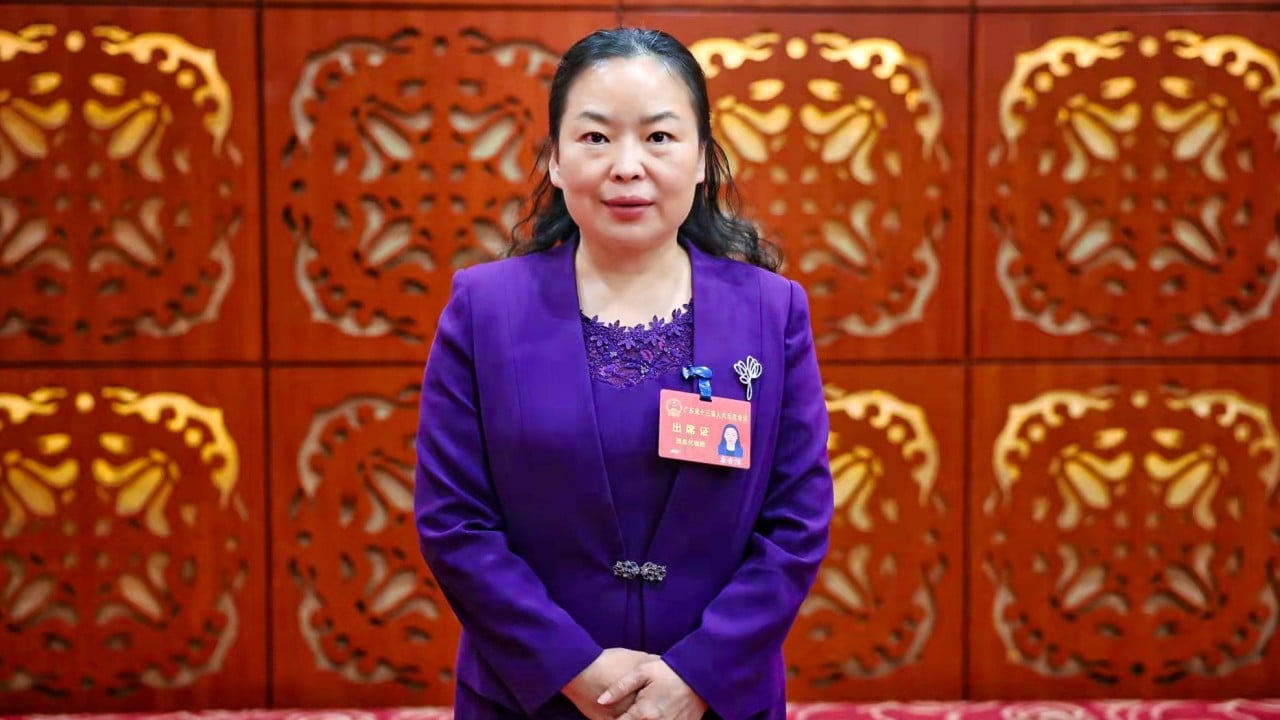
The appointment of Yuan Gujie as deputy director of the Liaison Office of the Central People's Government in the Hong Kong Special Administrative Region signals a shift in Beijing's administrative strategy toward the territory. By replacing Liu Guangyuan, a veteran career diplomat, with Yuan, a legal scholar and high-ranking provincial security official, the State Council has altered the structural skill set at the apex of its primary representative organ in Hong Kong. This structural optimization reflects an operational pivot from external diplomatic management to internalized, highly institutionalized legal and security alignment within the Greater Bay Area ecosystem.
Understanding this personnel rotation requires evaluating the institutional mechanisms of the Liaison Office, the specific operational history of the incoming executive, and the functional demands of Hong Kong's current statutory landscape.
The Structural Mechanics of the Personnel Shift
Personnel rotations within central government operations function as leading indicators of strategic priorities. The substitution of a diplomatic profile for a legal and security framework can be quantified across two distinct operational paradigms.
The Outgoing Paradigm: External Mediation and Diplomacy
Liu Guangyuan’s tenure as deputy director was defined by his extensive background in international relations, having previously served as ambassador to Kenya and Poland, and as the commissioner of the Ministry of Foreign Affairs in Hong Kong.
- Primary Objective: Managing the geopolitical friction points surrounding Hong Kong's international status.
- Operational Mechanism: Diplomatic engagement, external-facing communication, and mitigating international pressure regarding local governance.
- System Limitation: Diplomatic tools are optimized for inter-state management, lacking the granular administrative and legal mechanisms required for deep integration with the mainland legal apparatus.
The Incoming Paradigm: Domestic Statutory Enforcement
Yuan Gujie brings a specialized technocratic profile that diverges completely from traditional diplomatic tracks. Her career matrix spans academic legal research, local administrative governance, and provincial-level security oversight in Guangdong.
- Primary Objective: Achieving systemic legal synchronization and security alignment between Hong Kong and the mainland administration.
- Operational Mechanism: Statutory enforcement, structural coordination via the United Front framework, and regional legal integration.
- System Design: This profile is optimized for internal regulatory compliance, institutional oversight, and mitigating national security vectors at the provincial and municipal levels.
The Professional Matrix of Yuan Gujie
To gauge the future operational trajectory of the Liaison Office, one must analyze the component parts of Yuan's administrative history. Her career demonstrates a specific blend of theoretical legal expertise and hard operational enforcement.
[Academic Legal Specialization] ---> [Municipal Governance & Law Enforcement] ---> [Provincial Security & Coordination]
        (PhD in Law)                        (Maoming / Maoming Mayor)                (Guangdong Political & Legal Commission)
1. Theoretical Foundations in Jurisprudence
Yuan holds a PhD in law, establishing her as a legal technocrat rather than a generalist political administrator. This academic foundation provides her with the theoretical framework necessary to navigate the complexities of constitutional law, the Basic Law of Hong Kong, and national security legislation. This expertise is critical as Hong Kong continues to integrate its common law traditions with the civil law architecture of the mainland.
2. Provincial Security Architecture
Prior to this appointment, Yuan served as the secretary of the Political and Legal Commission of the Communist Party of China (CPC) Guangdong Provincial Committee. This commission oversees the entirety of the province's legal, judicial, and internal security apparatus, including courts, procuratorates, and public security bureaus.
- Geographic Alignment: Guangdong is the immediate mainland counterpart to Hong Kong within the Greater Bay Area framework.
- Operational Experience: Managing cross-border security challenges, data flows, and jurisdictional coordination.
3. United Front and Coordination Systems
Yuan's tenure as the deputy head of the United Front Work Department of the CPC Guangdong Provincial Committee provides her with deep operational knowledge regarding the management of non-party elites, business associations, and civil society organizations. This skill set translates directly to the primary structural mandate of the Liaison Office, which relies heavily on maintaining institutional relationships with Hong Kong's commercial, political, and social leadership.
The Coordinated Reshuffle: Structural Scope
This appointment is not an isolated event but rather a broader structural reconfiguration of the Liaison Office's executive tier. Concurrently, Liu Songlin has assumed the role of secretary-general, succeeding Wang Songmiao.
The simultaneous replacement of both a deputy director and the secretary-general points to an intentional institutional reset. While the deputy director dictates strategic execution and policy enforcement, the secretary-general controls the internal bureaucratic machinery, resource allocation, and information pipelines within the office. By updating both nodes, Beijing ensures that the internal administrative operations are aligned with the new strategic priorities brought by incoming leadership.
Strategic Implications for the Greater Bay Area
The transition from a diplomatic executive to a provincial security and legal specialist establishes a direct administrative link between the governance of Guangdong and the oversight of Hong Kong. This creates several structural outcomes for the regional political economy.
Cross-Border Legal Synchronization
The primary operational challenge within the Greater Bay Area is the "One Country, Two Systems, Three Customs Zones" friction point. Different legal systems create transaction costs and regulatory bottlenecks for capital, data, and human resource mobility. Yuan's deep familiarity with the Guangdong legal apparatus suggests an administrative push toward harmonizing regulatory frameworks, making cross-border commercial dispute resolutions and institutional cooperation more systematic.
Institutionalization of National Security Protocols
With Hong Kong having enacted its local national security legislation under Article 23 of the Basic Law, alongside the overarching National Security Law, the governance requirement has shifted from legislative drafting to operational enforcement. A legal and security specialist is structurally equipped to oversee this enforcement phase, ensuring that local judicial outcomes conform to the broader national security matrix established by the central authorities.
Optimization of Elite Engagement
The integration of a former United Front executive into the Liaison Office leadership indicates a recalibration of how Beijing engages with Hong Kong's commercial and political establishment. The focus will likely center on structured, institutionalized alignment rather than ad-hoc political alliances, demanding higher levels of policy compliance from local stakeholders in support of national economic objectives.
Operational Risk Matrix and Limits of the Strategy
While this personnel configuration optimizes the Liaison Office for internal legal alignment, it introduces specific institutional trade-offs that the administration must manage.
- Diminished Diplomatic Buffer: The removal of a career diplomat reduces the office's natural capacity to interface with foreign consular corps and international financial institutions. In periods of geopolitical volatility, the lack of a seasoned diplomatic interlocutor within the Liaison Office could accelerate institutional decoupling or communication failures with international markets.
- Jurisdictional Overlap Friction: Increased systemic integration between Guangdong's administrative style and Hong Kong’s autonomous structures can generate friction within the local civil service. Hong Kong's administrative state operates on clear bureaucratic procedures and judicial independence; attempts to apply mainland-style provincial coordination models could challenge bureaucratic efficiency if not calibrated precisely.
- Market Sentiment Sensitivity: International capital values the distinct, insulated nature of Hong Kong's legal system. The visible integration of high-level mainland security and legal personnel into the oversight apparatus requires careful communication to avoid signaling an unintended erosion of the commercial legal framework that protects foreign investments.
The New Institutional Directive
The appointment of Yuan Gujie confirms that Beijing views the current governance challenge in Hong Kong as an internal, structural integration problem rather than an external diplomatic defense issue. The administrative playbook has shifted from defending the territory's status internationally to locking in institutional, legal, and security continuity within the domestic sphere.
The strategic play moving forward will manifest in increased operational scrutiny over cross-border legal compliance, a more rigorous application of statutory mechanisms to resolve political and economic inefficiencies, and the systematic assimilation of Hong Kong’s governance structures into the wider administrative framework of the Greater Bay Area. Local and international enterprise must adjust their risk models to account for a regulatory environment that is increasingly precise, security-conscious, and legally aligned with mainland provincial counterparts.