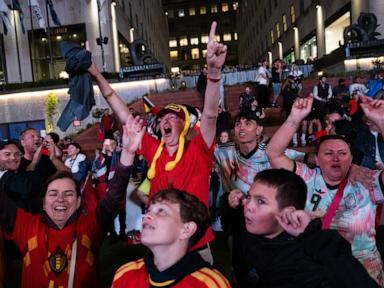
Linear television event metrics require a precise decomposition of structural distribution variables rather than simple audience counts. When Fox Sports reported that the United States Men’s National Team (USMNT) Round of 16 World Cup elimination match against Belgium attracted an average of 30 million viewers, it did not merely break a domestic record; it exposed a massive shift in consumer media allocation. Linear sports media consumption has historically faced structural constraints when attempting to scale soccer broadcasts in the United States. Analyzing this peak event reveals a blueprint for live-event monetisation and distribution infrastructure.
To evaluate how a single soccer match generated a peak audience of 36.8 million viewers between 9:15 PM and 9:30 PM Eastern Time, analysts must discard standard generalisations about growing market interest and map out the combination of scheduling mechanics, domestic hosting premiums, and broadcast infrastructure.
The Tri-Factor Viewership Framework
Three distinct economic and structural variables drove the historic audience size achieved during the Monday broadcast from Seattle Stadium:
1. The Geopolitical Co-Host Advantage
The 2026 World Cup geographic footprint removed the historical frictional drag of unfavourable time zones. When international matches air during early morning hours in North America, they face an immediate drop in audience size due to work schedules and sleep cycles. Hosting the tournament domestically establishes an optimal broadcast window. A Monday evening kickoff at 9:00 PM Eastern Time directly matches the peak viewing hours of the U.S. linear television audience, converting passive daytime interest into prime-time living room consumption.
2. Multi-Platform Funnel Dynamics
The total domestic scale of this broadcast relied on a dual-language network strategy. The 30 million viewers recorded on Fox's English-language platform do not include the supplementary audience delivered by Telemundo's Spanish-language coverage, which traditionally expands the total reach of major matches by an additional 25 to 35 percent based on group-stage baselines. By distributing content across both broadcast channels, rights holders captured complementary market segments simultaneously.
3. The Compounding Elimination Format
Single-elimination tournaments create a unique consumer urgency that group-stage matches cannot replicate. Viewership velocity accelerates as a team advances through knockout rounds. The progression of the USMNT audience shows clear compounding growth:
- Group Stage Opener (vs. Paraguay): Established the initial audience baseline.
- Round of 32 (vs. Bosnia and Herzegovina): Scaled to 26.4 million average viewers, setting a temporary record and proving consumer interest was rising.
- Round of 16 (vs. Belgium): Hit a peak average of 30 million viewers, representing a 13.6 percent increase in average audience size within a single week.
Peak Audience Dynamics and Audience Retention Churn
The 36.8 million viewer peak recorded in the final 15 minutes of the match illustrates the core mechanics of live sports media consumption. As the game clock runs down, casual viewers switch channels to join the core audience, drawn in by close game dynamics, social media alerts, and news notifications.
The 4-1 final score, which saw Belgium systematically build its lead through clinical finishing from Charles De Ketelaere, Hans Vanaken, and Romelu Lukaku, highlights a rare media trend: structural audience resilience. In standard entertainment or club sport environments, a three-goal deficit often triggers high audience churn, with viewers turning away before the final whistle.
During this broadcast, the structural premium of a World Cup knockout match overrode standard viewer drop-off trends. The combination of home-soil advantage and the high-stakes pressure of a World Cup tournament kept audiences engaged, despite a clear drop in the USMNT's chances of winning.
Structural Distribution Limitations
While a 30 million viewer average matches the audience size of an NFL Divisional Playoff broadcast or a College Football Playoff National Championship, sports media executives must recognize the limits of these metrics before adjusting their long-term growth forecasts:
- The Scarcity Premium Over Normal Seasons: The World Cup operates on a strict four-year cycle. This scarcity creates an artificial demand curve that cannot be easily replicated by domestic club soccer leagues, such as Major League Soccer (MLS) or the National Women's Soccer League (NWSL), which must maintain viewer interest over a long, multi-month regular season.
- National Identity as a Conversion Catalyst: The demographic makeup of World Cup viewers includes a large group of casual sports fans motivated by national sentiment rather than a specific interest in the sport itself. Converting these event-driven viewers into year-round consumers of soccer media remains a tough challenge for domestic sports networks.
- Host Co-Dependency Pitfalls: The elimination of all three co-hosts—the United States, Canada, and Mexico—by the end of the Round of 16 introduces an immediate challenge for the rest of the tournament's broadcast cycle. Historical trends indicate that when a host country is eliminated, subsequent neutral-site matches experience an immediate drop in casual viewership, leaving only dedicated soccer fans for the remaining quarterfinal, semifinal, and final rounds.
The Non-U.S. Value Proposition
The growth of the sport's domestic media profile is further demonstrated by matches that do not feature the home nation. Fox's reported 11.1 million average viewers for the Portugal versus Croatia Round of 32 match set a new record for the most-watched English-language soccer broadcast in the U.S. without an American team present, excluding tournament finals.
This metric provides a more accurate measure of the baseline growth of American soccer fandom than the USMNT's peak numbers. An 11.1 million viewer baseline proves that a reliable core audience has developed. This group consumes high-level international soccer purely for its entertainment and competitive value, completely independent of national identity.
Strategic Media Imperatives for Rights Holders
Media executives and corporate sponsors cannot afford to treat this historic rating as a passive victory. Capitalising on this audience migration requires immediate adjustments to distribution strategies:
Rights holders must design multi-year broadcast portfolios that transition casual fans from international tournaments to consistent domestic programming. This means bundling future national team packages with club league rights to ensure that media agencies cannot buy premium tournament inventory without also supporting regular, long-term programming.
Production teams must also adapt their content styles to match the habits of event-driven viewers. The huge social media footprint generated by the event—exceeding 7 billion views across Fox Sports' official channels during the group stage and early knockout rounds—shows that short, highly shareable digital video clips serve as a key entry point for younger audiences. Linear broadcasts must be structured to directly feed these digital highlight loops, turning live televised moments into immediate social media engagement that brings viewers back to the main broadcast window.
Finally, brand partners must shift from basic logo exposure to programmatic, context-specific advertising. The predictable spike in viewership during the final 15 minutes of a match requires flexible ad space allocation. Brands should secure premium digital inventory that activates when live viewership climbs past pre-set thresholds, maximizing exposure when audience attention is highest.