The Anatomy of a Legislative Fight
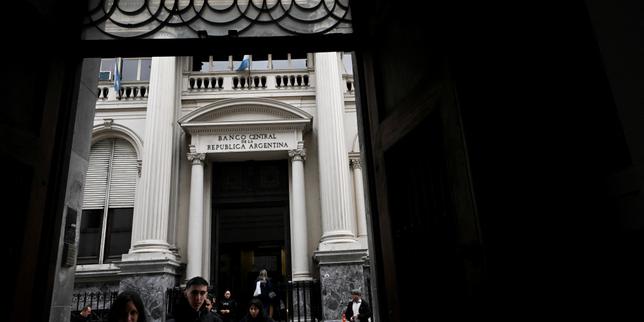
The ballot box in Buenos Aires delivered an earthquake, but the real demolition work is happening inside marble halls and committee rooms. When Argentina's lower house advanced the administration's sweeping central bank overhaul, international wire services painted it as standard fiscal medicine. That framing misses the point entirely. This is not a technical adjustment of interest rates or reserve requirements. It is an institutional gutting designed to permanently sever the executive branch from the printing press.
Decades of chronic inflation left the Argentine economy hollowed out, wrecked by successive administrations that treated the central bank as an endless line of credit. The newly approved legislative package targets that exact vulnerability. By stripping the monetary authority of its power to finance treasury deficits directly, the state is effectively signing a suicide pact with orthodoxy. There is no fallback option left. If the Treasury runs a deficit, it cannot simply order the central bank to spin up the digital presses and monetize the shortfall.
Markets reacted with predictable euphoria, sending sovereign bonds ticking upward while currency traders repriced risk. Yet seasoned observers on the ground in the financial district know better than to trust a temporary market rally. Legislation is words on paper. Reality is structural, messy, and deeply resistant to legislative decree.
Mechanics of the Chokehold
To understand what the reform actually does, one must look past the political rhetoric and examine the mechanics. The central bank charter has been rewritten to criminalize deficit financing. Historically, governments used provisional advances from the monetary authority to plug fiscal holes whenever tax revenues fell short or foreign lenders closed their doors. Those advances are now barred by strict statutory limits that carry severe legal penalties for compliance officers who look the other way.
Furthermore, the reform targets the remuneration of short-term central bank debt, the infamous liq and pases that piled up like radioactive waste on the balance sheet during previous administrations. For years, the monetary authority fought inflation by issuing trillions of pesos in short-term notes to mop up excess liquidity, paying astronomical interest rates that compounded the deficit exponentially.
- Direct Monetization Ban: Treasury funding via central bank issuance is strictly outlawed.
- Balance Sheet Restructuring: Legacy liabilities are shifting toward long-term sovereign instruments.
- Autonomy Enforcement: Board members face independent judicial oversight rather than executive dismissal at whim.
These changes look clean on a spreadsheet. In practice, they create a brutal liquidity squeeze. When you stop printing money to pay government bills, something else has to give. Public spending must drop instantly to match actual tax receipts, or the state defaults on domestic obligations. There is no middle ground, no creative accounting trick that survives this framework.
The Social Collateral Damage
Orthodox stabilization programs always carry a body count, and this one is paid in purchasing power and civil unrest. Slashing the fiscal deficit to zero overnight requires freezing public sector wages, cutting infrastructure projects to the bone, and stripping away energy and transport subsidies that urban populations relied on for decades.
Walking through the neighborhoods of Constitución or Once, the human cost of monetary rigor is glaring. Small business owners face a cruel paradox. Inflation is finally slowing down from its hyper-velocity peak, but consumer demand has evaporated because nobody has pesos in their pockets. Transactions are grinding to a halt. When money becomes scarce, the cost of borrowing skyrockets, locking out the small and medium enterprises that form the backbone of urban employment.
Economists sitting in air-conditioned offices in Washington or Geneva call this necessary adjustment. On the streets of Buenos Aires, it feels like a slow-motion economic cardiac arrest.
[Fiscal Deficit] ---> [Monetary Financing Banned] ---> [Public Spending Cut to Zero] ---> [Liquidity Crunch]
This sequence illustrates the exact transmission mechanism of the reform. Every link in the chain represents a political battleground. The administration believes it can outlast the pain by proving that stability is the ultimate social policy. Critics argue that society will fracture long before the macroeconomic indicators reach equilibrium. Both sides might be right.
The Dollarization Mirage and Alternative Futures
For all the talk of monetary independence, the shadow of the greenback looms over every clause of the new law. The central bank is no longer allowed to finance the state, but it has not yet accumulated the foreign reserves necessary to back the domestic monetary base fully. This leaves the peso in a dangerous purgatory. It is too restricted to function as a dynamic currency of choice, yet too embedded in local commerce to disappear overnight.
Private contracts are increasingly dollarized by default. Landlords demand greenbacks. Car dealerships price inventory in foreign currency. Supermarkets display pesos that must be updated twice a week simply to keep pace with the residual inflation baked into the supply chain. The reform does not solve this dual-currency reality; it codifies the pressure driving it.
If the administration manages to hold the line against congressional pushback and provincial governors demanding bailouts, Argentina might finally break its century-long cycle of currency debasement. If the social coalition fractures and the streets become ungovernable, the legislature will eventually repeal what it just passed, ushering in a wave of capital flight that makes previous crises look mild. History suggests betting against structural reform in South America is usually the safe wager, but the sheer exhaustion of the populace has altered the political calculus. The printing press is locked, the key is thrown away, and the country is about to find out if it can survive without its favorite drug.