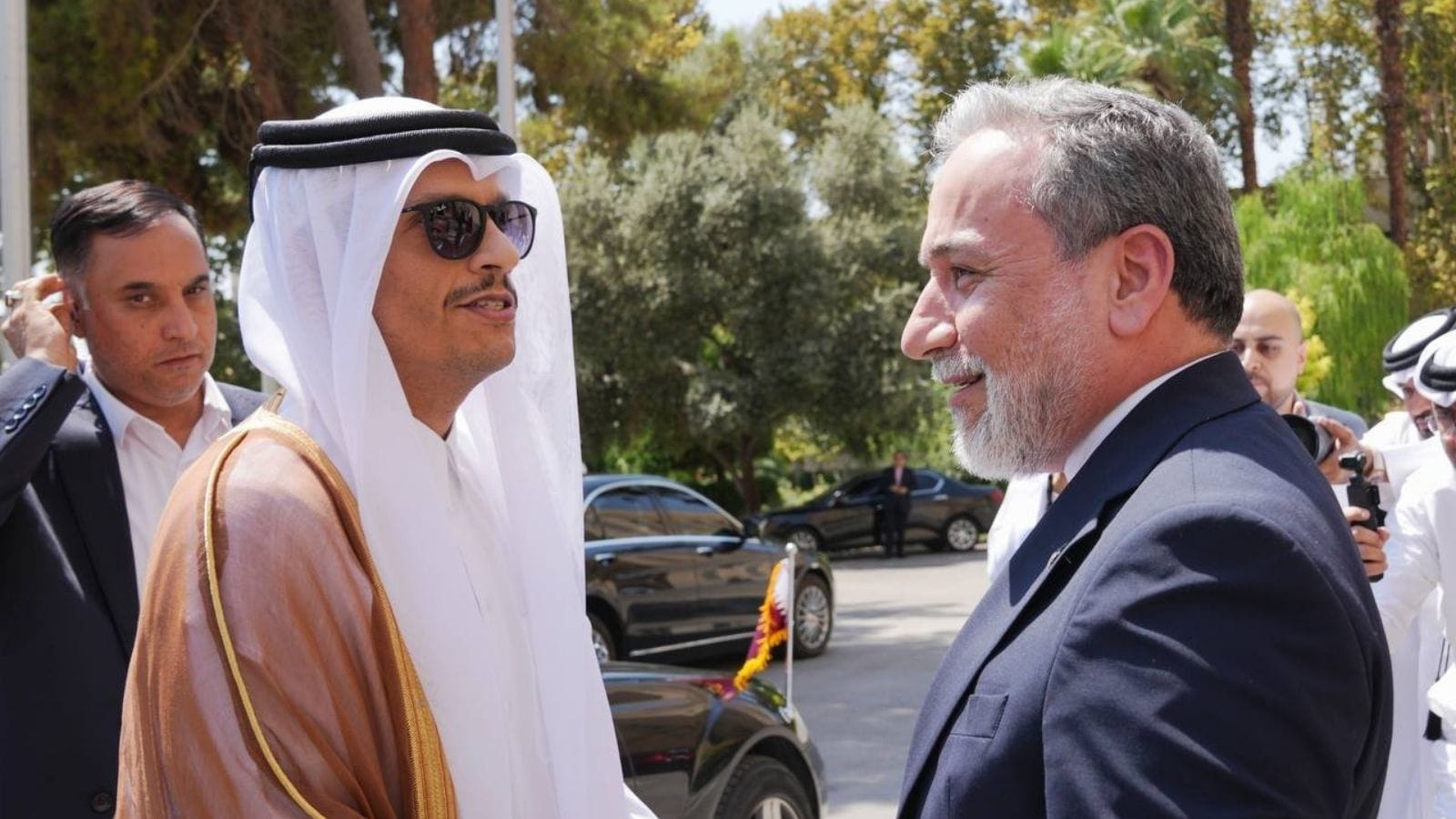
The coffee in the glass cup was already cold, but Abbas Araghchi kept his hands wrapped around it anyway. Outside the heavy wooden double doors of the Ministry of Foreign Affairs, Tehran hummed with its usual frantic energy—horns blaring, exhaust fumes mixing with the dust of the Alborz mountains, a city living on borrowed time and stubborn pride. Inside, the air conditioning hummed a low, mechanical note, failing to cool a room thick with unsaid things.
Diplomacy, he would say later, is not a miracle. It is a mechanic’s job. You crawl under the chassis, you burn your knuckles on hot metal, and you turn the wrench until something clicks or breaks completely. Meanwhile, you can find similar stories here: Why Alaska Keeps Losing Small Planes and Pilots in Deadly Crashes.
Right now, everything was broken.
Months of retaliation, posturing, and missile trajectories that cut the night sky like red hot needles had brought the Middle East to a precipice so sharp that even the hawks were blinking. Yet, when Araghchi spoke to the press, his tone was not one of triumphalism or surrender. It was weary. Measured. He offered a door left slightly ajar. Diplomacy remains possible, he noted, but only if Washington changes the weather. Only if the maximum pressure campaign—that relentless economic vise designed to squeeze the breath out of eighty million people—is abandoned. To explore the bigger picture, we recommend the recent analysis by NPR.
To understand what that means, you have to step away from the podiums in Geneva or New York and walk through a neighborhood in central Tehran.
(Note: The following scene is a hypothetical scenario constructed to illustrate the real, documented impacts of economic sanctions on everyday life.)
Consider Reza. He is fifty-four years old, with salt-and-pepper hair and fingers permanently stained with grease from the vintage sewing machines he repairs in a cramped shop off Enghelab Street. Ten years ago, Reza could afford imported German spare parts. Five years ago, he was making do with Turkish knockoffs. Today, he hammers scrap metal into makeshift bobbins because the currency devaluation has made foreign shipping an impossibility.
Reza does not read geopolitical treatises on nuclear enrichment or regional proxy networks. He does not care about the fine print of the 2015 nuclear deal, known formally as the Joint Comprehensive Plan of Action, which Washington abandoned in 2018 under a cascade of executive orders. Reza only knows the exchange rate. He knows the price of insulin for his diabetic mother. He knows that every time a Washington think tank publishes a new report on tightening financial sanctions, the price of cooking oil at his local bazaar ticks upward.
When Araghchi says diplomacy is not impossible, Reza hears a faint heartbeat in a patient everyone else has pronounced dead. But he also hears the catch. Washington wants capitulation. Tehran wants respect. And between those two demands lies a canyon of dead weight.
The architecture of this standoff was not built overnight. It is a monument to decades of mutual distrust, broken promises, and historical trauma that stretches back long before the current generation of leaders took power. For the Iranian establishment, the 1953 coup—engineered by foreign intelligence services to overthrow a democratically elected prime minister—is not ancient history. It is the operating system. It is the reason every diplomatic overture is parsed for hidden daggers. Every handshake is tested for poison.
Conversely, for Washington and its allies, the Iranian state’s support for regional militias, its ballistic missile program, and its rapidly advancing nuclear enrichment capabilities represent an intolerable security threat. Hostages taken decades ago, embassies stormed, proxy attacks against regional partners—these form a ledger of grievances that US administrations cannot simply swipe away with a stroke of a pen.
This is the deadlock. Two incompatible versions of reality staring each other down across a diplomatic gulf.
Yet, diplomacy rarely happens because politicians suddenly fall in love. It happens because the alternative becomes too expensive to bear.
By the summer of 2026, the cost of perpetual escalation has grown astronomical. Sanctions have achieved maximum economic friction, isolating Iran from global banking and energy markets, but they have not triggered the internal collapse that hardliners in Washington once promised. Instead, isolation has driven Tehran deeper into alternative economic pacts with Beijing and Moscow, while accelerating its nuclear program past thresholds once thought unreachable. Pressure, it turns out, is a compressing spring. Push it too far, and it does not break; it launches.
Araghchi knows this arithmetic. He is a career diplomat, a veteran of the grueling, marathon nuclear negotiations that produced the 2015 accord. He knows the vocabulary of compromise. He knows how to draft a communiqué that allows both sides to claim victory while backing away from the cliff.
But words require an audience willing to listen.
In Washington, the political incentives run in the opposite direction. To ease sanctions is to invite accusations of weakness, appeasement, and naivety. In the hyper-partisan arena of American foreign policy, appearing tough on Tehran is a bipartisan consensus. No administration wants to be the one caught holding the bag if a renewed diplomatic opening goes sideways. It is safer, politically, to maintain the status quo of hostility than to risk the unpredictable fallout of peace.
And so the standoff persists. A dance of ghosts.
Let us look at what actually happens when the diplomats do sit down behind closed doors. The mahogany tables are polished to a mirror shine. Translators adjust their headsets. Coffee cups are refilled. For all the grand rhetoric broadcast to domestic audiences about red lines and supreme sovereignty, the actual work is agonizingly mundane. It is about sequencing. Who moves first? Does Washington suspend oil sanctions in exchange for a freeze on uranium enrichment beyond sixty percent purity, or must every centrifuge be dismantled before a single frozen asset is released?
Trust is zero. Verification is everything.
In past talks, the International Atomic Energy Agency served as the referee, its inspectors crawling through underground facilities at Natanz and Fordow with Geiger counters and tamper-evident seals. But trust in those inspectors has frayed as the political climate deteriorated. Cameras have been turned off. Access has been restricted. Every technical concession is now viewed by the other side as a potential trap door.
Back in Tehran, the sun dips behind the smog, casting a bruised orange glow over the concrete minarets. Reza closes his shop, locking the heavy iron shutters with a loud, metallic clatter. He walks home through streets crowded with young people who are too exhausted by inflation to dream of revolution, yet too resilient to simply disappear. They scroll through filtered social media feeds on cracked smartphones, sharing memes about the price of tomatoes alongside footage of distant explosions.
They are waiting. We are all waiting.
The statement dropped by Araghchi was not a breakthrough. It was an invitation to test whether any oxygen was left in the room. It was a recognition that military escalation is a downward spiral with no bottom, and that economic warfare, no matter how sophisticated, is ultimately a war waged against people who just want to repair sewing machines and buy groceries in peace.
The door is not locked. It is merely heavy, rusted on its hinges, and guarded by decades of bitter memory. But someone has to be brave enough—or desperate enough—to push it open before the fire reaches the frame.