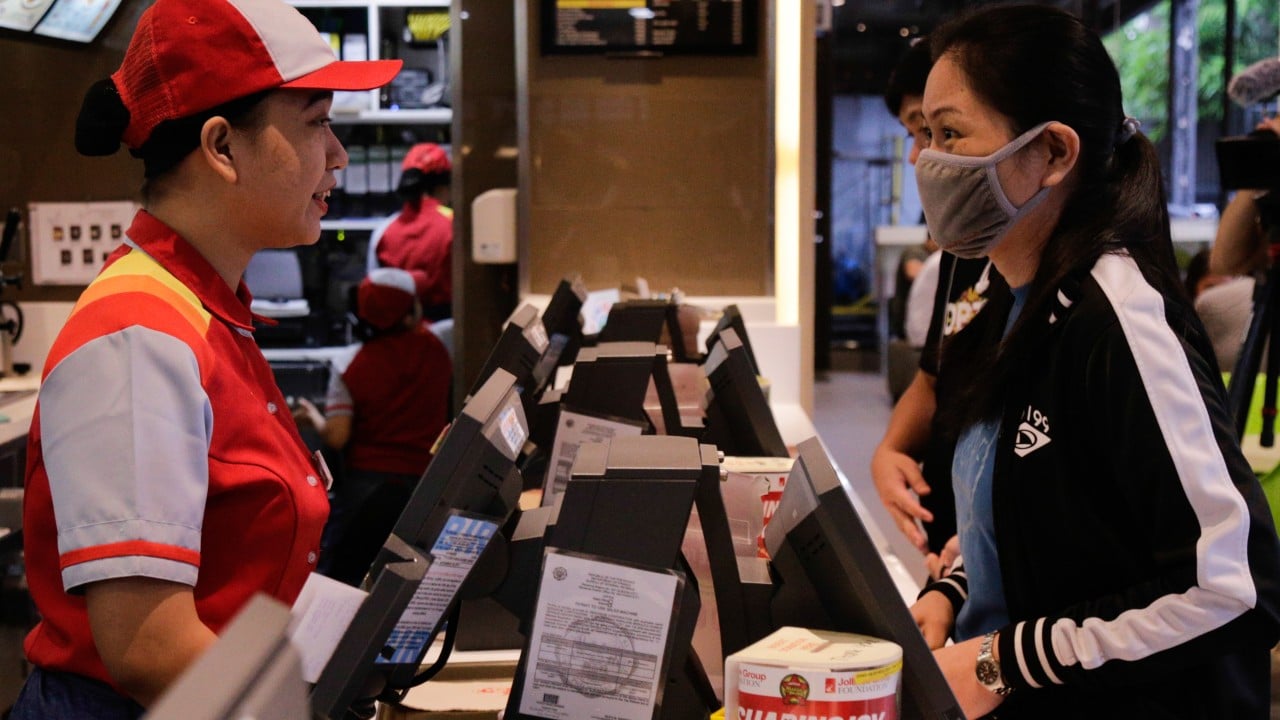
The air inside the neighborhood grocery store smells of damp cardboard, cheap floor wax, and the sharp, unmistakable tang of dried fish cooling in a woven basket by the counter. Outside, the Manila sun beats down with a heavy, indifferent cruelty that makes the asphalt shimmer. Inside, Maria stands in front of the detergent aisle, her thumb tracing the frayed edge of a shopping list scribbled on the back of a utility bill.
She is looking at a sachet of washing powder. Then she looks at the medium-sized tub next to it.
The math happens entirely behind her eyes, silent and fast. The tub offers better long-term value per gram. Every sensible instinct she possesses tells her to buy the tub. But the tub requires four hundred pesos today. The sachet requires twenty. And twenty pesos is all she has left after setting aside the bus fare for her daughter's commute tomorrow.
Maria puts the sachet in her basket. She does not feel defeated. She feels practiced.
Multiply Maria by millions, and you begin to understand the quiet earthquake reshaping retail across the Philippine archipelago.
The Anatomy of a Squeeze
For decades, consumer goods companies built their empires on the promise of abundance. Bigger boxes, family-size portions, and bulk discounts were the gold standard of modern retail. The underlying assumption was simple: as the middle class expanded, baskets would grow deeper, shelves would fill wider, and shoppers would trade up for convenience.
Then reality intervened.
Global inflation sent the price of crude oil, wheat, and shipping containers surging. Locally, weather shocks battered agricultural yields, pushing staple food prices to heights that ordinary households found dizzying. Wages did not keep pace. When a household budget is stretched tight like a drumskin, something has to give.
People stopped buying the family-size tubs. They did not stop washing their clothes, seasoning their food, or feeding their families. They simply changed how they paid for survival.
(Note: This behavioral shift mirrors what economists call the "shrinkflation" and "sachet economy" phenomena, though retail analysts prefer the term "pack-size architecture adjustment.")
Retailers and manufacturers woke up to a stark truth. If you do not meet the consumer at the exact boundary of their daily cash flow, you do not exist in their world.
Rewriting the Formula
Behind the glass-paneled boardrooms of Makati and Quezon City, executives found themselves staring at declining volume growth. The old playbooks were gathering dust. You could not simply raise prices to protect profit margins without pushing your products completely out of reach.
Instead, supply chain strategists executed a pivot that required surgical precision. They began re-engineering the recipe of commerce itself.
Consider what happens next on the production line. Food processors adjusted their ingredient ratios, substituting expensive imported inputs with locally sourced alternatives without sacrificing the core flavor profile that generations of families grew up trusting. A popular local brand of canned corned beef, for instance, subtly altered its cut proportions to keep the retail price locked at a psychological sweet spot below fifty pesos.
Packaging engineers went to work with microscopes and calculators. They rolled out smaller formats, trial packs, and micro-portions. Shampoos, cooking oils, and even household disinfectants shrank into single-use or weekly-use vessels.
This was not merely about shrinking products. It was about preserving accessibility.
Retailers realized that foot traffic was migrating away from sprawling hypermarkets and toward the nimble, neighborhood-level sari-sari stores and community minimarts. If a shopper cannot afford to walk into a supermarket once a week and drop three thousand pesos, they will walk to the corner store five times a week and spend sixty pesos each time.
The strategy worked because it aligned with human dignity. It allowed families to maintain their routines, their favorite brands, and their small daily comforts without having to take on debt or make impossible choices between meals and medicine.
The Resilient Neighborhood Store
To see this transformation in action, you have to look past the gleaming malls of the capital and walk through a dense residential barangay during the late afternoon rush.
Aling Nena, who has run a corner store out of her front window for twenty-two years, has watched the evolution firsthand. Her wooden counter is a barometer of the national economy.
"Before, people bought cooking oil by the liter bottle," she says, wiping down her counter with a damp cloth. "Now, they buy it in tiny plastic pouches, just enough for tonight's batch of adobo. They buy three cloves of garlic instead of a whole bulb. They buy one egg instead of a tray."
She doesn't judge. She stocks what her neighbors can afford.
Major retail conglomerates understood that to survive this era, they had to become partners with Aling Nena. Distribution networks were overhauled to deliver smaller batches more frequently. Logistics fleets traded massive semi-trucks for nimble delivery vans and motorcycles that could navigate narrow alleyways, ensuring that even the smallest storefront never ran out of micro-packaged essentials.
This agility is the hidden backbone of modern retail resilience. It requires sophisticated data analytics to track how consumer spending shifts week by week, paired with manufacturing flexibility that can reconfigure a production line in hours rather than months.
Beyond Survival
There is a temptation to view all of this through a lens of pure melancholy—a story of decline, of tightening belts, and shrinking ambitions. But that misses the deeper current running through the market.
When humans face constraint, ingenuity blooms.
The shift toward affordable goods has forced local brands to sharpen their competitive edge against global giants. Filipino consumers are fiercely loyal, but they are also exceptionally discerning. They know the exact taste of quality, and they know when a brand is trying to cheat them with inferior fillers. Brands that successfully navigated this transition did not do so by cutting corners on quality; they did so by optimizing efficiency, tightening supply chains, and respecting the hard-earned value of every single peso.
This is why local enterprises have managed to hold their ground, and in many cases, outpace multinational competitors. They understand the emotional geography of the consumer because they live in it too. They know that buying a sachet of coffee isn't just about caffeine; it's about claiming a small, predictable moment of peace before the chaos of the workday begins.
The Unbroken Thread
Back at the neighborhood grocery store, Maria drops the washing powder sachet into her basket alongside a small pack of garlic and a single can of sardines.
The total comes up on the register. She hands over her crumpled bills, counts her exact change down to the last twenty-5 centavo coin, and nods a quiet thank you to the cashier.
Outside, the sun is finally beginning to dip behind the rooftops, casting long, cool shadows across the street. The air smells of charcoal smoke and frying onions from a nearby sidewalk vendor. Maria walks home with her light basket, navigating the bustling sidewalk with practiced grace.
The packages on the shelves may be smaller, the margins tighter, and the economic winds harsher than they were a few years ago. Yet the fundamental rhythm of life continues, sustained by a quiet, collective refusal to let circumstances dictate the warmth of the evening meal.