The air in southern Spain does not merely warm you; it wraps around you like a heavy, golden blanket. For decades, this intoxicating heat has acted as a siren song for northern Europeans. They come seeking refuge from gray skies, purchasing white-walled villas nestled among the olive groves and pine-scented hillsides of Andalusia. They come to slow down. They come to live.
But summer in this part of the world has begun to carry a quiet, predatory edge.
When the dry Terral wind blows from the interior, the pine needles beneath your feet do not rustle; they crackle like kindling. The air grows so dry it makes your throat ache. You look up at the mountain peaks, shimmering in the haze, and you feel a faint prickle of unease. Most of the time, nothing happens. The sun dips below the horizon, the sangria flows, and the night brings a cool, welcome breeze.
Then comes the day when the wind does not cool down.
The Smell of Burning Pine
It starts with a smell. It is not the comforting scent of a backyard wood stove or a rustic kitchen fire. It is sharp, chemical, and instantly recognizable to anyone who has ever had to run for their life. It is the smell of resinous pine exploding under intense heat.
For five families this week, that smell was the beginning of the end.
As the wildfire swept through the scrubland of Andalusia, devouring dried vegetation with terrifying speed, it did not care about holiday itineraries or retirement dreams. It moved with the erratic, roaring hunger of a monster. Firefighters describe the sound of a major forest fire not as a crackle, but as a low, continuous roar, like a freight train barreling through your living room.
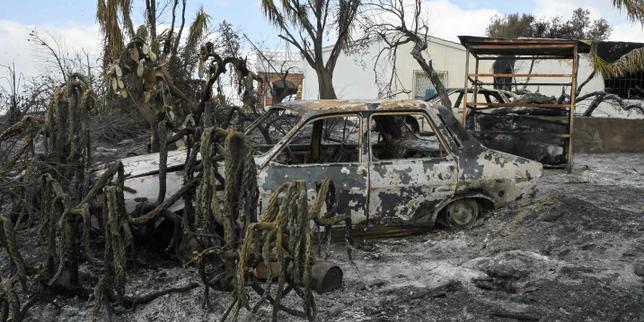
When the smoke cleared and the water-bombers finally brought the perimeter under control, the toll was laid bare. Five people did not make it out. Four British citizens and one French national, individuals who had looked at the rugged beauty of the Spanish south and seen a sanctuary, were overtaken by the flames.
To read the official reports is to encounter a wall of cold, clinical prose. They speak of "stabilized perimeters," "hectares affected," and "repatriation protocols." But behind those sterile terms lies a messy, agonizing human reality.
The Anatomy of a Trap
To understand how a paradise turns into a death trap, you have to understand the geography of escape.
Many of the villas favored by expatriates and holidaymakers are built in what urban planners call the wildland-urban interface. These are homes tucked away in nature, surrounded by thick Mediterranean brush. They are beautiful. They offer privacy. They also offer only one way in and one way out.
Imagine a narrow, winding asphalt road. It is barely wide enough for two cars to pass. On either side, dried rosemary, gorse, and Aleppo pines crowd the tarmac.
Now imagine the power grid fails because a transformer has melted. The air is suddenly thick with orange smoke so dense you cannot see past your own hood. The GPS on your phone loses its signal. Panic sets in. You turn the key, step on the gas, and drive into a wall of gray.
This is not a hypothetical scenario. It is the recurring nightmare of the modern Mediterranean. When a fire moves at speeds exceeding ten miles per hour, throwing embers hundreds of yards ahead of the main front, evacuation is not a orderly process. It is a desperate lottery.
The French tourist who perished in this blaze may have simply stayed a few minutes too long to pack a suitcase. Perhaps the four British victims, unfamiliar with the speed at which a wind-driven Spanish fire can jump a ridge, believed they were safe behind their stucco walls. Stucco does not burn, but the air inside a house surrounded by fire quickly turns to carbon monoxide.
The tragedy of these deaths is that they occurred in places designed for joy.
The Men in the Yellow Suits
While families grieve, the hillsides are still crawling with men and women clad in heavy, soot-stained yellow suits. These are the bomberos forestales—the forest firefighters who face down walls of flame with little more than hand tools and immense courage.
Watching them work is a lesson in humility. They do not fight these fires by throwing water at them; there is never enough water, and the heat is too intense for engines to get close. Instead, they fight with dirt and chainsaws. They cut lines through the brush, scraping the earth bare to starve the beast of fuel.
They speak of the fire as if it were a sentient enemy. They watch the clouds. A sudden shift in the wind can trap a crew in seconds. For these firefighters, the stabilization of this Andalusian blaze is not a victory to be celebrated with banners and parades. It is a grim, exhausting relief. They know the summer is far from over. The soil remains dry. The wind will blow again.
The fire is now officially stabilized, a term that brings cold comfort to those who lost loved ones. It means the fire is no longer expanding, but the ground is still hot. Columns of white smoke still rise from the blackened scars on the hillsides, looking like ghostly fingers reaching for the sky.
The Changing Face of Summer
For generations, the journey south was a simple, uncomplicated pilgrimage of pleasure. We packed our bags, boarded cheap flights, and surrendered to the sun. We ignored the changing climate because the pool was cool and the beer was cold.
We can no longer afford that luxury.
The deaths of these five individuals are a stark warning that the nature of travel in southern Europe is shifting. The sun is no longer just a source of life; under the right conditions, it is a catalyst for devastation.
This does not mean we must abandon the Andalusian hills or stop visiting the places that bring us peace. But it does mean we must change how we interact with them. We must learn to read the wind. We must know our escape routes. We must understand that when the local authorities issue a red alert for fire danger, it is not an inconvenience—it is a matter of survival.
As the sun sets over the charred ridges of Andalusia tonight, the sky will turn a deep, bruised violet. The air will finally cool. But for those who survived, and for the families of those who did not, the warmth of the Spanish sun will never feel quite the same again.