Every time American and Chinese officials leave a high-stakes summit, the foreign policy press corps rushes to file the exact same binary headline. Did they sign a crisis prevention deal, or did the talks fail?
That question is broken. It treats great-power rivalry like a corporate merger where a signed term sheet guarantees predictable behavior on Monday morning.
In Washington, public readouts from the U.S. Department of Defense and the State Department consistently frame crisis management around installing "guardrails" and maintaining open military-to-military communication channels. In Beijing, statements from China's Ministry of Foreign Affairs and commentaries from People's Liberation Army scholars frame stability around "mutual respect," "political foundations," and strict adherence to stated "bottom lines." Analysts who try to compress those two incompatible worldviews into a simple yes-or-no verdict end up misreading both capitals.
They have not reached a traditional crisis prevention deal. They are not going to reach one anytime soon. And even if they ink a dozen new communication agreements next month, those pieces of paper will not work the way mainstream commentary assumes.
The Fallacy of the Binary Scorecard
Watch how financial markets and cable news panels react whenever bilateral defense talks resume or stall. When a working group is announced, pundits celebrate a thaw. When a phone call goes unanswered during a maritime standoff, the same pundits declare the diplomacy dead.
Both reactions stem from the same misconception: the belief that crisis prevention is a switch you flip on or off.
I have watched analysts and institutional risk desks misprice diplomatic communiqués for decades because they confuse the existence of a hotline with the political willingness to use it. In commercial law, an executed contract binds both parties to clear remedies when obligations break down. In international politics between nuclear-armed rivals, agreements on crisis communication are non-binding expressions of temporary convenience.
Consider the paper trail that already exists between Washington and Beijing:
- The 1998 Military Maritime Consultative Agreement (MMCA): Created specifically to establish a regular mechanism for naval and air safety consultations between the U.S. military and the People's Liberation Army.
- The 2014 Memoranda of Understanding (MOUs): Signed during the Obama-Xi summit, establishing formal rules of behavior for the safety of air and maritime encounters alongside mutual notification protocols for major military activities.
- The Post-2023 Resumption of Theater-Level Talks: Announced after the Woodside summit between President Joe Biden and President Xi Jinping to restore operational communication channels that Beijing had frozen in August 2022.
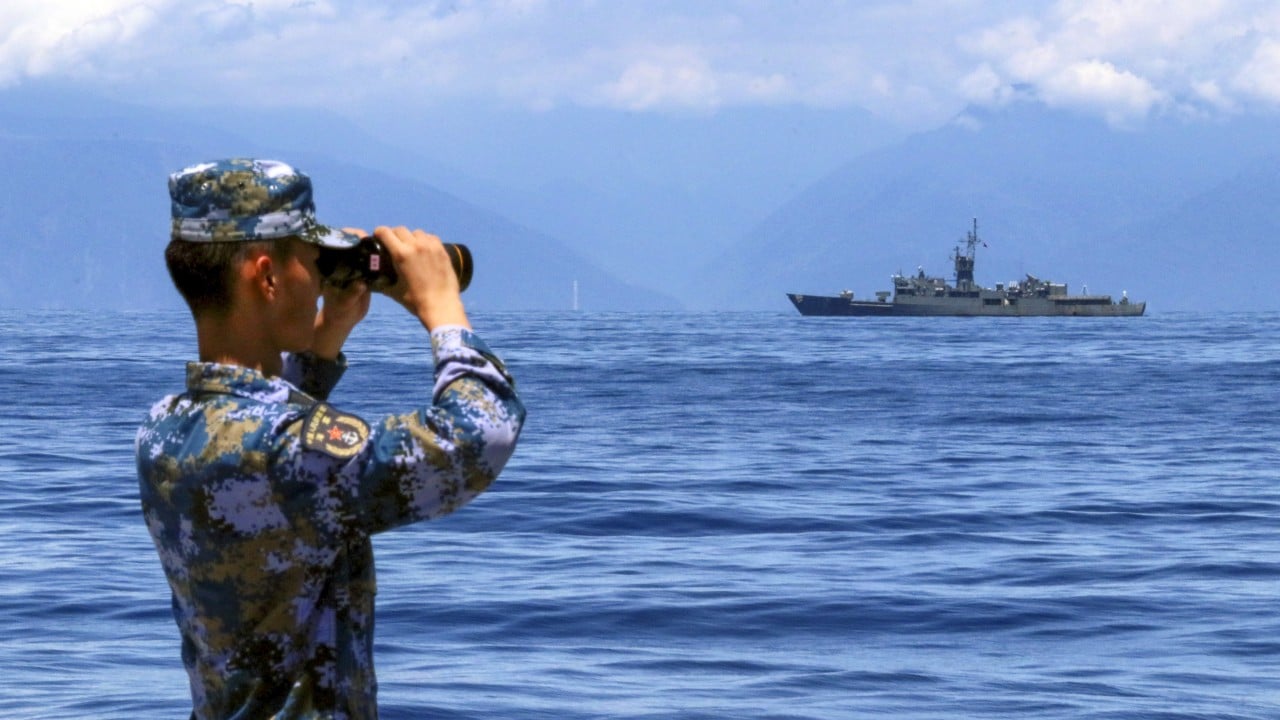
If signed agreements prevented crises, the Western Pacific would already be the calmest body of water on earth. Yet unsafe aerial intercepts, laser illuminations, and near-collisions at sea continued long after 1998 and 2014.
The hardware is already installed. The protocols are already written. The friction persists not because diplomats forgot to draft a clause, but because Washington and Beijing hold fundamentally opposing theories about what causes a crisis in the first place.
Two Capitals, Two Definitions of Prevention
When American defense planners and Chinese strategists sit across a negotiating table and say the words "crisis prevention," they are describing two entirely different concepts.
Washington's Procedural Model
According to Pentagon strategy documents and congressional testimony by U.S. defense officials, Washington views crisis management as a tactical and procedural problem. From the American perspective, the primary danger in the Indo-Pacific is an accidental collision, a misread radar signature, or an overzealous pilot triggering an unintended escalation spiral that neither capital wants.
Therefore, Washington prioritizes operational guardrails:
- Predictable Rules of the Road: Standardized distances and maneuvers during air and sea intercepts in international waters and airspace.
- Direct Operational Hotlines: Real-time links between U.S. Indo-Pacific Command and PLA theater commanders so officers can de-escalate an incident within minutes.
- Insulation from Politics: Keeping military safety channels permanently open regardless of broader political disputes over tariffs, technology controls, or Taiwan.
In short, Washington wants to make strategic competition safe for daily operations. It wants to conduct freedom-of-navigation patrols, reconnaissance flights, and allied exercises near China's periphery while ensuring those operations do not spark an accidental war.
Beijing's Political Model
According to public statements by China's Ministry of Foreign Affairs and analyses published by researchers at Chinese military academies, Beijing views crisis management as a political and structural problem. Chinese officials routinely criticize the American approach as "putting the brakes on while stepping on the gas."
From Beijing's vantage point, tactical accidents are merely symptoms of what it characterizes as U.S. military containment along China's coastline. In this framework, signing up for friction-free tactical guardrails does not reduce danger—it subsidizes American military presence inside the First Island Chain by lowering the perceived risk to U.S. forces.
Beijing therefore insists on a completely different sequence:
- Resolve Root Political Disputes First: Demand that Washington respect Beijing's core sovereignty claims and curtail military activities near Chinese territory before expecting seamless operational cooperation.
- Link Channels to Political Conduct: Treat military-to-military communication not as a permanent public utility, but as a diplomatic privilege that can be suspended when Washington crosses political red lines.
- Preserve Deterrent Uncertainty: Keep American planners guessing about how Beijing will respond to pressure rather than offering a guaranteed safety net for every close encounter.
When one side demands tactical guardrails to manage daily friction and the other side views tactical friction as a legitimate deterrent against unwanted military presence, no single agreement can bridge the gap. You cannot sign a technical appendix that resolves a clash over regional order.
Why the Cold War Hotline Myth Fails in the Pacific
Whenever commentators ask why Washington and Beijing cannot simply lock in a reliable crisis deal, they almost always point to the Cold War. After the 1962 Cuban Missile Crisis brought the world to the brink of nuclear war, Washington and Moscow established the direct teletype link known as the "hotline" and eventually negotiated strict maritime incident agreements, such as the 1972 Incidents at Sea Agreement.
That historical comparison flatters the commentators and misleads the public. The Indo-Pacific is not Cold War Europe, and the structural dynamics bear little resemblance to the Soviet-American standoff.
First, the Cold War standoff was built on territorial symmetry and mutual recognition of spheres of influence. By the early 1970s, neither Washington nor Moscow was actively contesting the inner borders of the other's alliance bloc on a daily basis. In the Western Pacific today, the core flashpoints—the Taiwan Strait, the South China Sea, and the East China Sea—sit directly on China's doorstep while intersecting vital U.S. treaty alliances and international shipping lanes.
Second, the nuclear balance operates differently. As deterrence theorist Thomas Schelling explained in Arms and Influence, Cold War stability rested on the shared terror of instantaneous, massive thermonuclear exchange—what Schelling termed the "threat that leaves something to chance." Because both Moscow and Washington possessed massive, hair-trigger nuclear arsenals, both capitals had an overwhelming incentive to prevent even minor conventional skirmishes from spiraling upward. In the U.S.-China relationship, Beijing has historically maintained a smaller nuclear force posture aimed at assured retaliation while relying on conventional regional forces and gray-zone maritime tools to assert claims below the threshold of war.
Third, bureaucratic incentives during a crisis run in opposite directions. In American military doctrine, picking up the phone immediately during a crisis is viewed as a sign of competence, responsibility, and control. In Chinese bureaucratic practice, as scholars such as Oriana Skylar Mastro and Bonnie Glaser have documented, picking up the phone before senior leadership has established a unified political line carries severe personal and institutional risk for officials.
History bears this out. When a U.S. Navy EP-3 reconnaissance plane collided with a PLA Navy J-8 fighter jet near Hainan Island in April 2001, urgent calls from Washington went unanswered for days. That silence was not caused by broken telephone wires. It was the product of a political system deliberating internally before committing its top leaders to a public negotiating posture.
Asking why a U.S.-China hotline does not work like the Moscow-Washington line assumes both governments process crisis decisions through identical bureaucratic machinery. They do not.
Strategic Ambiguity as a Weapon of Deterrence
To understand why Beijing resists binding, unconditional crisis prevention rules, you have to stop viewing risk purely as a hazard to be eliminated and start viewing it as a currency used in bargaining.
Thomas Schelling's foundational insight into coercive diplomacy was that a weaker or regionally contested actor often gains bargaining power by visibly relinquishing full control over escalation—by making the situation appear inherently dangerous so the opponent blinks first.
Imagine a scenario where a Chinese Coast Guard vessel and an allied naval ship scrape hulls near a disputed reef during a period of acute diplomatic tension.
Under a strict, American-style crisis prevention regime, theater commanders on both sides immediately connect on a dedicated channel, exchange coordinates, order vessels to pull back to a pre-agreed buffer distance, and issue a joint statement attributing the incident to navigational error. The immediate danger evaporates. So does the political pressure on Washington and its allies to reconsider future patrols in that area.
Now run the same scenario without an automatic safety valve. The hotline rings unanswered for forty-eight hours. Regional commanders hold position rather than retreating. State media frames the incident as a deliberate provocation, while military movements signal readiness without clarifying the exact threshold for further action. Suddenly, senior policymakers in Washington face an acute dilemma: push forward and risk an unpredictable escalation, or quiet down the patrol schedule to let temperatures cool.
In that second scenario, uncertainty itself performs deterrent work.
This is the core paradox that mainstream crisis-management commentary misses. Washington wants crisis prevention mechanisms to reduce tactical risk so it can sustain strategic presence. Beijing frequently tolerates—and occasionally cultivates—tactical risk precisely because the fear of unintended escalation forces Washington to self-deter.
As political scientist Jessica Chen Weiss has observed in her research on Chinese foreign policy, domestic nationalist signaling and external diplomatic flexibility are tightly intertwined in Beijing. Agreeing to automatic, behind-closed-doors de-escalation rules strips leaders of the ability to demonstrate resolve to both foreign adversaries and domestic audiences when sovereignty claims are tested.
Where This Contrarian View Can Backfire
A sharp critique of diplomatic groupthink has to acknowledge its own blind spots. Dismissing U.S.-China crisis talks as pure theater carries a serious danger: it can breed a lazy fatalism that ignores genuine reductions in accidental risk.
Even when high-level hotlines fail during major political crises, lower-level operational agreements still perform quiet, unglamorous work that saves lives. Standardized radio frequencies, maritime collision regulations, and agreed search-and-rescue protocols help prevent mundane disasters—a pilot disoriented in a typhoon, a ship suffering engine failure in congested shipping lanes, or a misidentified civilian aircraft—from turning into geopolitical emergencies.
Furthermore, as Graham Allison highlighted in Destined for War, rising and established powers face an elevated structural risk of stumbling into conflict through third-party catalysts or miscalculation. Even an imperfect communication channel creates a pre-existing off-ramp. Once leaders in both capitals have satisfied their domestic political audiences and extracted whatever diplomatic signaling they sought from a standoff, a standing channel gives them a face-saving mechanism to climb down without inventing new diplomatic protocols from scratch.
The mistake is not holding the talks. The mistake is expecting the talks to override the core strategic incentives of the participants.
How to Read the Next Summit Without Getting Played
Stop asking whether Washington and Beijing have a crisis prevention deal. That binary framing belongs in sports coverage, not strategic analysis.
When the next summit readout lands in your feed promising "enhanced communication channels" or "new military safety dialogues," run it through three diagnostic filters before drawing any conclusions about stability in the Pacific:
- Check the Rank and Authority of the Counterparts: Talks between policy bureaucrats or defense ministry spokespeople are diplomatic theater. Watch whether direct, scheduled communication is occurring between the commander of U.S. Indo-Pacific Command and the leaders of the PLA's Eastern and Southern Theater Commands—the officers who actually control ships and aircraft in contested zones.
- Watch for Political Preconditions: Ask whether the channel is structured to survive a major political shock, such as a high-level congressional visit to Taipei or new export controls, or whether Beijing explicitly ties military dialogue to broader political compliance. A phone line that gets unplugged the moment a political argument starts is a diplomatic reward, not a crisis tool.
- Track Water and Air, Not Press Releases: Ignore the adjectives in joint statements. Watch the actual distance between wingtips during reconnaissance intercepts in the South China Sea and the frequency of gray-zone coast guard blockades. Operational behavior at sea reveals true risk tolerance far more honestly than any communiqué drafted in a hotel ballroom.
Crisis prevention between Washington and Beijing is not a treaty waiting to be signed. It is an ongoing, unresolved contest over who bears the burden of caution in the Western Pacific. Until both capitals agree on where the red lines sit, the most important thing about any hotline is not whether it exists, but who decides to let it ring.