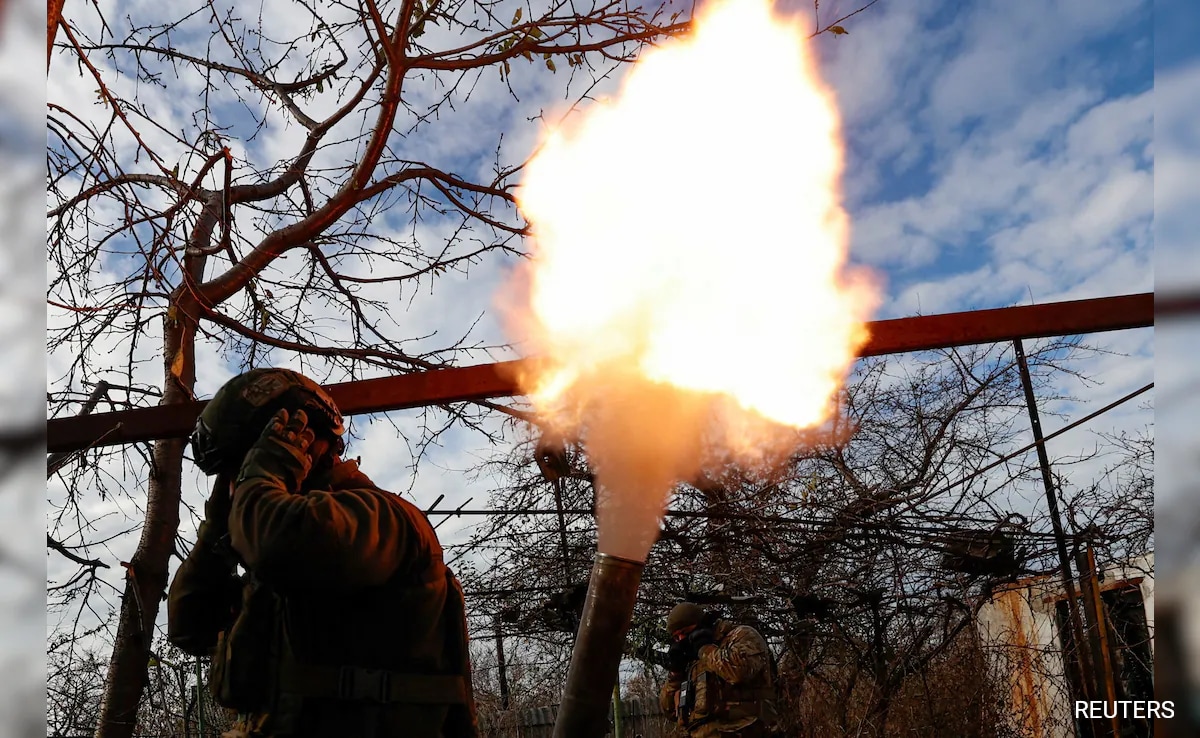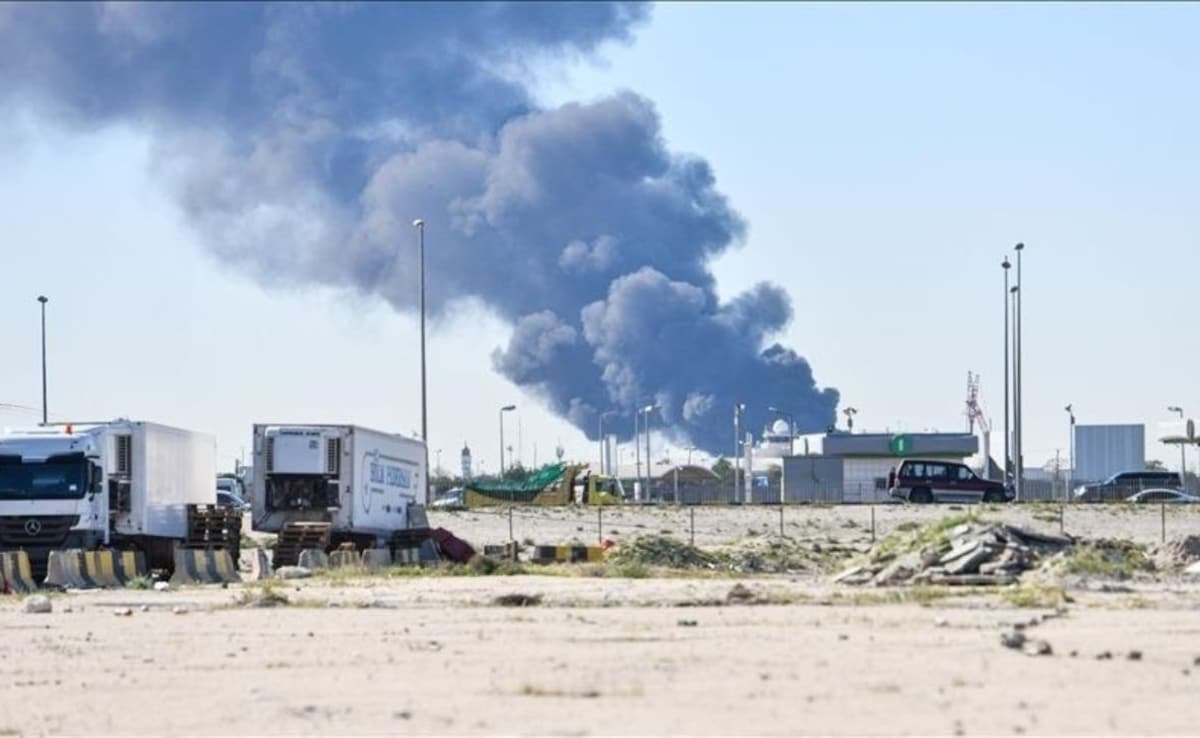
The kinetic engagement of critical infrastructure in Kuwait represents a shift from symbolic posturing to a calculated strategy of utility-level attrition. By targeting the intersection of thermal power generation and seawater desalination, the strikes exploit a fundamental vulnerability in the Gulf’s life-support systems: the high-dependency coupling of water and energy. In this geography, the degradation of a single power turbine is not merely a localized blackout; it is a systematic reduction in the potable water supply, creating a compounding crisis where the repair cycle cannot outpace the rate of resource depletion.
The Dual-Utility Vulnerability Framework
Kuwait’s infrastructure operates on a co-generation model. Multi-Stage Flash (MSF) distillation and Reverse Osmosis (RO) plants are integrated with gas-fired thermal power stations. This integration, while thermodynamically efficient, creates a single point of failure.
The Thermal Coupling Bottleneck
Most desalination in the region relies on waste heat from power generation. When a missile or drone strike impacts the steam turbine assembly, the immediate result is a loss of electricity. The secondary, more critical result is the cessation of the thermal energy required to boil seawater. The math of this dependency is brutal:
- Energy Input to Water Output Ratio: Large-scale MSF plants require approximately $250-300 \text{ kJ/kg}$ of thermal energy.
- Operational Sensitivity: A 20% reduction in power plant output often necessitates a 40-50% reduction in water production to maintain grid stability.
This creates a Cascading Failure Loop. If the grid frequency drops due to damaged generation units, the high-pressure pumps required for Reverse Osmosis must be throttled to prevent motor burnout. Consequently, the strike does not just "damage a building"; it desynchronizes a complex electrochemical ecosystem.
Quantifying the Kinetic Impact
Evaluating the damage to the Kuwaiti facilities requires moving beyond "moderate" or "severe" descriptors toward a metric of Restoration Lead Time (RLT). Modern utility infrastructure is not modular.
The Long-Tail Procurement Crisis
The specific components targeted—likely the step-up transformers, control rooms, or high-pressure manifolds—are long-lead-time items.
- Transformers: Custom-wound large power transformers (LPTs) have a global manufacturing lead time of 12 to 24 months.
- Control Logic: If the Supervisory Control and Data Acquisition (SCADA) systems were physically compromised, the facility loses its "brain." Re-integrating legacy mechanical hardware with new digital logic controllers is a months-long engineering endeavor, not a days-long repair.
Salinity and Membrane Fouling
A hidden cost of kinetic strikes on desalination plants is the "stagnation effect." When an RO plant loses power abruptly, seawater sits static in the membranes. Without constant flow, biological fouling and mineral scaling occur rapidly. If the facility is not restored within a critical window—often 24 to 72 hours—the expensive membrane stacks may be permanently ruined, requiring a full capital expenditure (CapEx) replacement even if the external structure appears intact.
The Strategic Logic of Resource Insecurity
The choice of Kuwait as a target suggests a shift in the regional theater of influence. Unlike larger neighbors with more diverse water sources or deeper strategic reserves, Kuwait’s geographical footprint and reliance on a centralized coastal strip for its utilities make it a "high-leverage" target.
The Buffer Capacity Deficit
The severity of this strike is measured against Kuwait’s Days of Strategic Water Reserves (DSWR). While the state maintains significant underground storage, the consumption rate in an arid climate with high industrial demand creates a narrow margin.
- The Consumption Function: $C_{total} = C_{domestic} + C_{industrial} + C_{emergency_loss}$.
- The Inflow Deficit: If the damaged plant accounts for 15% of national capacity, the state must find a way to reduce demand by 15% immediately or deplete its reserves at an exponential rate.
This creates political pressure. Unlike an attack on a military base, an attack on a desalination plant is a direct strike on the civilian social contract. The "Cost of Inaction" for the government rises every hour the water pressure remains low.
Logistics of the Strike Mechanism
The precision required to hit specific utility junctions indicates a high level of intelligence regarding the plant’s layout. Targeting the pumping stations or switchyards rather than the large, reinforced concrete storage tanks demonstrates an intent to maximize functional downtime while minimizing the immediate visual "rubble" that might provoke an equivalent international outcry.
Interdicting the Supply Chain
The attack highlights a shift toward Component-Level Warfare. By damaging the specialized intake pipes or the chemical treatment units (where chlorine and anti-scalants are added), the attacker ensures that even if the power is restored, the water remains undrinkable. These components are often sourced from a limited number of European or Japanese manufacturers, making the recovery subject to global shipping lanes and geopolitical clearance.
Redefining Regional Grid Resilience
The vulnerability exposed here is a byproduct of extreme centralization. For decades, the Gulf strategy has been "bigger is better"—larger plants, higher output, greater efficiency. This strike proves that efficiency is the enemy of resilience.
The Decentralization Imperative
The logical response to this vulnerability is a shift toward a Distributed Water-Power Architecture.
- Micro-Desalination: Small-scale, modular RO units powered by localized solar arrays.
- Hardened Redundancy: Moving critical control infrastructure underground or into reinforced "bunkers" within the plant perimeter.
- Inter-GCC Grid Hardening: Increasing the capacity of the Gulf Cooperation Council Interconnection Authority (GCCIA) to shunted power across borders instantly when a domestic plant goes offline.
However, the "Interconnection" strategy has a flaw: it assumes the neighboring grids are secure. If multiple plants across the region are targeted simultaneously, the "Mutual Defense" of the power grid collapses into a regional blackout.
Structural Constraints of Rapid Recovery
Kuwait faces a "Specialist Bottleneck." The technicians required to repair high-pressure steam systems and desal-membranes are often third-party contractors from international firms. In a high-risk environment where further strikes are possible, mobilizing these experts becomes a logistical and insurance nightmare. The "War Risk Premium" for engineering firms can increase the cost of repair by 300% to 500%, further straining the national budget.
The Mathematical Reality of the Grid
The grid must maintain a constant balance. $P_{gen} = P_{load}$. When a major plant is removed, the remaining plants must "ramp up" to fill the void. However, desalination plants are notoriously difficult to "ramp." They are designed for steady-state operation. Forcing an old plant to run at 110% capacity to cover the loss of the damaged facility significantly increases the probability of mechanical failure, leading to a "domino effect" of utility collapses.
Strategic Realignment
The strike on Kuwait’s utilities has moved the conflict from a "clash of militaries" to a "clash of life-support systems." The attacker is banking on the fact that a population can live without many things, but it cannot live without a functioning water-energy nexus for more than a few days.
Strategic planning must now move toward Passive Defense and Redundancy Overlap. This involves:
- Immediate Diversification: Investing in large-scale atmospheric water generation and wastewater reclamation to decouple water from the coastal thermal plants.
- Kinetic Shielding: Deploying localized Point-Defense Systems (PDS) specifically for utility hubs, treating them as high-value military assets.
- Digital Air-Gapping: Ensuring that even if a physical strike occurs, the rest of the national utility network cannot be compromised via the connected SCADA systems.
The regional security calculus has fundamentally changed. Power and water are no longer background utilities; they are the primary front lines of modern asymmetric conflict. Future stability depends on the ability to transition from a centralized, vulnerable "Efficiency Model" to a ruggedized, "Resilience Model" that can absorb kinetic shocks without total system failure.