The security architecture of the Persian Gulf is currently experiencing a structural shift where traditional state-on-state deterrence is being bypassed by specialized, sub-conventional incursions. Kuwait’s recent allegation regarding the infiltration of Iranian Revolutionary Guard Corps (IRGC) units onto its territory represents more than a localized border dispute; it is a calculated test of the "Grey Zone" threshold—the space between routine diplomacy and open kinetic warfare. To analyze this event, one must move beyond the surface-level reporting of "tensions" and instead quantify the incident through the lens of maritime sovereignty, proxy-driven power projection, and the specific geographic vulnerability of the northern Gulf.
The Geography of Vulnerability: The Bubiyan-Warba Axis
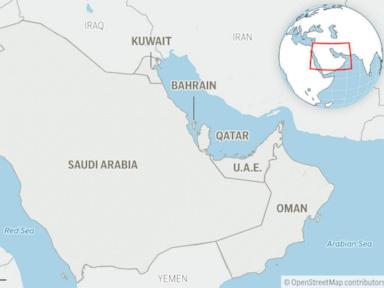
The territorial integrity of Kuwait is inextricably linked to its northern islands, specifically Bubiyan and Warba. These landmasses dictate the maritime access to Iraq’s Umm Qasr port and control the approach to Kuwait’s own Khor Abdullah waterway. Any unauthorized presence in this sector functions as a strategic blockade mechanism.
- Proximate Encroachment: The distance between Iranian launch points in the Shatt al-Arab and Kuwaiti islands is minimal, allowing for high-speed, low-signature transit by IRGC Navy (NEDSA) fast attack craft.
- Hydrographic Control: By establishing a footprint—even a temporary or deniable one—on these islands, a hostile actor gains the ability to monitor 100% of the commercial traffic entering the northern Gulf.
- Sovereignty Erosion: Repeated, low-level incursions serve a psychological function. They aim to normalize the presence of foreign paramilitary forces in disputed or sensitive waters, gradually eroding the target state's perceived control over its own borders.
The IRGC Operational Framework: Intelligence, Sabotage, and Signaling
The Iranian Revolutionary Guard Corps does not deploy units without a specific hierarchy of objectives. In the context of the Kuwaiti allegations, the operational logic typically follows a three-tiered objective set.
Tier 1: Intelligence Gathering and Surveillance (ISR)
The primary goal is often the placement of signals intelligence (SIGINT) equipment or the physical scouting of Kuwaiti coastal defenses. Given Kuwait’s proximity to major US military installations, including Camp Arifjan and Ali Al Salem Air Base, these islands serve as ideal "listening posts" that are difficult to monitor via satellite due to the high density of regional small-craft traffic.
Tier 2: The Logic of Proximate Deterrence
Iran utilizes "horizontal escalation" to respond to external pressures. If Tehran perceives an increase in Western sanctions or a shift in the regional defensive posture (such as the strengthening of the Abraham Accords or GCC-US naval integration), it targets the weakest links in the regional chain. Kuwait, which maintains a delicate balancing act in its foreign policy, is often viewed as a high-value target for coercive signaling. The message is clear: regional security is contingent upon Iranian acquiescence.
Tier 3: Testing the Mutual Defense Treaties
A critical component of this incursion is the empirical testing of Kuwait’s security guarantees. By using the IRGC—a paramilitary entity—rather than the regular Iranian Navy (Artesh), Tehran creates a "deniability gap." They are testing whether a small-scale infiltration triggers a collective GCC response or a US intervention. If the response is merely a diplomatic protest, the IRGC calculates that the threshold for kinetic intervention is high, emboldening further clandestine activity.
The Cost Function of Asymmetric Maritime Conflict
From a strategic consultant’s perspective, these incursions can be modeled as a cost-imposition strategy. The "Attacker’s Advantage" in this scenario is driven by a massive disparity in resource allocation.
- Deployment Cost: The cost for the IRGC to send a team via a fast-patrol boat is negligible—estimated in the low thousands of dollars.
- Response Cost: For Kuwait to counter this, it must maintain high-readiness maritime patrols, deploy drone surveillance 24/7, and potentially mobilize land-based forces to secure uninhabited islands. The "Burn Rate" of a state's defense budget in response to low-cost provocations is a primary driver of long-term attrition.
- Political Capital: Incursions force the Kuwaiti government into a binary trap. They must either escalate rhetorically (risking a trade or diplomatic fallout) or downplay the incident (risking domestic perceptions of weakness).
Technical Analysis of Infiltration Methods
The IRGC-N utilizes specific naval assets designed for the shallow, cluttered waters of the northern Persian Gulf. These are not standard military vessels but are often "dual-use" platforms that blend into the local maritime ecosystem.
- High-Speed Interceptor Craft (HSIC): These vessels, often based on the Bladerunner or Boghammar designs, can exceed 50 knots. Their low radar cross-section makes them nearly invisible in the "clutter" of the Gulf’s heavy wave action and numerous fishing dhows.
- Swarming Tactics: Infiltration is rarely a single-point failure. It usually involves a "swarm" of vessels where several decoys distract coastal radar operators while a single "insert" craft reaches the shore.
- Civilian Masking: The use of traditional wooden dhows to transport personnel and equipment is a hallmark of IRGC operations. By utilizing vessels that are indistinguishable from local fishing and trading craft, they negate the effectiveness of standard visual and radar identification.
The Geopolitical Ripple Effect: Beyond the Kuwaiti Border
This incident does not exist in a vacuum. It is a variable in the broader "Maximum Pressure vs. Maximum Resistance" dynamic. The timing of such accusations often aligns with three external factors:
- OPEC+ Dynamics: Kuwait is a critical player in global energy markets. Any perception of instability in its northern oil fields or shipping lanes has an immediate impact on risk premiums in oil futures.
- The Iraq Factor: Iraq’s domestic instability often creates a vacuum in the northern Gulf. As Iraq struggles to secure its own maritime borders, the IRGC finds more room to maneuver, using Iraqi territorial waters as a staging ground for incursions into Kuwait.
- Regional Integration Projects: The development of the "Great Mubarak Port" on Bubiyan Island is a multi-billion dollar project central to Kuwait’s "Vision 2035." Persistent security threats in this area directly undermine the feasibility of this project by deterring foreign direct investment and increasing insurance premiums for shipping.
Structural Failures in Current Maritime Monitoring
The fact that an IRGC team could be accused of reaching Kuwaiti soil suggests a bottleneck in the regional maritime domain awareness (MDA). Currently, the reliance on AIS (Automatic Identification System) is a systemic flaw, as hostile actors simply disable these transponders.
Furthermore, there is a "Data Silo" problem. While the US 5th Fleet maintains high-end surveillance, the real-time integration of this data with local Kuwaiti Coast Guard assets is often hampered by bureaucratic friction and disparate communication protocols. This creates "Blind Spots" in the littoral zones where the transition from deep-water monitoring to coastal defense occurs.
Strategic Recommendations for Sovereign Defense
To move from a reactive posture to a proactive deterrent, the following structural adjustments are necessary:
- Automated Littoral Denial: Implementation of unmanned surface vehicles (USVs) equipped with AI-driven pattern recognition to identify "dark" vessels (those with AIS off) that deviate from established commercial shipping lanes.
- Infrastructure Hardening on Bubiyan: The transition of northern islands from "unattended territory" to "monitored zones" through the installation of persistent, solar-powered acoustic and optical sensors.
- The "Transparency Pivot": Rather than internalizing the intelligence, Kuwait should adopt a policy of immediate, public declassification of surveillance footage. By "naming and shaming" the specific IRGC units and vessels involved, Kuwait increases the international political cost for Tehran, moving the conflict out of the Grey Zone and into the spotlight of international maritime law.
The escalation in the northern Gulf is not a series of random events but a sophisticated application of asymmetric pressure. Kuwait’s ability to defend its northern flank will depend less on the size of its navy and more on the precision of its intelligence integration and its willingness to disrupt the IRGC's "low-cost, high-reward" logic.