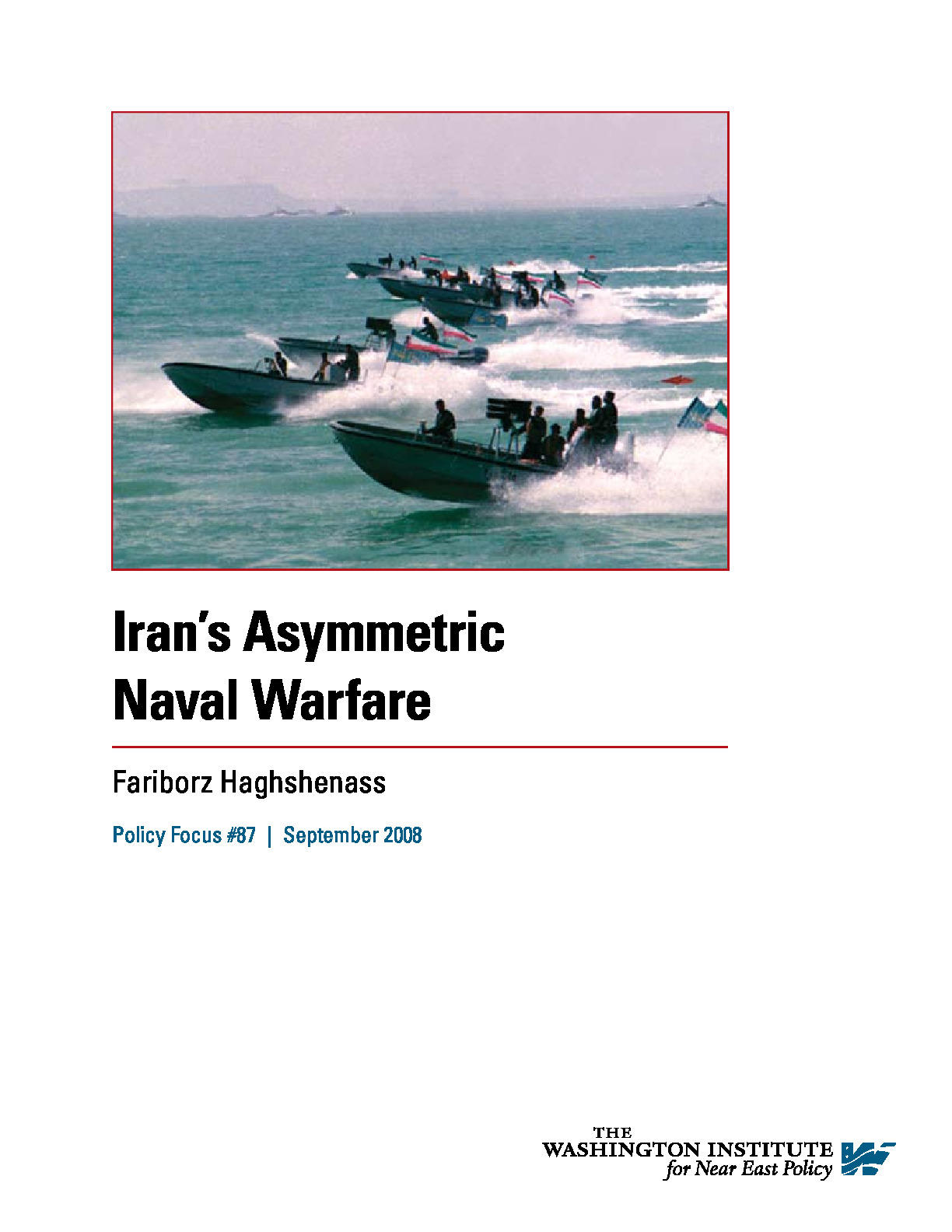
The recent kinetic engagement in the Strait of Hormuz involving Iranian patrol craft and a commercial oil tanker is not an isolated tactical anomaly but a calculated deployment of Asymmetric Maritime Interdiction (AMI). While media reports focus on the immediate exchange of fire, the strategic value lies in the disruption of the "Global Commons" energy throughput. This incident demonstrates a specific doctrine: the use of low-cost naval assets to impose high-risk premiums on global energy logistics. Understanding this event requires moving past the surface-level narrative of "aggression" to analyze the underlying mechanics of maritime choke-point pressure and the escalation ladder of the Islamic Republic of Iran Navy (IRIN) and the Islamic Revolutionary Guard Corps Navy (IRGCN).
The Strategic Geometry of the Strait of Hormuz
The Strait of Hormuz serves as the world’s most critical energy artery. Approximately 20% of global petroleum liquids—roughly 20.5 million barrels per day—transits this 21-mile wide corridor. The geographical constraints create a "Tactical Funnel" where large vessels, specifically Very Large Crude Carriers (VLCCs), are restricted to narrow shipping lanes.
The Buffer Zone Constraint
The internationally recognized Traffic Separation Scheme (TSS) mandates specific inbound and outbound lanes, each two miles wide, separated by a two-mile buffer zone. Because these lanes fall within the territorial waters of Iran and Oman, any vessel transiting the Strait is subject to the legal framework of "Innocent Passage" under the United Nations Convention on the Law of the Sea (UNCLOS).
Iran’s operational logic exploits the ambiguity of "innocent." By claiming a vessel has violated environmental protocols, safety standards, or maritime law, the IRGCN creates a legal pretext for boarding and inspection. When a tanker refuses to comply—often under guidance from private security or Western naval task forces—the transition to kinetic force (warning shots or direct fire) occurs. This is a deliberate friction point designed to test the Rules of Engagement (ROE) of nearby international warships.
The IRGCN Swarm Doctrine
The incident involves the IRGCN’s preferred tactical unit: the Fast Inshore Attack Craft (FIAC). Unlike a traditional navy that relies on capital ships, the IRGCN utilizes a decentralized, "Swarm" architecture. This approach serves three distinct functions:
- Target Saturation: A single tanker or its escort destroyer can track and engage a limited number of high-speed targets simultaneously. By deploying dozens of FIACs, the IRGCN saturates the vessel's defensive sensor arrays and defensive weaponry.
- Economic Disparity: The cost of a FIAC, often a modified civilian hull equipped with 107mm rockets or heavy machine guns, is negligible compared to the multi-million dollar missiles used by Western navies for defense.
- Plausible Deniability and Escalation Control: Small-arms fire allows for a "tit-for-tat" escalation without crossing the threshold of full-scale naval warfare. It is a calibrated signal of intent rather than an attempt to sink the vessel.
The Cost Function of Maritime Instability
The immediate impact of firing on a tanker is not the physical damage to the hull, which is usually minimal given the double-hull construction of modern VLCCs. The real impact is the manipulation of the Maritime Risk Variable.
The Insurance Premium Spike
Lloyd’s Market Association’s Joint War Committee (JWC) monitors these incidents to categorize "Listed Areas" where additional insurance premiums apply. A single skirmish in the Strait triggers an immediate re-evaluation of War Risk Insurance.
- Base Freight Rate: The standard cost of moving oil.
- War Risk Surcharge: An additional percentage based on the perceived probability of hull damage or seizure.
- Hull and Machinery (H&M) Adjustments: Long-term increases in premiums for any fleet operating in the Persian Gulf.
When an Iranian patrol boat fires on a tanker, it is effectively levying a "Security Tax" on every barrel of oil moving through the Strait. This economic pressure is a lever used to influence diplomatic negotiations or retaliate against international sanctions.
Technical Analysis of the Kinetic Engagement
In this specific event, the use of small-arms fire and 20mm cannon rounds against a tanker’s bridge or superstructure is a psychological operation. Modern tankers are massive; a 300,000-deadweight tonne (DWT) vessel is largely impervious to small-caliber fire in terms of its buoyancy or cargo integrity.
However, the Human Factor remains the primary vulnerability. Tanker crews are civilian, often under-trained for combat scenarios. By targeting the bridge, IRGCN forces aim to:
- Force the Master to cut engines and allow boarding.
- Trigger an emergency distress signal that draws Western naval assets into a localized, disadvantageous position.
- Create a visual record of "defiance" for domestic and regional propaganda.
The failure to board the vessel in this instance suggests a "Harassment Protocol" rather than a "Seizure Protocol." In a seizure protocol, the IRGCN typically uses heliborne Special Forces (Saberin) to fast-rope onto the deck while FIACs provide suppressive fire. The absence of aerial assets in this report indicates the goal was likely signaling or data-gathering on response times.
The Response Matrix: Sentinel and Prosperity Guardian
The international response to these interdictions is managed through frameworks like the International Maritime Security Construct (IMSC) and Operation Sentinel. These task forces utilize a "Hub and Spoke" surveillance model.
The Surveillance Loop
- Persistent ISR: High-altitude long-endurance (HALE) drones and satellite imagery provide a real-time "Pattern of Life" in the Strait.
- Acoustic Monitoring: Passive sonar arrays detect the high-frequency signatures of FIAC outboard motors long before they reach the shipping lanes.
- Rapid Response: Deploying Littoral Combat Ships (LCS) or frigates to intervene.
The bottleneck in this response matrix is the Distance-to-Intercept. If an IRGCN craft is stationed at Abu Musa or the Tunb Islands, they are minutes away from the shipping lanes. A Western destroyer may be 50-100 miles away. This "Geographic Advantage" allows Iran to initiate and conclude an engagement before an escort can arrive, leaving the tanker to defend itself with Water Cannons or Long Range Acoustic Devices (LRAD).
Weaponizing Maritime Law and Jurisdiction
The legal battleground is as significant as the physical one. Iran utilizes a specific interpretation of the 1982 UN Convention on the Law of the Sea, which it has signed but never ratified. They argue that "Innocent Passage" does not apply to warships or commercial vessels from "hostile" nations.
This creates a Jurisdictional Grey Zone. When a tanker is fired upon, the Iranian narrative often cites a "Hit and Run" incident with a local fishing dhow or an undeclared environmental spill. By framing kinetic action as "law enforcement," Iran complicates the international legal justification for a retaliatory strike. If a US Navy ship fires back, Iran claims an unprovoked attack on its sovereign police force within its territorial waters.
Operational Limitations of Asymmetric Interdiction
While effective for harassment, the Iranian strategy has clear structural ceilings:
- Escalation Dominance: While FIACs can harass tankers, they cannot survive a direct engagement with modern integrated air-defense systems or carrier-based aviation. Iran must keep the friction low enough to avoid a "Praying Mantis" style decapitation of its naval assets.
- Strategic Counter-Productivity: Frequent attacks accelerate the development of bypass infrastructure, such as the East-West Pipeline in Saudi Arabia or the Abu Dhabi Crude Oil Pipeline (ADCOP), which bypass the Strait entirely.
- Global Isolation: Targeting tankers from neutral nations (e.g., Panama-flagged, Greek-owned, carrying Chinese oil) erodes the diplomatic cover provided by major trading partners who require energy stability.
Tactical Integration of Unmanned Systems
A critical evolution to monitor is the integration of One-Way Attack (OWA) UAVs into these patrol boat sorties. The transition from manned FIACs to unmanned, explosive-laden surface vessels (USVs) and drones represents the next phase of the "Strait of Hormuz Cost Function."
In future engagements, we should expect:
- Kinetic Multi-Vectoring: Simultaneous drone strikes from the air and FIAC harassment from the sea.
- Electronic Warfare (EW): Spoofing of AIS (Automatic Identification System) data to make tankers appear off-course or in prohibited waters, providing a "digital" pretext for physical interdiction.
The Strategic Recommendation for Maritime Operators
The data indicates that these incidents are not random outbursts but are synchronized with broader geopolitical friction points—specifically nuclear negotiations or the freezing of offshore assets.
For commercial operators, the strategy must shift from passive transit to Active Defensive Posturing:
- Hardening of the Bridge: Installing ballistic glass and reinforced plating to mitigate the effectiveness of small-arms fire.
- Pre-emptive AIS Spoofing Defense: Utilizing encrypted or redundant positioning systems to counter Iranian GPS jamming in the Strait.
- Private Maritime Security Teams (PMST): Deployment of embarked security with clear ROEs that include non-lethal and kinetic deterrents to bridge the gap until naval support arrives.
The Strait of Hormuz remains a theater where 20th-century geography meets 21st-century asymmetric doctrine. The goal of the IRGCN is not to close the Strait—which would be an act of economic suicide for Iran—but to maintain a "Controlled Instability" that allows them to extract concessions from the global community. Each shot fired at a tanker is a data point in a larger negotiation of power.